


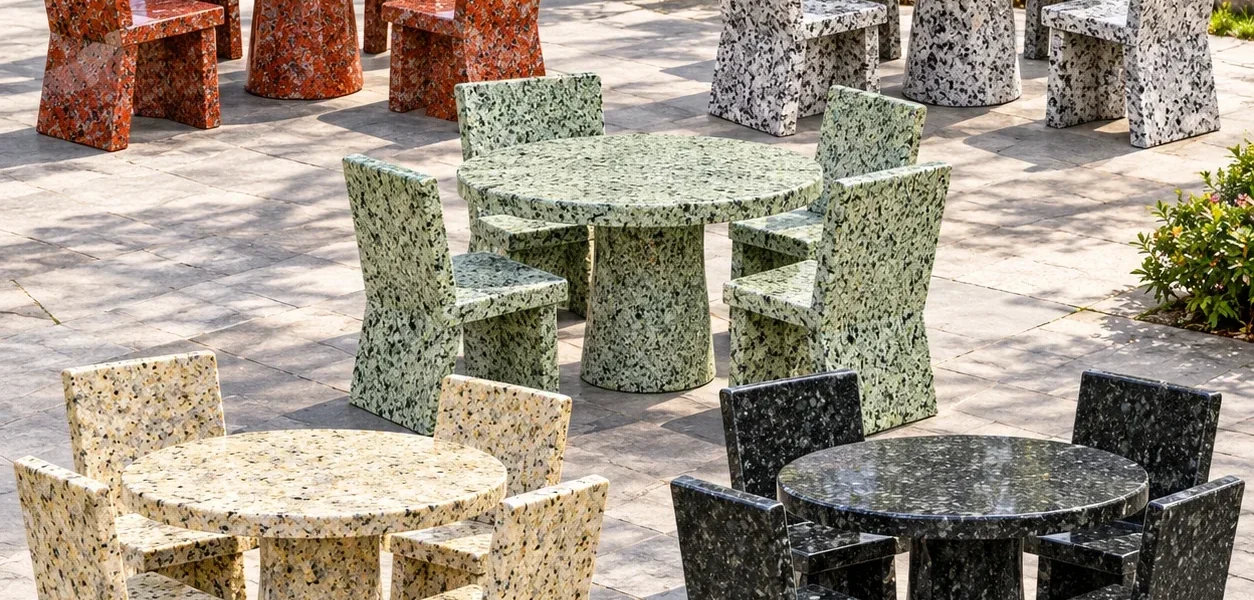
When considering natural granite outdoor furniture, compare the actual surface, intended application, and installation requirements instead of relying on the trade name alone. This guide focuses on checks that can be completed before material approval.
Natural stone varies from slab to slab and batch to batch. Water absorption, strength, thickness, and load capacity should only be quoted from documentation for the specified product, alongside the approved sample and project drawings.
1. high Weather Resilience and Thermal Stability
Tropical climates subject outdoor furnishings to brutal conditions: intense solar ultraviolet radiation followed by torrential monsoon downpours. Granite is an igneous rock formed under high subsurface pressures and temperatures over millions of years, resulting in an exceptionally dense crystalline interlocking matrix. You can also refer to our guide on “Natural Granite Patterns: How to Choose for Each Application” to compare technical suitability for your installation.
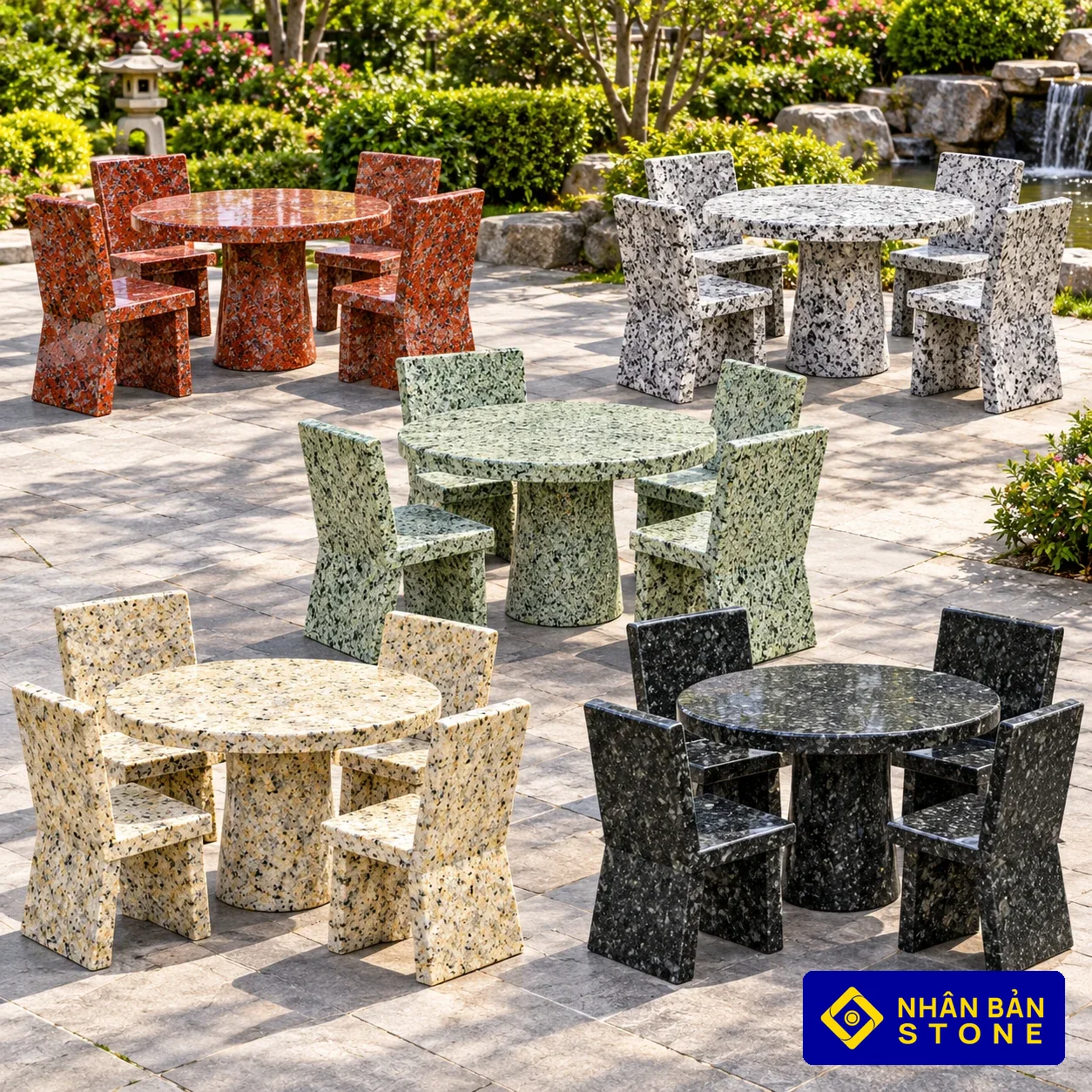
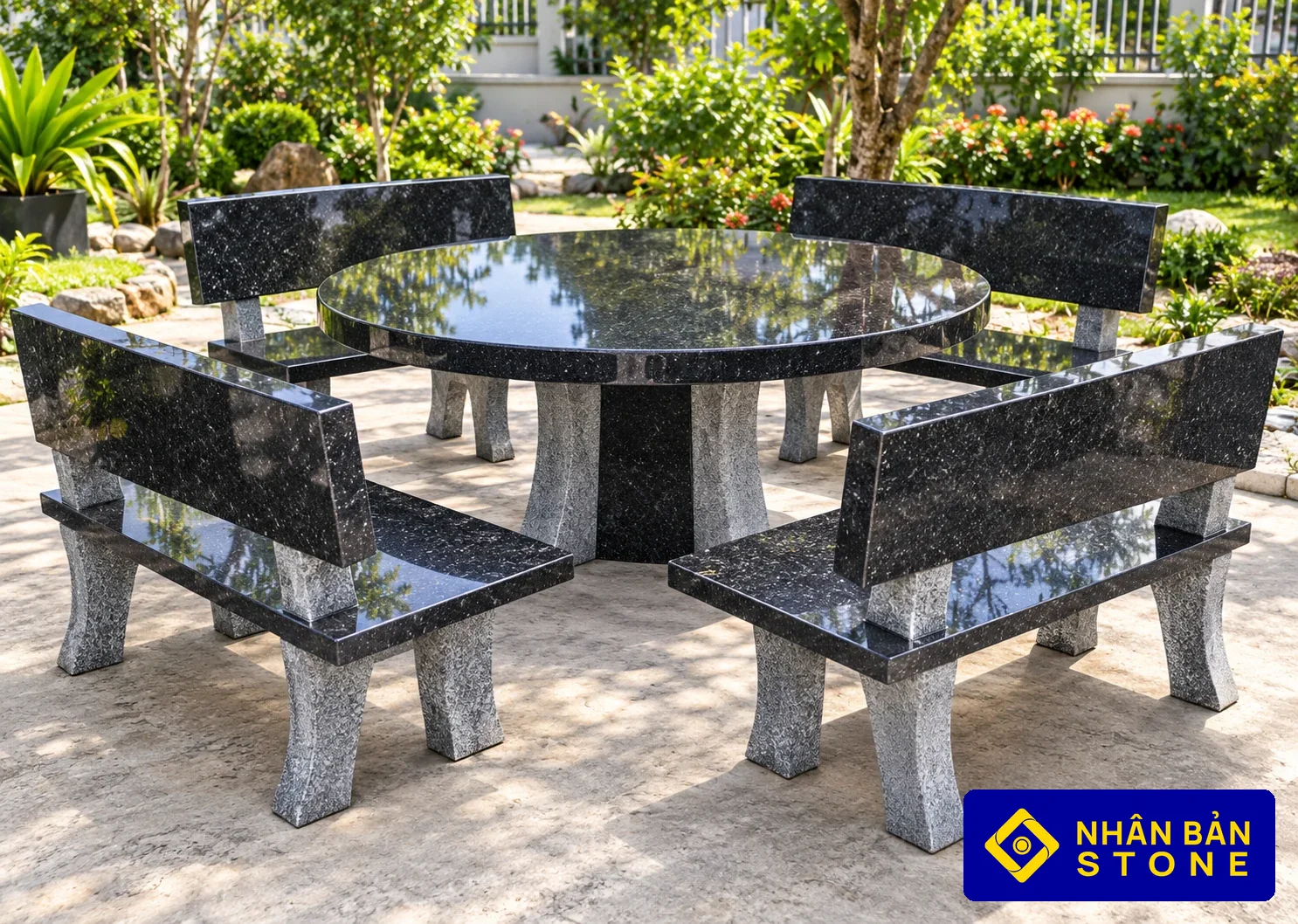
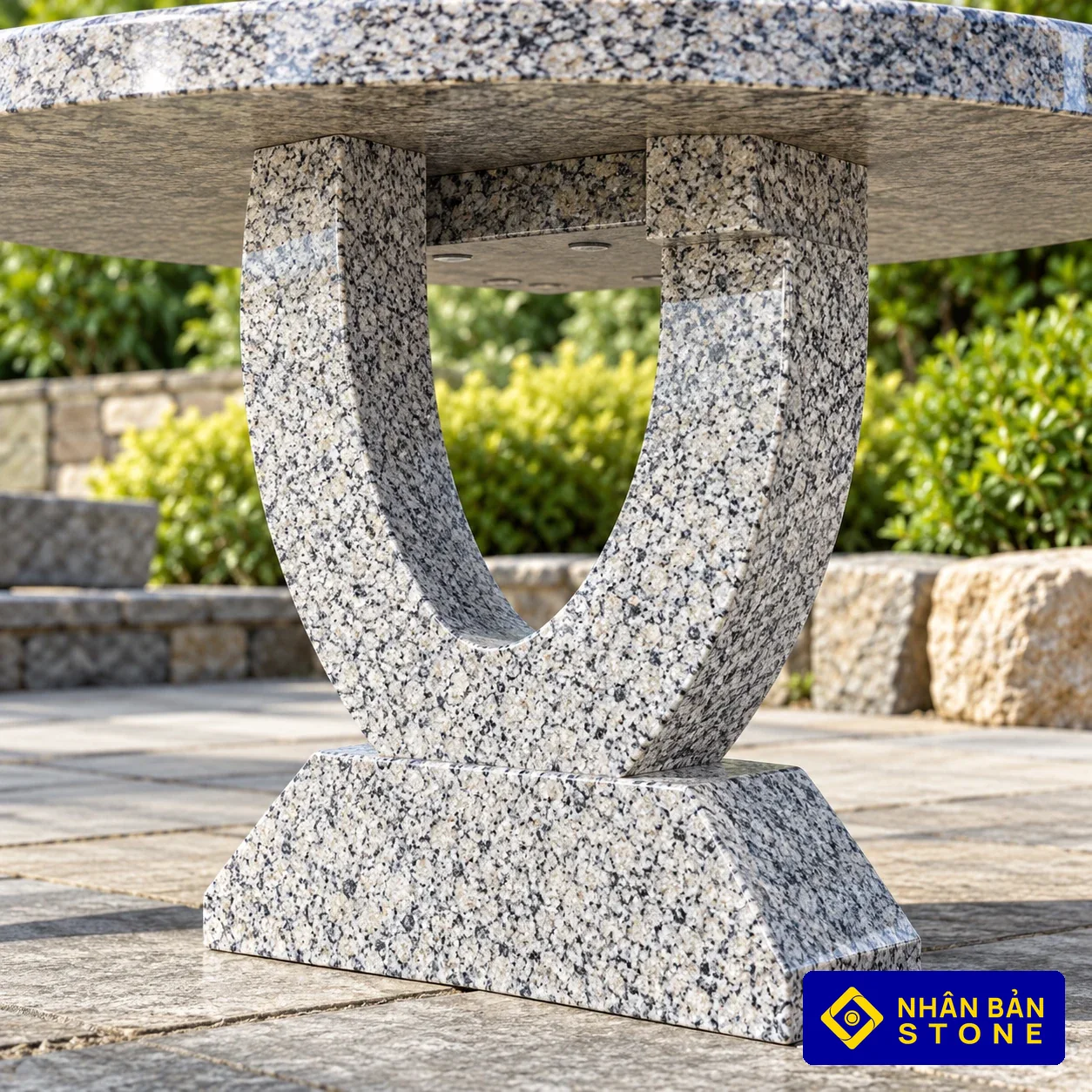
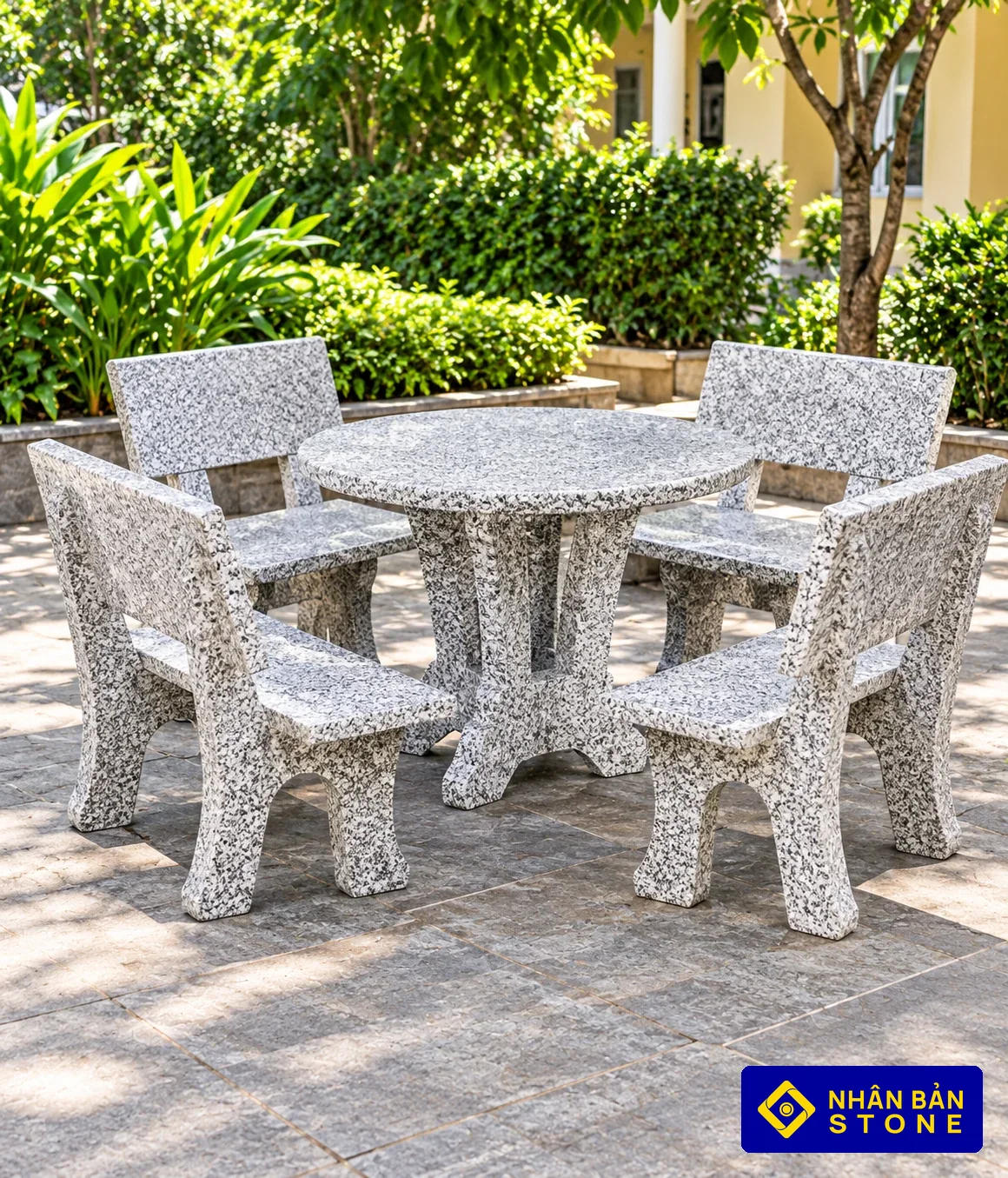
2. Natural Polished Patina That Matures Over Time
Daily use and gentle wiping with fresh water burnish the surface over time, enhancing its organic sheen. The quartz, feldspar, and biotite grains preserve their natural vividness without fading, transforming the garden set into an enduring natural sculpture that enriches outdoor living.
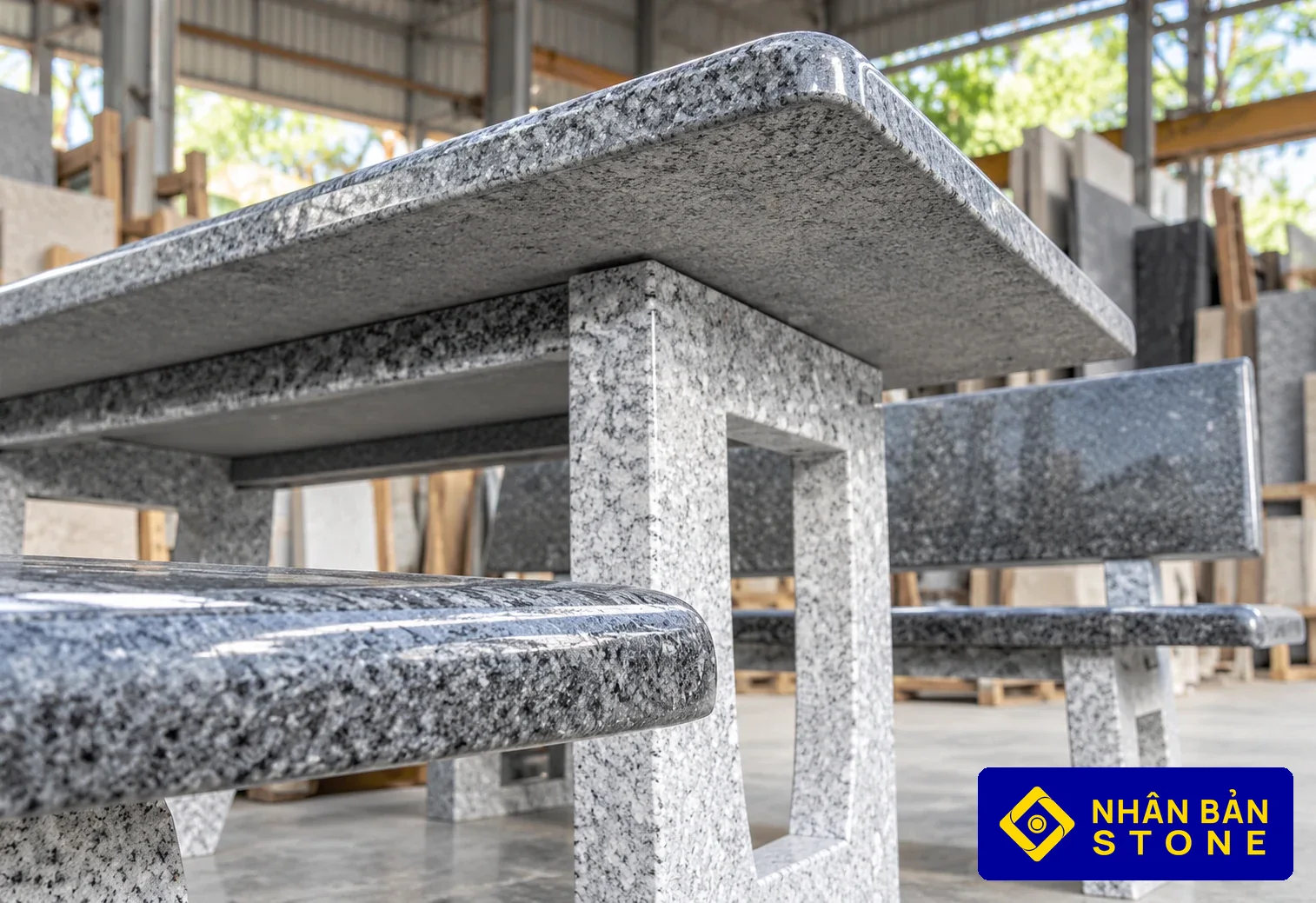
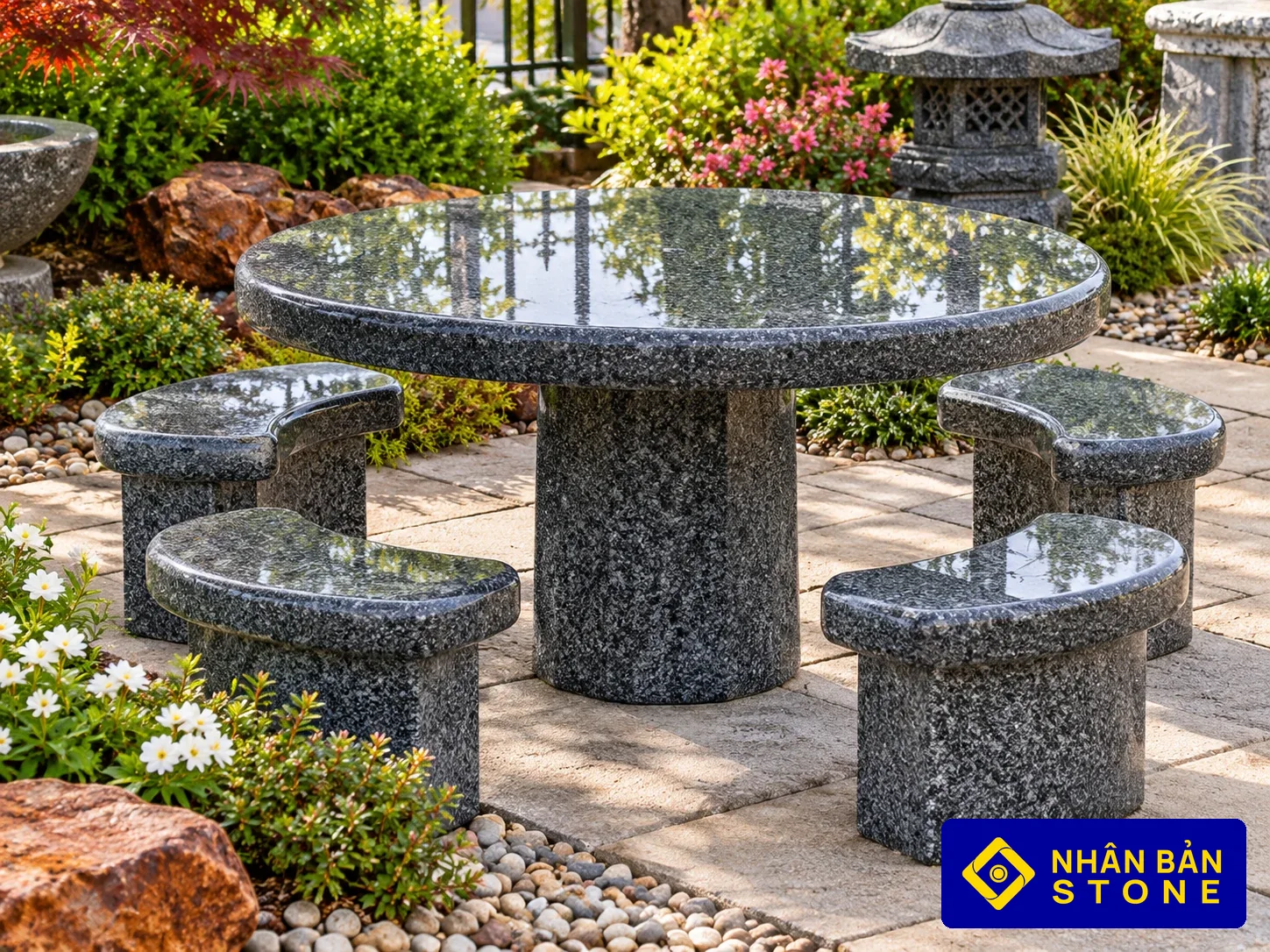
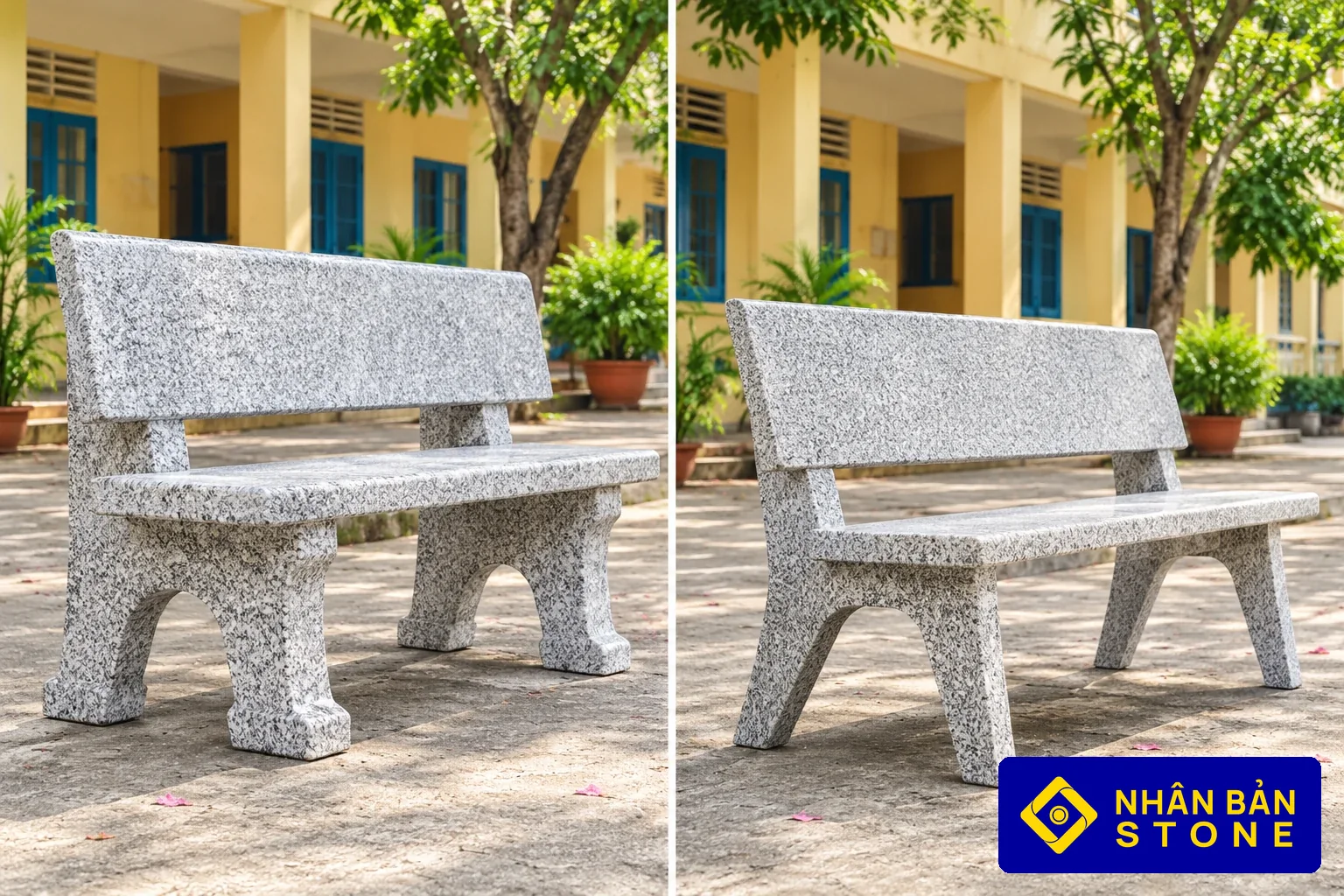
4. Quick Cleaning and Practical Moss Prevention
Unlike outdoor timber that demands annual staining or metal that requires periodic rust scraping, granite requires less frequent refinishing over its lifespan. You can also refer to our guide on “Should You Use Granite? Performance and Cost Factors” to compare technical suitability for your installation.
Review the slab under lighting similar to the intended space, and record the vein direction, colour range, and acceptable variation between adjacent pieces.
For outdoor, wet, heated, or food-preparation areas, select the finish, support detail, and care products for the actual exposure. Performance should not be inferred from the material name alone. You can also consult our technical reference on “Natural Stone Surface Finishes: Technical Guide” for comprehensive engineering specifications.
Checks Before Ordering
Measure the intended area and allow circulation space around the furniture. A suitable footprint supports comfortable use and gives installers enough room to move and position heavy components without damaging walls, planting, or adjacent finishes.
The supporting surface must be level, stable, and designed for the expected load. Support points, joints, and any anchoring method should be shown on the drawings; the weight of the stone alone is not evidence that every configuration will remain stable.
Review pieces that will sit next to one another. Natural stone can vary in tone, grain, and veining, so numbering and dry-layout photographs are useful before packing and again during installation.
Check seat edges and tabletop profiles by sight and touch, especially for homes with children or public spaces. Chips, sharp arrises, uneven joints, and rocking components should be resolved before handover.
For routine care, begin with clean water, a soft cloth, and a pH-neutral cleaner. Blot spills early, and use sealers or restoration products only when they are suitable for the specified stone and supported by the product instructions.
Price: Contact us