

A truly durable stone tabletop requires much more than an attractive raw slab. Most practical failures occur down the line: choosing a stone variety ill-suited to a family’s daily dining habits, chipped edge profiling, long spans deflecting due to inadequate support, or driving screws directly into the stone, which causes hairline fractures within months.
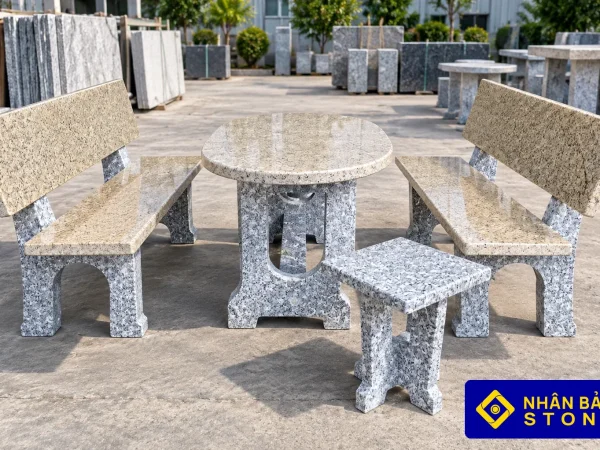
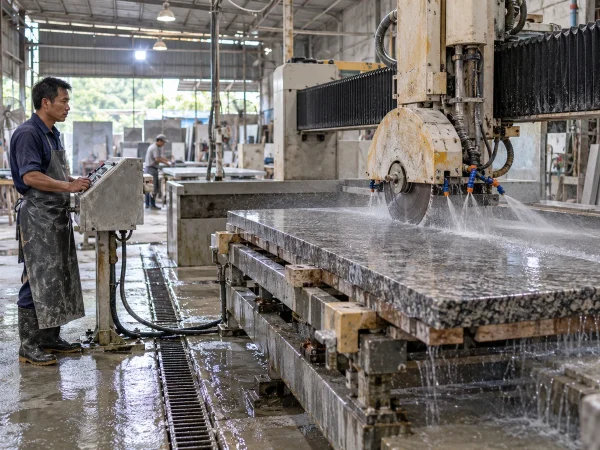
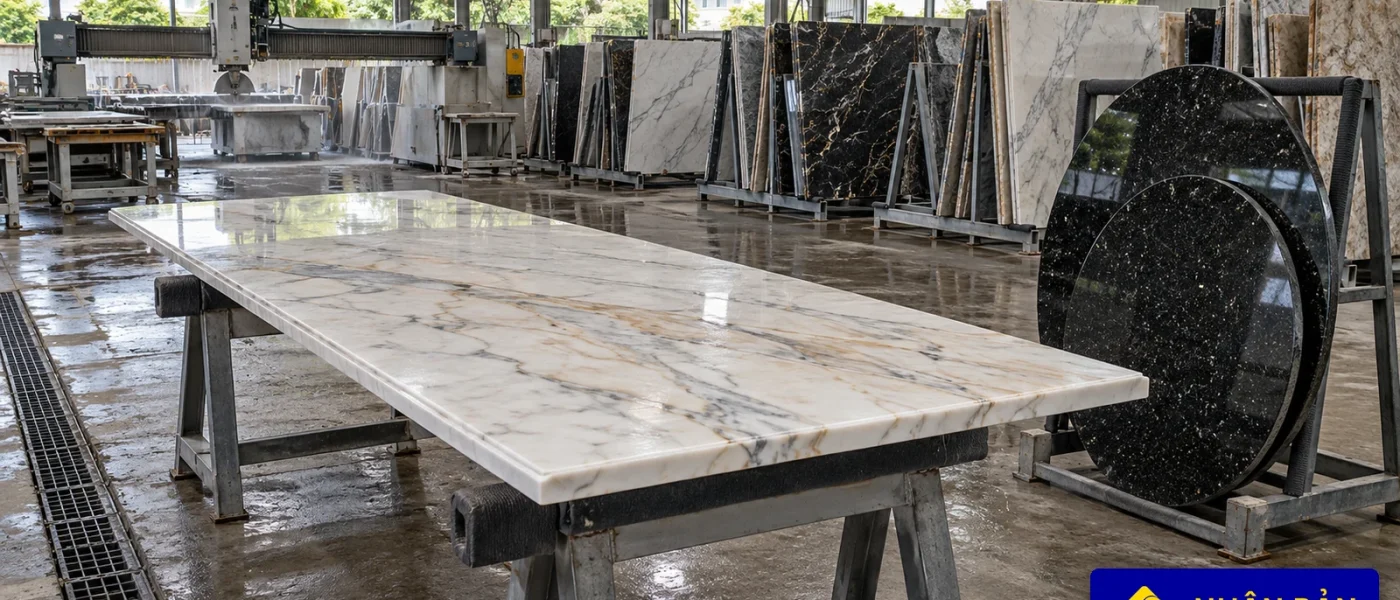
At the NHAN BAN STONE workshop in District 12, Ho Chi Minh City, we fabricate custom dining tables, coffee tables, kitchen island counters, and conference tabletops tailored to exact architectural drawings. Raw slabs are hand-selected at our stone slab warehouse, cut on precision CNC machinery per approved drawings, edge-finished, and securely crated at our facility. This guide highlights the critical technical decisions you should establish before placing an order to ensure longevity and an accurate quotation from day one.
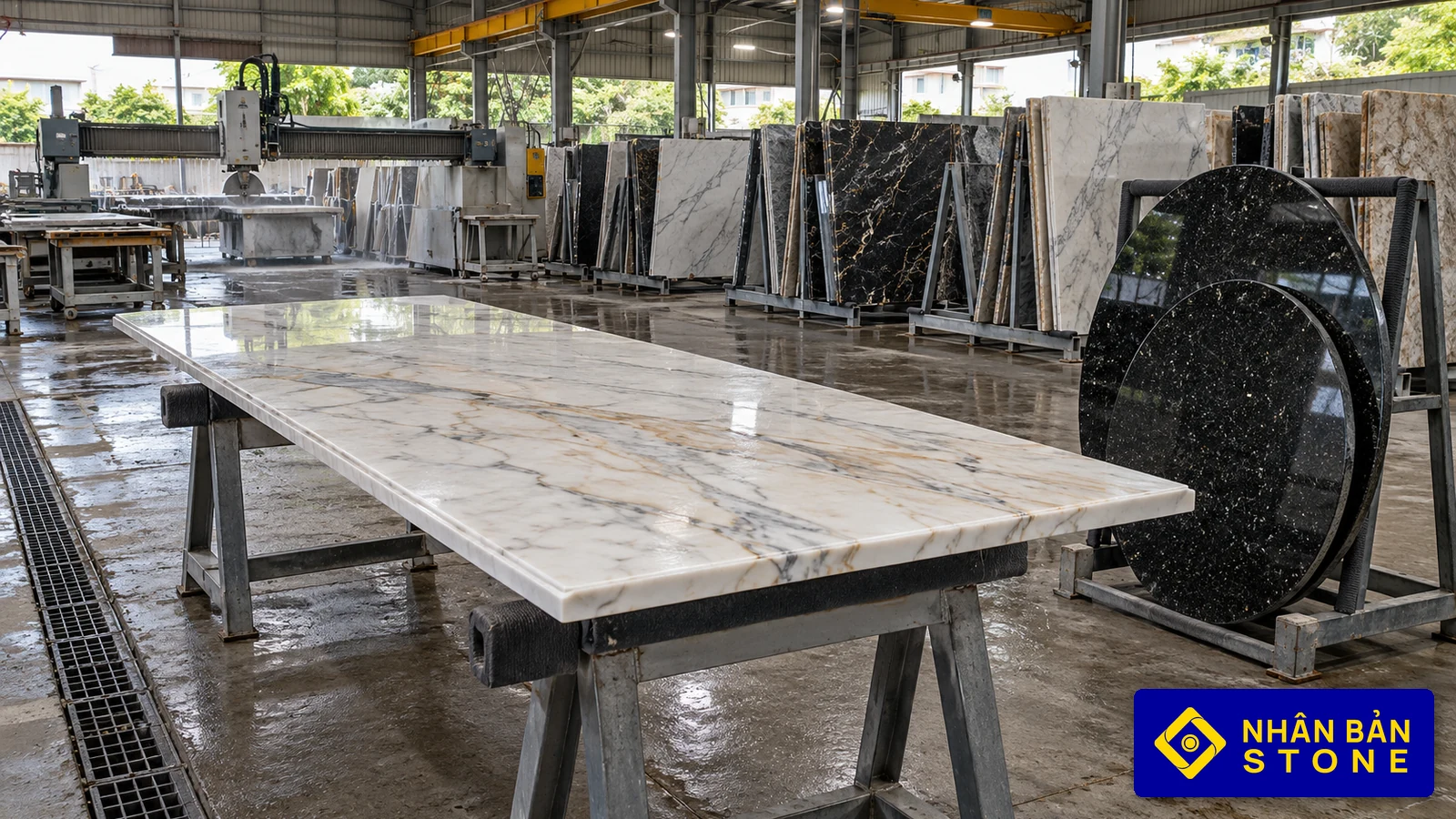
1. Four Questions to Clarify Before Ordering a Custom Stone Tabletop
The majority of stone tabletop issues stem from misaligned early decisions rather than sawing craftsmanship. Before choosing a color or vein pattern, clarify these four points:
- What is the tabletop’s daily function, and who uses it? A family dining table with young children, frequent hot pots, or tabletop grilling demands a vastly different material than a low-traffic formal living room coffee table.
- What are the dimensions and leg spacing? Extended spans, widely spaced pedestals, or pronounced overhangs require calculated slab thickness, perimeter mitered aprons, or concealed underside structural reinforcement.
- What level of maintenance are you willing to maintain? Natural marble is visually striking but demands immediate wiping when exposed to lemon juice, vinegar, or red wine. Granite and sintered stone are significantly more forgiving in daily residential use.
- Who manufactures the table base? If the base is built by an independent carpentry or metal fabrication shop, mounting positions must be locked in CAD drawings early so mechanical inserts and channels can be milled precisely at our workshop.
Answering these four questions allows our workshop to recommend the right stone grade and provide a reliable quote right from the first consultation.
2. Selecting Stone by Daily Lifestyle, Not Just Surface Veining
Each stone category has distinctive physical characteristics. The table below compares them in practical residential settings:
| Stone Category | Core Strengths | Key Considerations | Best Suited For |
|---|---|---|---|
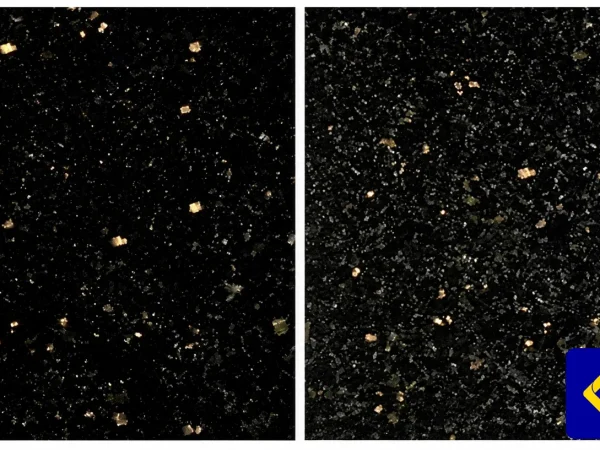
| Natural Granite | Highly durable, scratch-resistant, withstands heavy impacts | Granular mineral texture; limited flowing “cloud” veins | High-traffic family dining tables, outdoor & patio tables |
| Natural Marble | Soft fluid veining, luxurious elegance, unique slab identity | Acid-sensitive, softer surface than granite | Coffee tables, reception tables, formal dining with minimal tabletop cooking |
| Sintered Stone | Ultra-low porosity, stain-proof, heat-tolerant, diverse vein prints | Thin edge profiles require skilled chamfering to prevent chipping | Modern minimalist dining tables, curved organic coffee tops |
| Engineered Quartz | Consistent color patterns, seamless interior matching | Requires heat trivets for hot cookware | Apartment dining tables, residential workstations |
Our physical slab inventory evolves continuously with each imported lot. You are welcome to explore our natural stone and engineered stone portfolios, or schedule an on-site visit to inspect slabs in person before finalizing.
Workshop Insight: If your family frequently enjoys hot pot, grilled meals at the table, or has children who draw with markers, prioritize natural granite or sintered stone. Natural marble remains an exquisite choice for dining, provided you accept that natural patina and subtle signs of use may develop over years of family gatherings.
3. Slab Thickness, Mitered Edge Aprons & Underside Reinforcement
Standard raw slabs are typically quarried and calibrated to 18 mm – 20 mm. For compact coffee tables or tables with continuous perimeter base frames, this standard thickness is structurally sufficient. For long dining spans, cantilevers, or widely spaced pedestal legs, our workshop integrates tailored structural solutions:
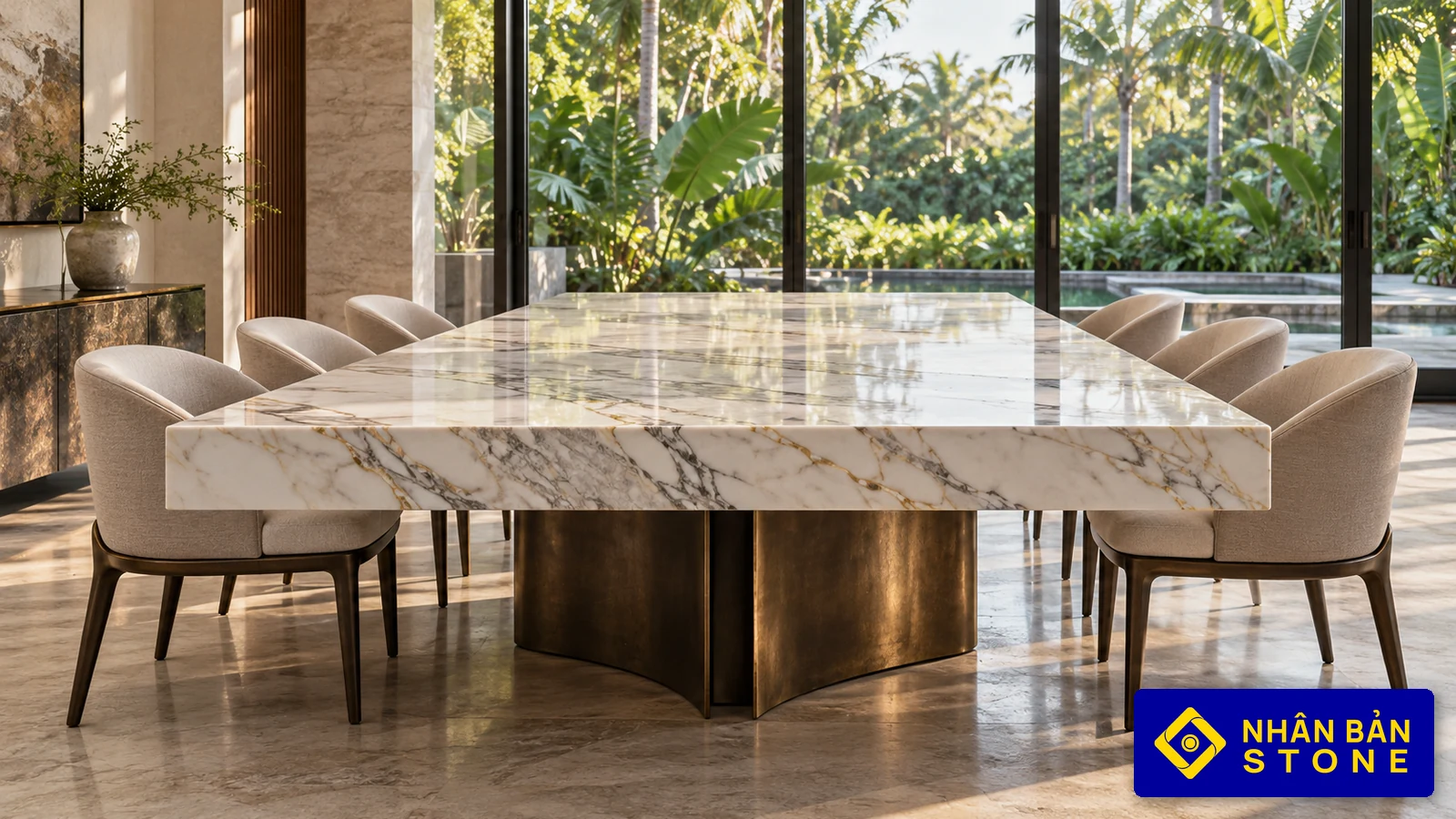
- Mitered Drop Edge Apron (40 mm – 50 mm Visible Edge): Two stone edges are sawn at a 45-degree bevel and bonded with color-matched structural epoxy, allowing continuous vein flow from the top surface down over the edge face. This profile enhances visual mass and increases edge rigidity.
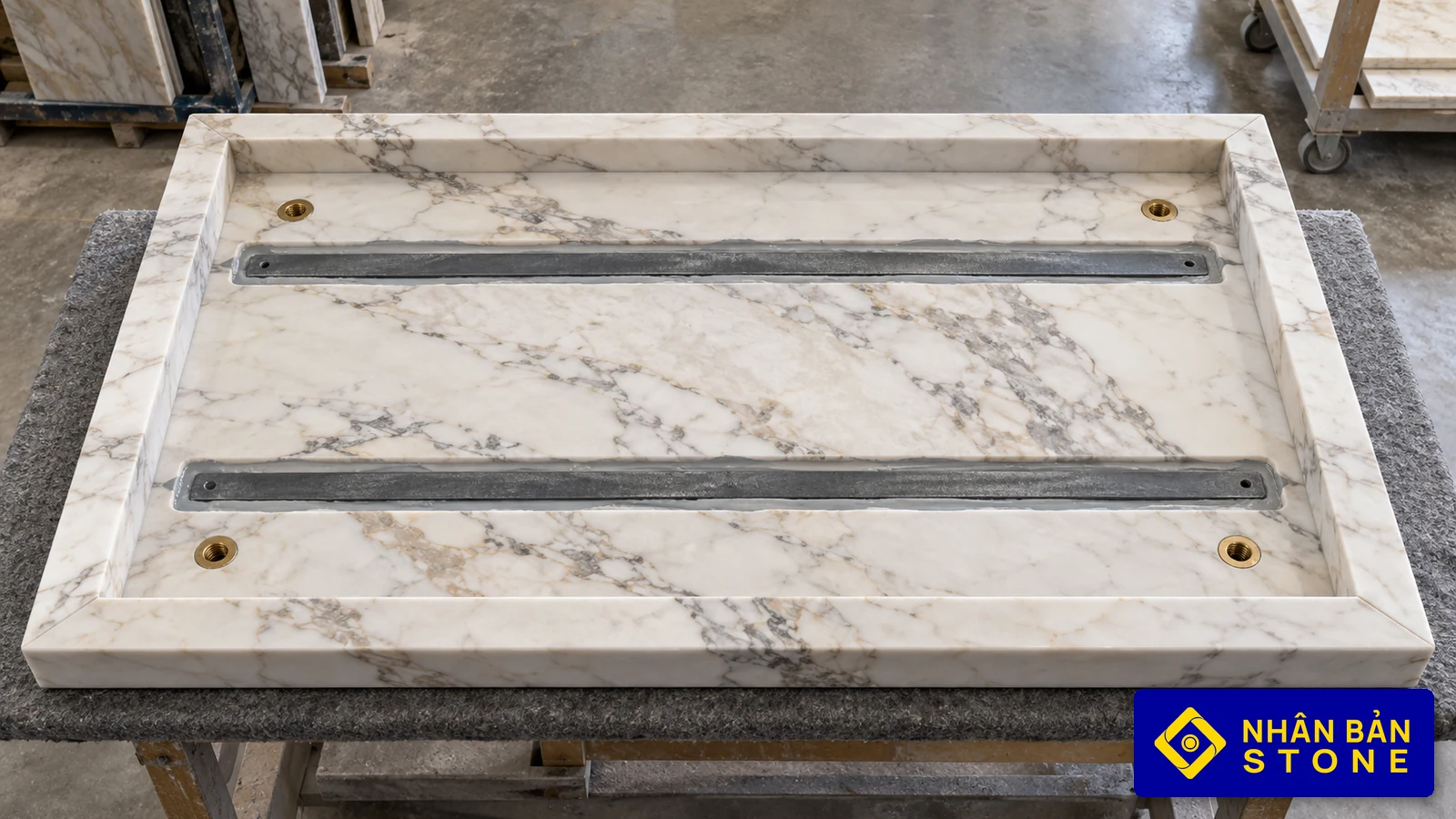
- Concealed Underside Reinforcement: When engineering spans require it, CNC operators mill shallow channels along the underside to bed flat steel reinforcement bars in structural stone adhesive.
- No Direct Screwing into Stone: Mounting connection points are drilled and fitted with flush brass threaded inserts. This allows legs and metal subframes to be bolted and unbolted cleanly without exerting destructive stress on the stone.
4. Edge Profiles & Geometric Shapes: Defining the Table’s Character
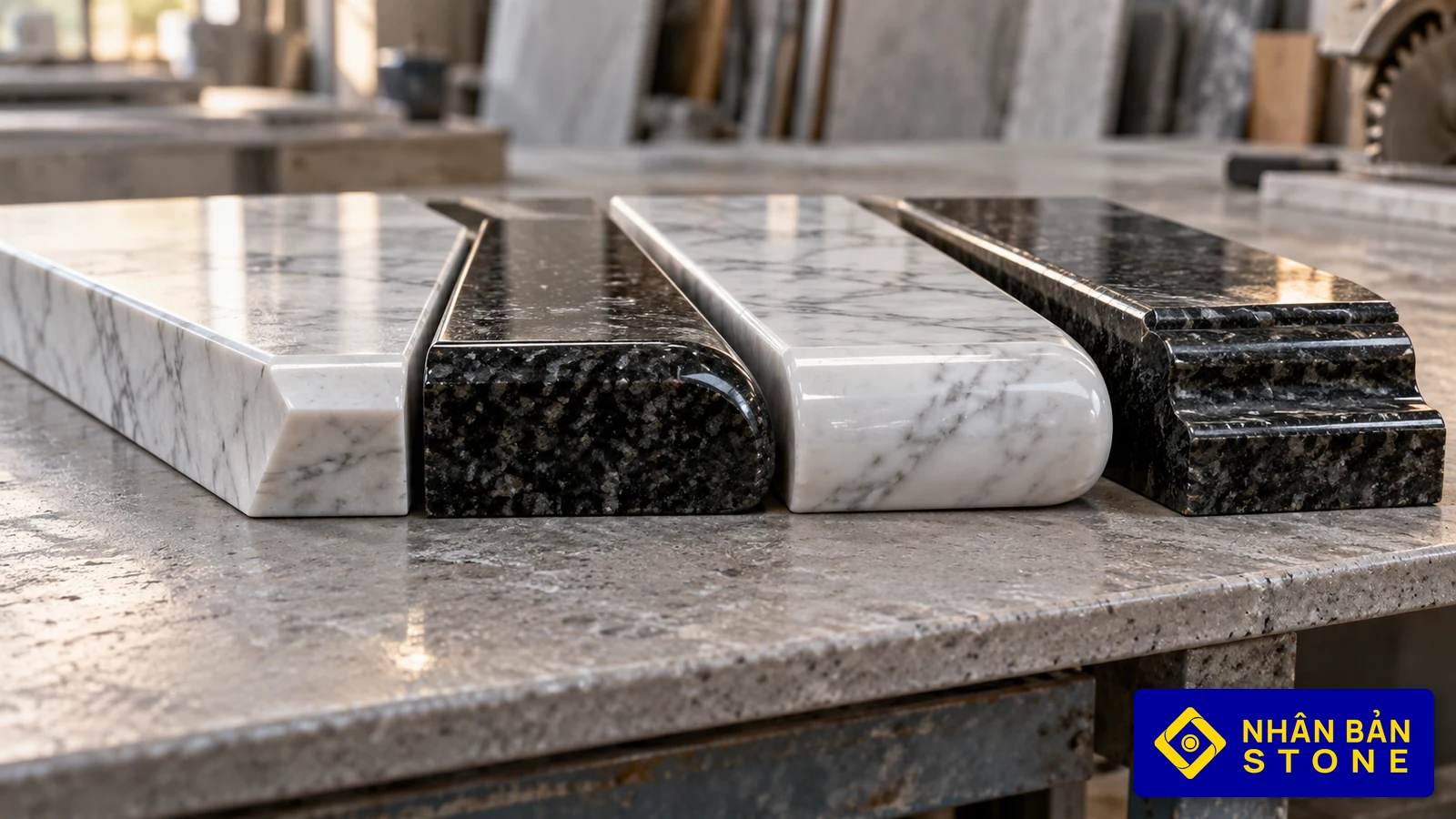
On the exact same slab, different edge profiles produce markedly different architectural impressions:
- Micro-Bevel (Small 45° Chamfer): Clean, crisp, and contemporary; ideal for modern minimalist dining tables.
- Half Bullnose & Full Bullnose: Smooth, rounded, reducing sharp-edge contact; particularly recommended for households with young children.
- Classic Ogee: Elegant S-curve profile; best suited for neoclassical and heritage luxury dining spaces.
- Live Edge / Chiseled Edge: Retains the raw, fractured organic stone face; favored for wabi-sabi or industrial aesthetics.
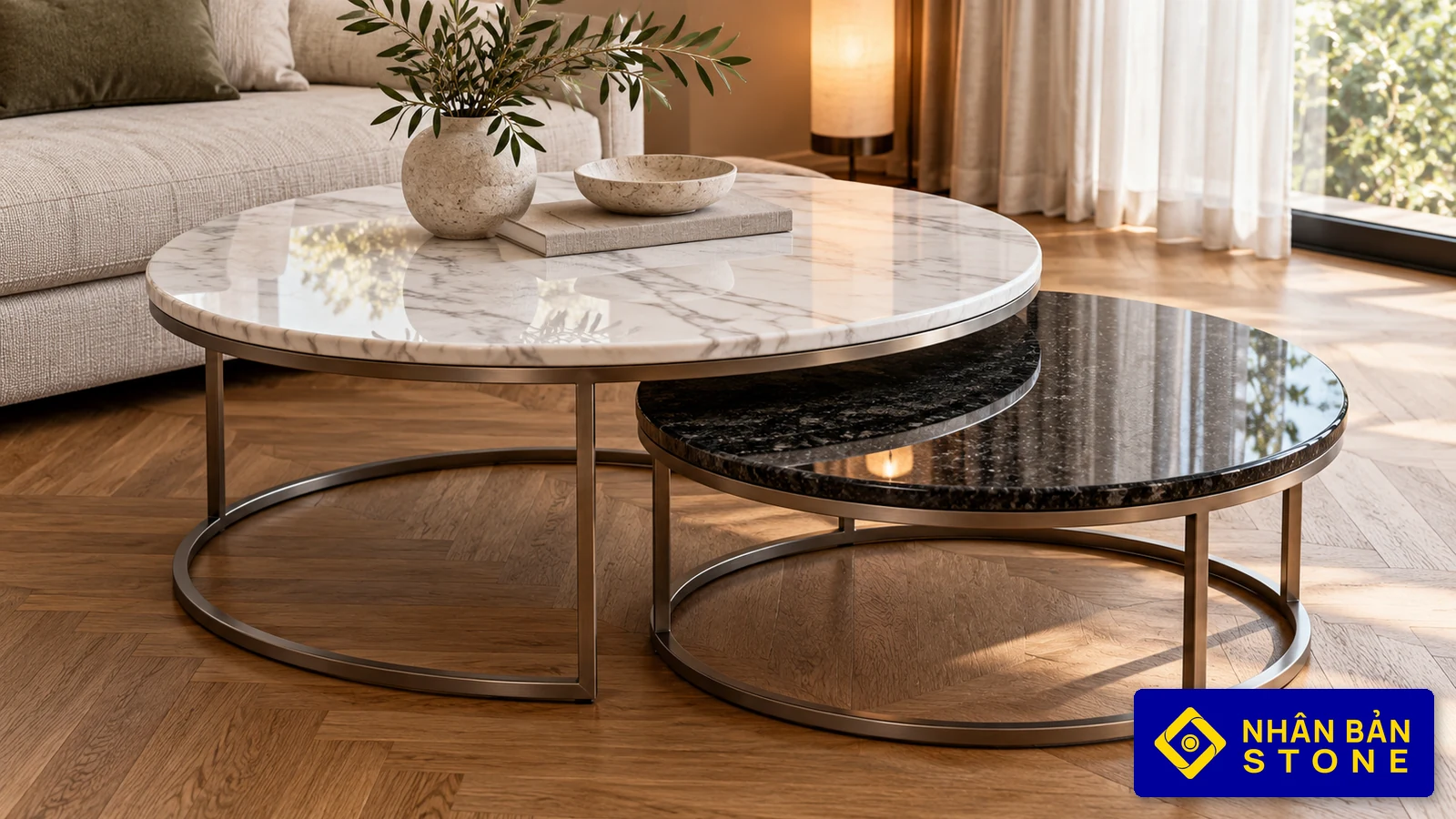
For coffee tables, custom geometries are increasingly popular: nested dual round tables (differing heights), organic pebble or teardrop silhouettes, and rounded racetrack ovals. These contours are fabricated from approved CAD files, with the cutting method and edge finishing selected for the stone and shape.
5. Seamless Collaboration with Carpentry, Metal Shops & Interior Contractors
Many luxury stone tabletops pair with bespoke timber or metal bases fabricated by specialized trade partners. To help the tabletop fit the agreed base, NHAN BAN STONE operates on three clear collaboration principles:
- Working from .dwg / .dxf CAD Files: Base mounting plates, insert centerlines, and wire-management grommet cutouts (for conference tables) are imported directly from approved shop drawings.
- Itemized Quotations: Slabs per square meter, CNC sawing, linear-meter edge profiling, 45-degree mitered aprons, underside reinforcing, and surface sealing are quoted transparently for easy inclusion in general contractor estimates.
- Clear Scope of Handover: Workshop fabrication, factory dry-fitting, and secure crating are our standard baseline. Site delivery and installation coordination are confirmed separately when specified in quotations or project contracts.
6. Workshop Fabrication Workflow at NHAN BAN STONE
- Step 1 – Requirement Intake: Review architectural drawings, reference photos, or base frame specifications. Our engineers advise on stone feasibility, slab thickness, and edge profiles.
- Step 2 – Slab Inspection & Digital Vein Nesting: Inspect full slabs at our District 12 facility or via high-definition video. For statement dining tables, cutting templates are digitally overlaid onto slab photographs so clients can approve exact vein positioning before cutting.
- Step 3 – CNC Machining & Detail Fabrication: Precision perimeter sawing, edge profiling, 45-degree miter joints, underside reinforcement grooving, and brass insert installation.
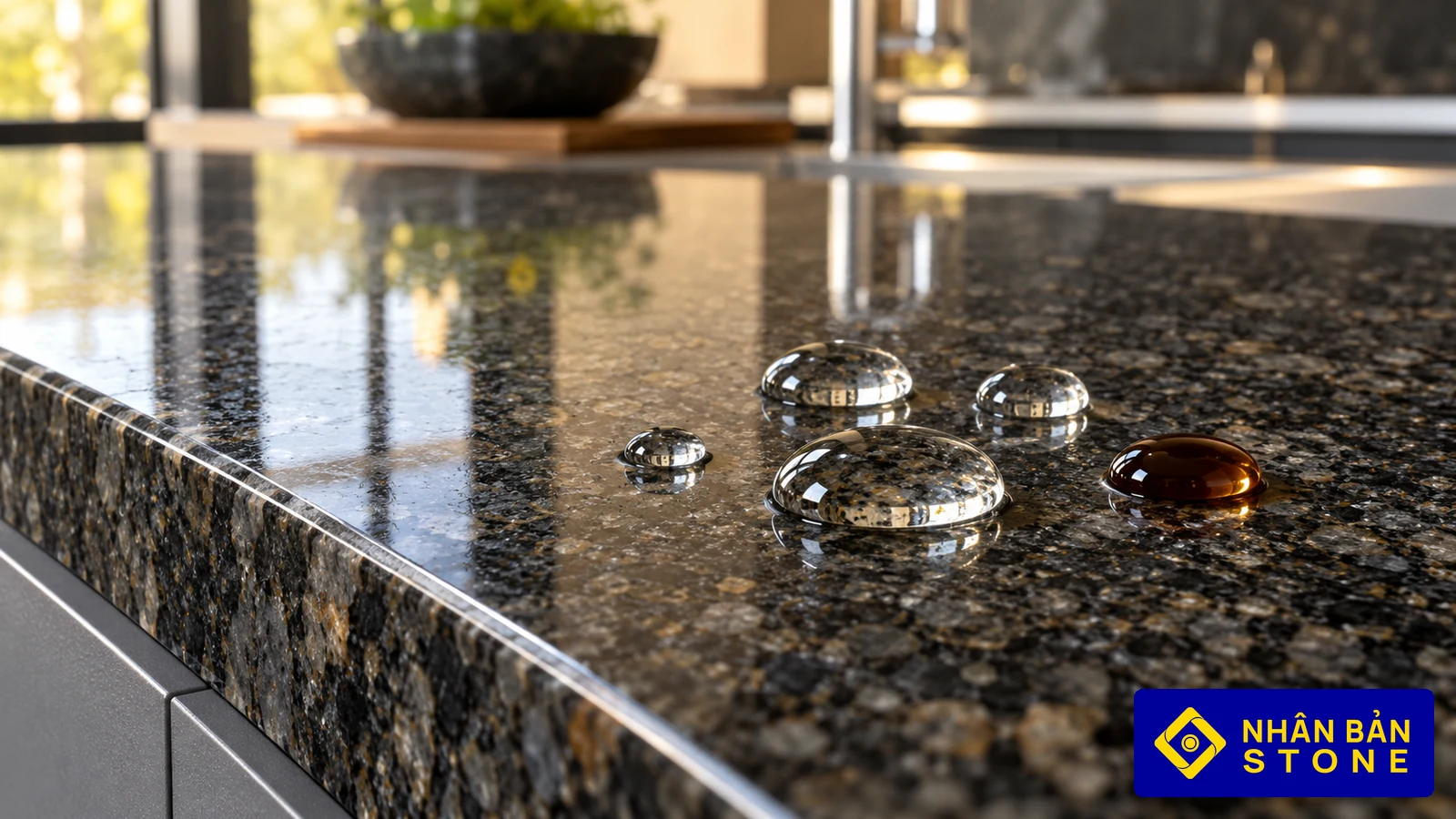
- Step 4 – Surface Finishing & Protective Treatment: Hand-honing and polishing edges to match factory slab sheen, followed by deep-penetrating hydrophobic and oleophobic sealing tailored to the specific stone porosity.
- Step 5 – Inspection & Secure Crating: Verification of squareness, diagonal tolerance, and surface flatness; multi-layer foam corner protection, stretch wrap, and vertical pallet securing.
Turnaround schedules depend on stone availability, volume, and geometric complexity, with milestones locked in upon quotation approval.
7. What Information to Provide for a Fast, Accurate Quote
To receive an accurate, itemized quotation on first contact, please share the following via Zalo or Email:
- Length × width dimensions (or CAD .dwg/.dxf drawings) and intended tabletop geometry (rectangular, round, oval, organic).
- Preferred stone variety or sample vein reference photo.
- Desired visible edge thickness (standard 20 mm single edge vs. 40 mm – 50 mm mitered apron) and edge profile type.
- Base frame type, leg attachment plate locations, or shop drawings (if already finalized).
- Quantity and delivery destination.
8. Simple Daily Care for Long-Lasting Stone Tabletops
- Wipe down surfaces with a soft damp microfiber cloth and mild, pH-neutral soap solution.
- For natural marble, wipe away acidic spills (lemon juice, vinegar, wine, coffee) immediately.
- Always use trivets under hot cookware and coasters beneath glasses; use cutting boards rather than slicing directly on stone.
- Avoid harsh toilet cleaners, strong acids, abrasive scouring pads, and steel wool.
9. Frequently Asked Questions (FAQ)
9.1. What is the recommended thickness for a stone dining table?
Standard calibrated slabs are 18 mm – 20 mm thick. For dining tables, many clients select a 45-degree mitered drop edge to achieve a 40 mm – 50 mm visible perimeter block, which enhances visual weight and rim strength. Tables with long spans or minimal subframes receive concealed underside reinforcement.
9.2. Should I choose marble or granite for my dining table?
If low maintenance and everyday resilience are your top priorities: choose granite or sintered stone. If unique, flowing natural veining is your primary aesthetic goal and you are comfortable with mindful daily wiping: natural marble is unmatched.
9.3. Does your workshop fabricate table bases?
Our workshop specializes strictly in stone engineering and CNC fabrication. For timber or metal table bases, we collaborate directly with your carpentry or metalwork contractor, milling precise mounting holes and inserts based on their approved CAD drawings.
9.4. Can I inspect the actual slab before fabrication begins?
Yes. You can schedule an appointment to view full slabs in person at our District 12 warehouse, or receive high-resolution photos and video footage of available lots before approving the cutting layout.
9.5. Does NHAN BAN STONE handle on-site delivery and installation?
Precision workshop fabrication, quality inspection, and crating are our default scope. Project delivery and installation coordination can be arranged and confirmed as distinct items within your quotation or formal contract.
Contact NHAN BAN STONE Fabrication Workshop
- 📲 Hotline / Zalo: 0909 221 083 (Monday – Saturday, 07:00 – 17:00)
- 🏢 Warehouse & Workshop: 1765 National Highway 1A, Tan Thoi Hiep Ward, District 12, Ho Chi Minh City, Vietnam
- 🌐 Explore More: Custom Stone Kitchen Countertop Fabrication · Outdoor Granite Furniture · Architectural Surface Finishes