Engineered Stone vs. Natural Marble: Chemical Matrix, Acid Vulnerability and Interior Selection

A deep scientific comparison of Engineered Composite Stone versus Natural Calcite Marble: chemical porosity, citric acid etching, stain resistance, and optimal zone allocation.

Share this article:

Contact our Hotline for direct consultation & factory quotation.

Published on

When considering engineered stone vs natural marble, compare the actual surface, intended application, and installation requirements instead of relying on the trade name alone. This guide focuses on checks that can be completed before material approval.

Natural stone varies from slab to slab and batch to batch. Water absorption, strength, thickness, and load capacity should only be quoted from documentation for the specified product, alongside the approved sample and project drawings.

1. Fundamental Divergence in Chemical Matrix and Porosity

The divergent operational performance of these two materials stems directly from their chemical mineralogy: You can also refer to our guide on “Artificial Moka White Stone: Subtle Veining, Thermoforming Curves and Luxury Bathrooms” to compare technical suitability for your installation.

    2. Acid Etching Vulnerability vs. Routine Stain Repellence

    This compositional divergence dictates contrasting behaviors under daily residential exposure:

    • Acid Reactivity: Calcite ($CaCO_3$) within natural marble reacts chemically with common household acids, including lemon juice, culinary vinegar, carbonated beverages, and wine. Unchecked acidic spills etch polished marble surfaces, leaving long-term dull spots. Conversely, engineered quartz remains chemically inert against household food acids.

    3. Architectural Zone Allocation Guidelines

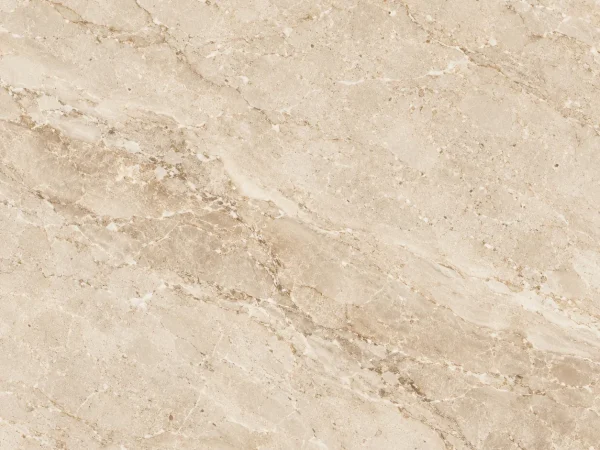
    1. Optimum Zones for Natural Marble: Living room feature walls, grand entrance foyer flooring, fireplace mantels, master bedroom headboards, and executive elevator portals. These dry, low-abrasion vertical and horizontal surfaces allow unrepeatable natural marble veining to serve as fine landscape art.
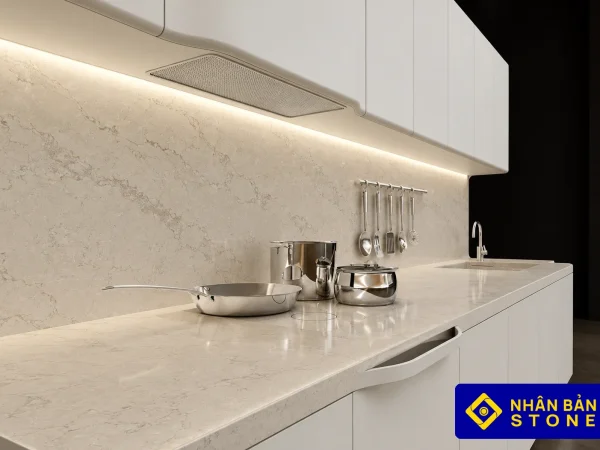
    2. Optimum Zones for Engineered Stone: Kitchen cooktop counters, active preparation islands, wet bars, and bathroom vanity tops. These high-contact wet areas demand chemical inertness, stain resistance, and routine hygiene.

    4. Professional Conservation and Crystallization for Natural Marble

    • Immediate Liquid Blotting: Should wine, soft drinks, or acidic juices spill upon polished marble, instantly blot liquids dry with clean towels rather than scrubbing, preventing acidic fluid from driving deeper into open capillary pores.

    Points to confirm for engineered stone

    “Engineered stone” covers products with different mineral content and binders. Limits for heat, ultraviolet exposure, chemicals, thermoforming, and repair must therefore come from the documentation for the exact brand and product line. You can also refer to our guide on “What Is Engineered Stone? Interior Applications and Limits” to compare technical suitability for your installation.
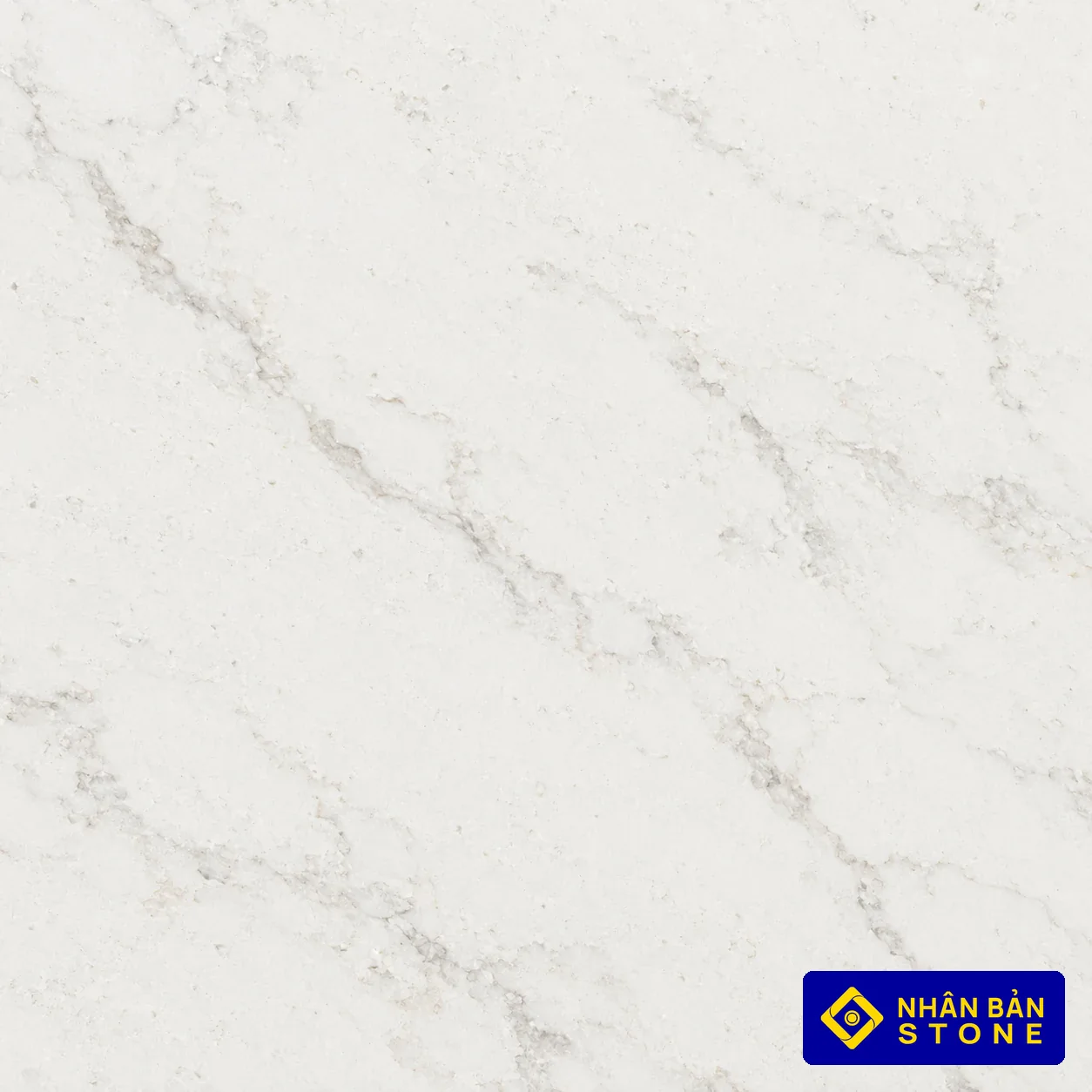
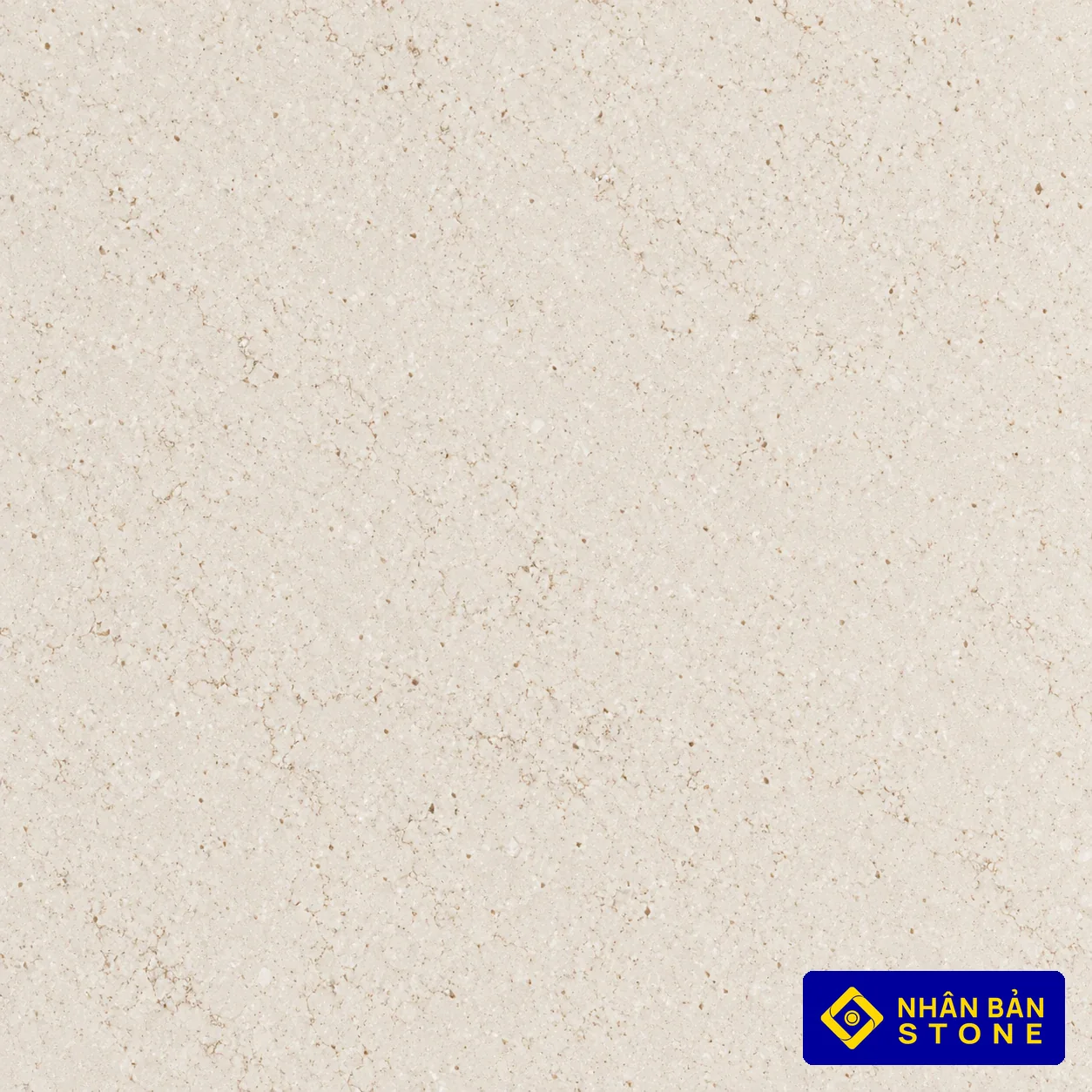
    trang duong nhan tao
    trang moka nhan tao

    Review both a small sample and a larger representation because particles, veining, and seams can read differently at room scale. Agree on vein direction and joint placement before cutting.

    For worktops and vanities, check cutout radii, distance from heat sources, support around sinks, and the recommended adhesive. Cutting boards and trivets reduce avoidable wear and thermal stress. You can also consult our technical reference on “Engineered Quartz Patterns and Surface Applications” for comprehensive engineering specifications.

    Clean with a soft cloth, warm water, and a mild detergent, and test new products in an inconspicuous area. Avoid strong chemicals or solvents unless the product instructions permit them, and wipe spills before they dry.

    Price: Contact us

    Technical Consultation & Quotation

    Mr. Hải
    Mr. Hải Consultant
    Mr. Hoà
    Mr. Hoà Consultant
    Mr. Tín
    Mr. Tín Consultant

    More from Similar Topics

    Heated discussion: You might want to know

    FABRICATION & MATERIAL SPECIFICATIONS FAQ

    Frequently Asked Questions

    Verified details on workshop CNC fabrication, shop-drawing submission, and stone material parameters at NHAN BAN STONE.

    01 What stone fabrication specifications does NHAN BAN STONE provide for serviced apartments and residential projects in HCMC?

    NHAN BAN STONE supplies raw stone slabs and provides workshop-based precision fabrication according to approved technical drawings: bridge saw cutting, undermount/overmount sink cutouts, edge profiling, and 45-degree mitered joints for kitchen countertops, vanities, stairs, and thresholds. Customers or contractors provide itemized dimension drawings, and finished components are fabricated on laser bridge saws and CNC machinery for collection at our workshop (District 12) or curbside delivery. Our scope focuses strictly on factory fabrication; we do not provide on-site measurement, installation, or construction services.

    02 Which stone surface is recommended for rental property countertops balancing long-term durability and budget?

    For serviced apartments and rental units with frequent cooking, dense Natural Granite varieties (such as Indian Black, Black Galaxy, or Suoi Lau White) are commonly preferred for their surface hardness, thermal resistance against hot cookware, and stain resistance against household liquids. Natural stone exhibits inherent variation in veining and tonal shade across quarries; NHAN BAN STONE recommends inspecting current batch slab samples prior to finalizing fabrication orders.

    03 What specifications should customers prepare to receive an itemized fabrication quotation?

    To receive a precise estimate, please prepare: (1) Detailed dimension drawings or cutting schedules (length, width, thickness); (2) Required edge profiles (beveled, bullnose, mitered) and cutout locations; (3) Specified stone code or preferred aesthetic tone; (4) Total quantity and requested completion timeframe at the workshop.

    04 How are fabricated stone pieces treated and inspected prior to dispatch?

    Following precision cutting on infrared bridge saws and CNC machines, components are verified against drawing dimensional tolerances. Prior to dispatch, cut edges and faces receive surface sealing using dedicated penetrating sealers for natural stone. Sealer longevity depends on specific mineral characteristics and post-handover care (prolonged contact with harsh acidic cleaners should be avoided).

    05 Where is the warehouse located and how can customers inspect physical slabs?

    Slabs and sample batches can be inspected directly at the NHAN BAN STONE Warehouse & Workshop: 1765 National Highway 1A, Tan Thoi Hiep Ward, District 12, Ho Chi Minh City (Hours: Monday – Saturday, 07:00 – 17:00). Alternatively, technical drawings can be sent via WhatsApp/Zalo (+84 909 929 904) for material suitability advice.