

Overview and practical value
Engineered quartz is a manufactured composite made from mineral aggregates, polymer binders and pigments in proportions defined by the manufacturer. Water absorption, stain, heat and chemical performance should be checked in the datasheet for the selected product.
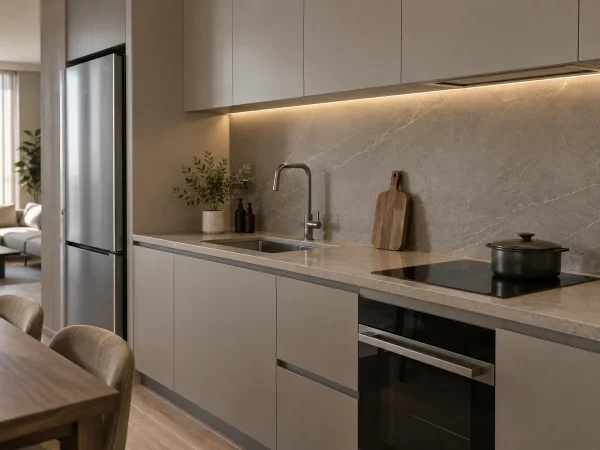
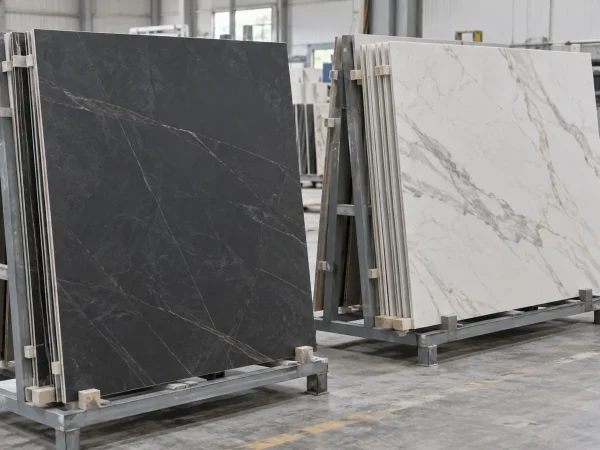
For architects, contractors, and developers, an appropriate selection should be assessed well beyond the reference photograph. The slab must suit the architectural scale, service conditions, panelization layout, and fabrication budget. A small physical sample helps evaluate color; full-slab photography and layout drawings help assess vein movement across adjacent surfaces.
Before selection, review full-slab imagery and physical samples under the lighting conditions relevant to the project.
Reading color and veining
Examine the engineered quartz surface at three distances: close up to verify quartz aggregate density and matrix uniformity; mid-range to evaluate vein dispersion; from afar to ensure color consistency across slabs within the same production batch.
What to confirm before ordering
- Confirm the exact trade name, material classification, and batch lot.
- Review the full slab, physical sample, and planned cutting layouts.
- Approve dimensions, thickness, surface finish, edge profiles, cutouts, and tolerances per shop drawings.
- Mark sensitive zones and key veining features before fabrication begins.
- Confirm edge details, cutouts, joint locations and the agreed fabrication information before work begins.
Applications to consider
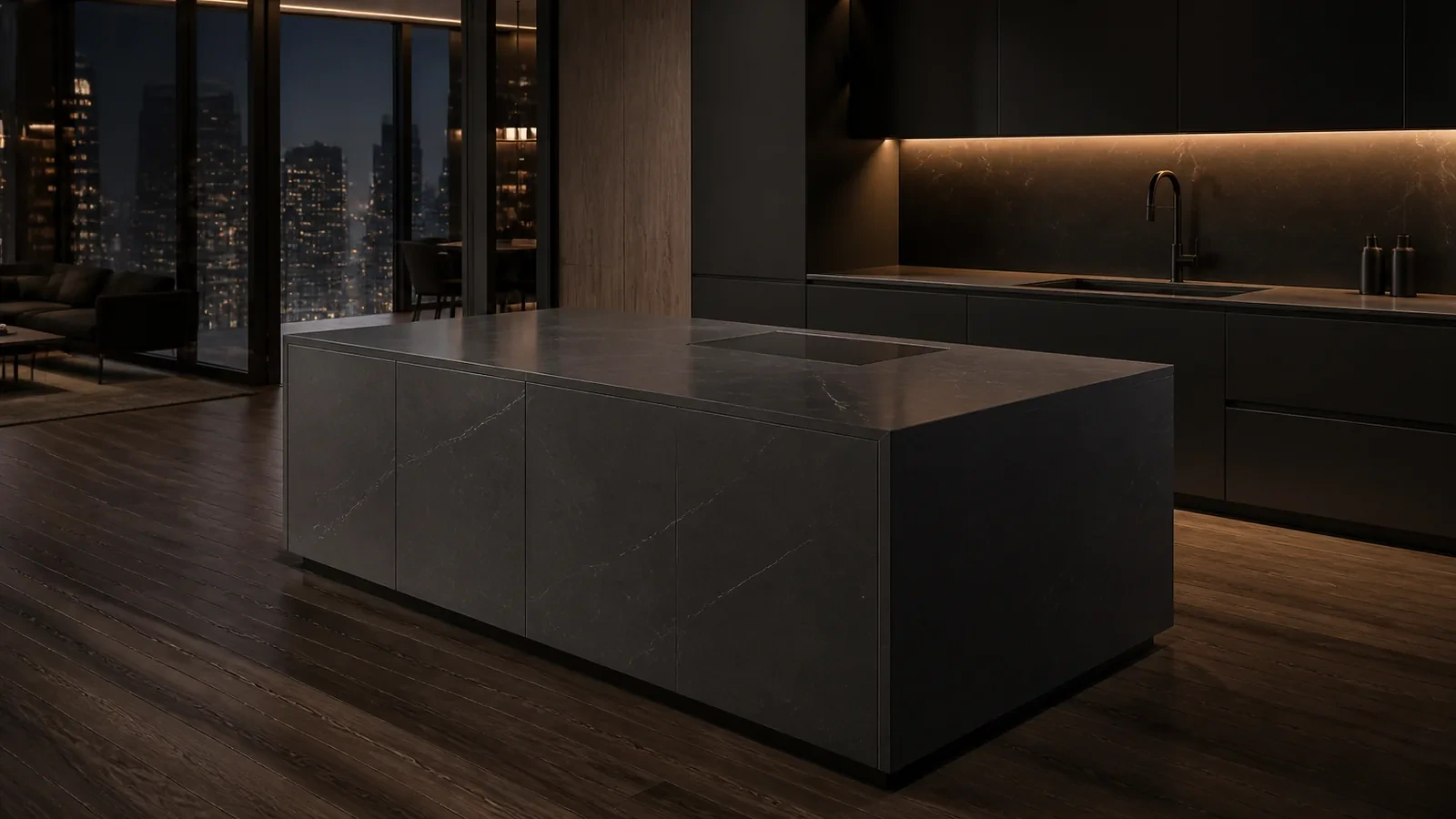
Common application directions include worktops and kitchen islands, vanities and service counters and interior surfaces needing relatively consistent color. Ultimate suitability depends on the specific material grade, substrate framing, structural loads, environmental exposure, and manufacturer or engineering guidelines.
Reference material gallery







Technical and care notes
Engineered quartz surfaces combine quartz aggregates with polymer resin binders. Water absorption and stain resistance should be checked in the datasheet for the selected product; because thermal limits can vary by formulation, use heat trivets and follow the manufacturer’s care guidance.
Clean with warm water, a soft cloth, and pH-neutral cleaners. Do not use hydrofluoric acid, highly alkaline cleaners or industrial paint strippers unless the product documentation expressly allows them. See the Caesarstone quartz care guidance for general reference; it does not replace the selected product’s datasheet.
Discuss stone options for your project
NHAN BAN STONE can help compare the design intent with available material, select blocks or slabs, fabricate in the workshop, inspect, pack and hand over within the agreed scope. Contact us by phone, Zalo or email, or open directions for an in-person discussion.