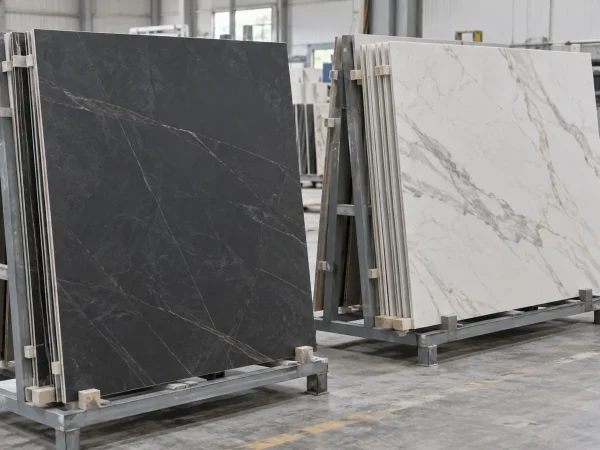


Compare to decide, not to rank universally
Granite, marble, quartzite, engineered quartz, and sintered stone should not be reduced to one score and assigned a universal winner. Each group has different origins, variation, product formats, care guidance, and technical documentation.
A useful comparison starts with the location, the most important criteria, the acceptable limits, and the evidence that needs to be reviewed. A material that suits a kitchen worktop may not suit a wet floor, a large wall, or an exterior application.
How five material groups differ
- Granite: natural stone with variation in background, grain, and veining; review the actual slab or sample, finish, and intended exposure.
- Marble: natural stone with varied veining and background; acid sensitivity, protection, and care depend on the stone and finish.
- Natural quartzite: not the same as engineered quartz; name, image, and product data must be verified so the groups are not confused.
- Engineered quartz: an industrial product with a specific formula and code; color, heat limits, cleaning, and warranty follow the manufacturer’s documentation.
- Sintered stone: an industrial material group with product-specific processes; format, edges, cutouts, handling, and application need to be checked for the exact code.
These descriptions are starting points for questions, not a conclusion that all products in a group perform in the same way.
Criteria to place side by side
| Criterion | Comparison question | Evidence to review |
|---|---|---|
| Visual variation | Is consistency required, or is natural movement preferred? What range is acceptable between slabs? | Physical sample, full-slab images, approval range, and layout |
| Exposure | Will the surface contact heat, water, acids, colored liquids, grit, or UV? | Exact product data, manufacturer guidance, and design requirements |
| Fabrication | What should be confirmed for size, thickness, edges, cutouts, joints, lifting, and support? | Drawings, material documentation, and responsible-party confirmation |
| Care | What cleaning and protection routine can the operator actually maintain? | Care guidance for the selected material and actual conditions |
| Budget | Does the comparison include slab, fabrication, accessories, packing, delivery, and care? | A versioned scope and quotation |
This table prevents a single attribute from deciding the comparison. Do not use a general number for hardness, stain resistance, heat, or service life without documentation for the exact product and application.
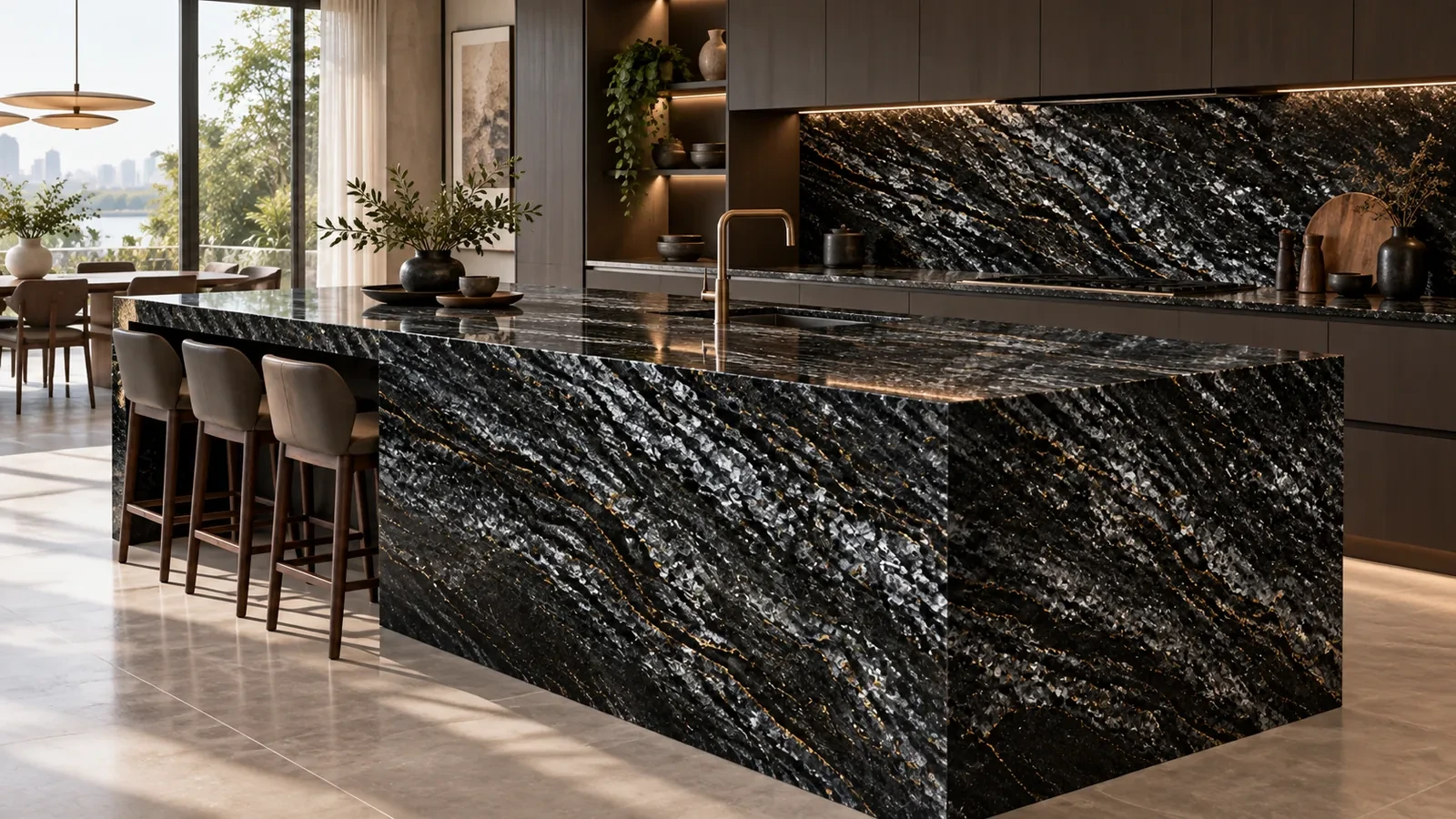
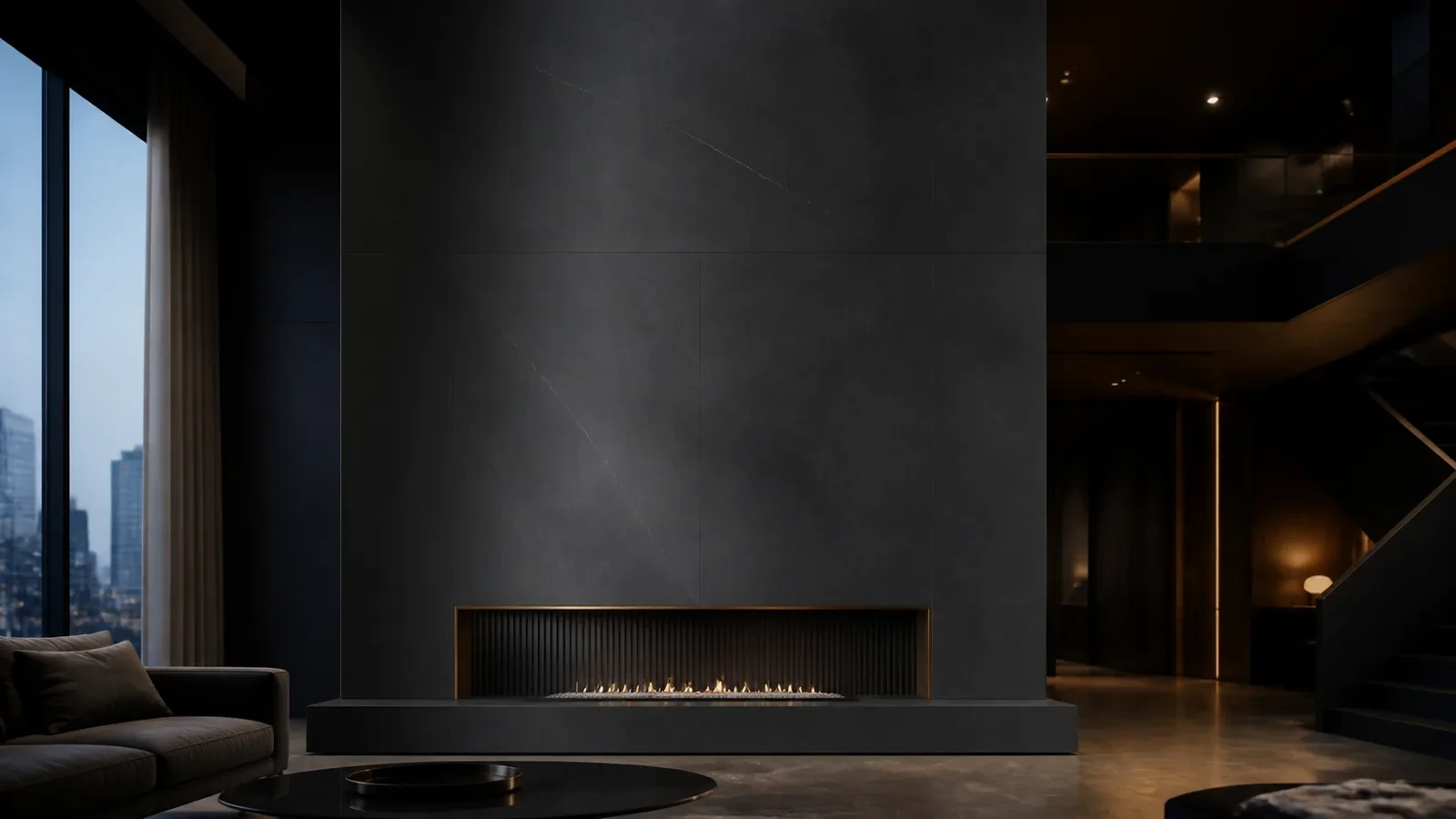
Reference images

How to confirm a selection
- Record the location, orientation, frequency of use, and substances that may contact the surface.
- Review a shortlist through physical samples or full-slab images under suitable lighting.
- Read documentation for the exact code; do not apply one product’s characteristics to a whole material group.
- Record color or vein range, finish, excluded zones, edges, cutouts, and joints.
- Confirm substrate, structure, fixing, delivery, and installation responsibilities with the responsible parties.
Natural Stone Institute technical resources can help identify questions to review. Manufactured products should be checked against the relevant manufacturer’s documentation.
Limits of a comparison table
A comparison table does not replace a test report, approved sample, drawing, or detailed design. Screen colors can differ from the physical surface; natural stone varies; industrial materials have product-specific limits.
To avoid false expectations, record what has been confirmed, what still depends on documentation, and what belongs to the design or engineering team. There is no “best” material independent of location and use.
Discuss material samples
To help NHAN BAN STONE compare samples and define the workshop-fabrication scope, provide the application, priority criteria, drawings, reference samples, and care requirements. Site survey, measurement, structural work, construction, and installation remain with the relevant project parties.