

When considering natural stone furniture manufacturing, compare the actual surface, intended application, and installation requirements instead of relying on the trade name alone. This guide focuses on checks that can be completed before material approval.
Natural stone varies from slab to slab and batch to batch. Water absorption, strength, thickness, and load capacity should only be quoted from documentation for the specified product, alongside the approved sample and project drawings.
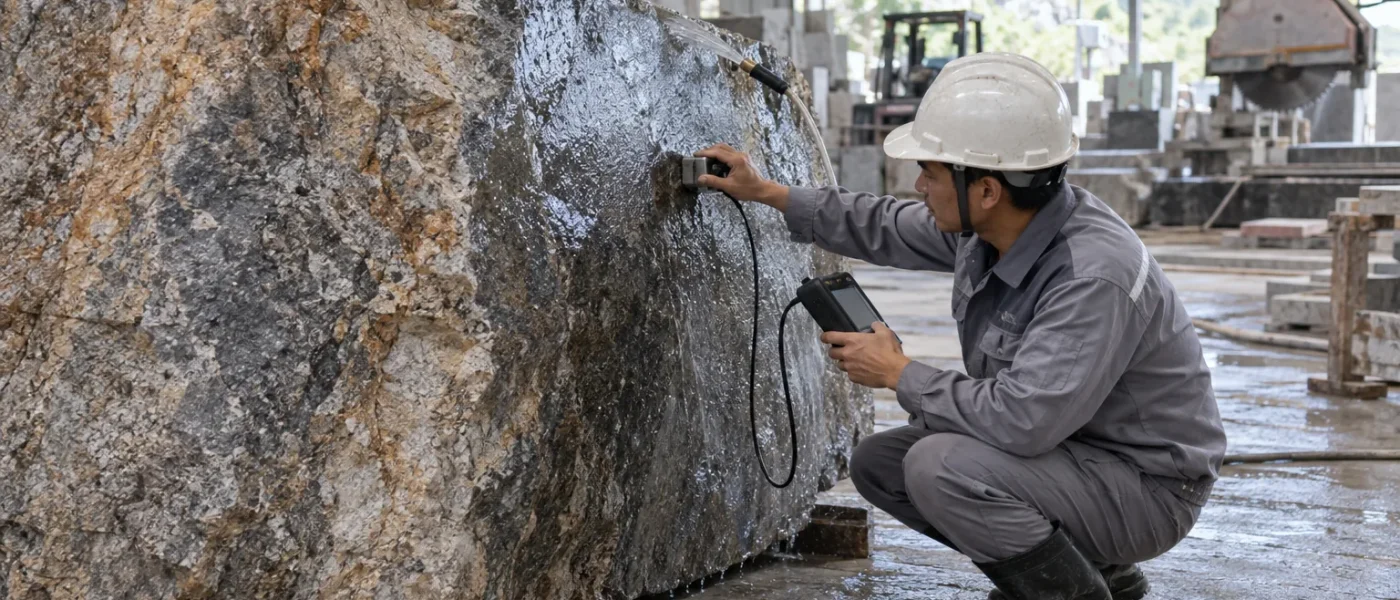
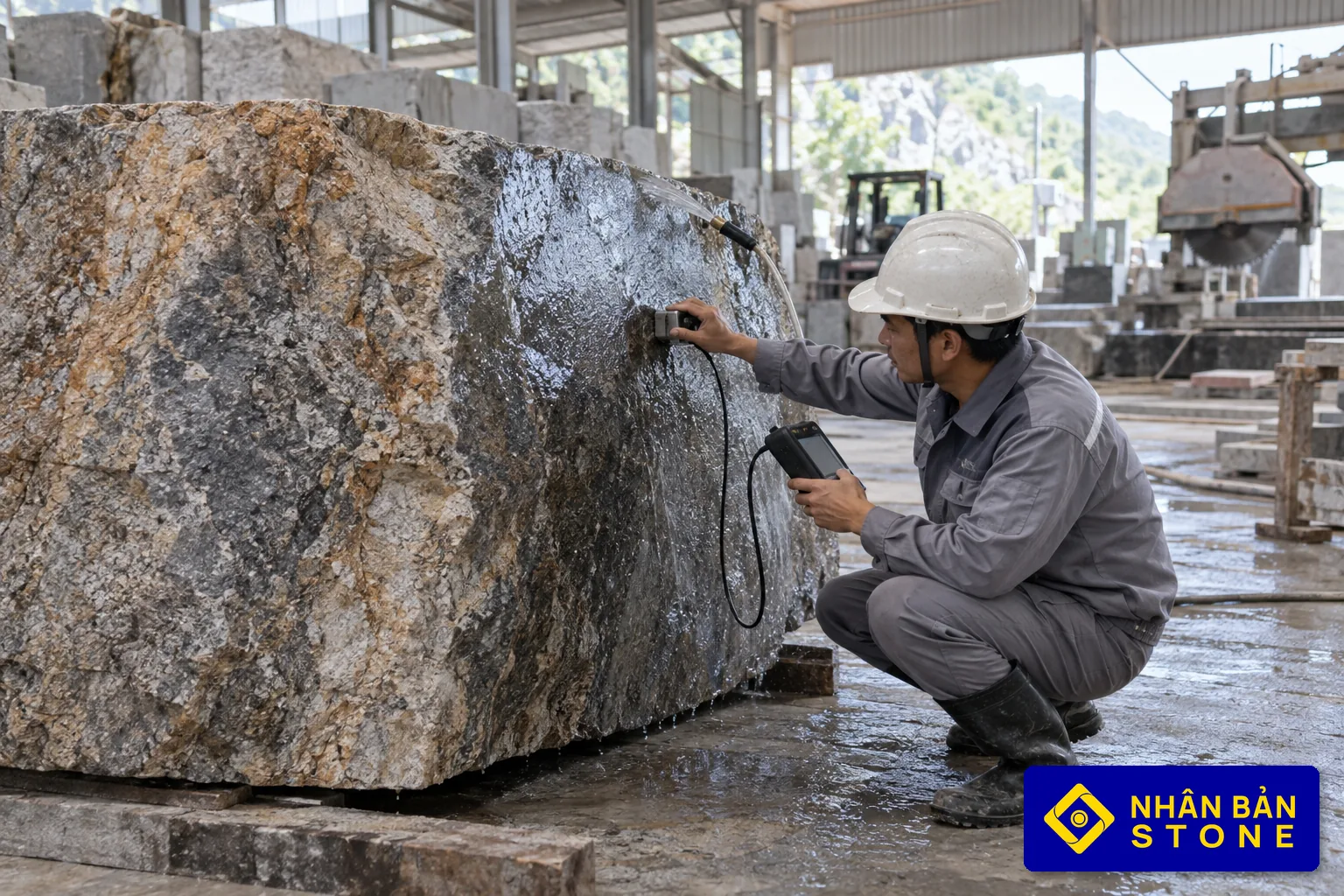
Step 1: Raw Block Quarry Inspection and Subsurface Flaw Detection
Blocks undergo wetting and acoustic tap tests to detect concealed geological fissures. Blocks exhibiting structural micro-fissures are rejected to eliminate fracture hazards during downstream cutting or post-installation service. You can also refer to our guide on “Natural Stone Garden Furniture Catalog: Shapes, Styles and Spatial Sizing Guide” to compare technical suitability for your installation.
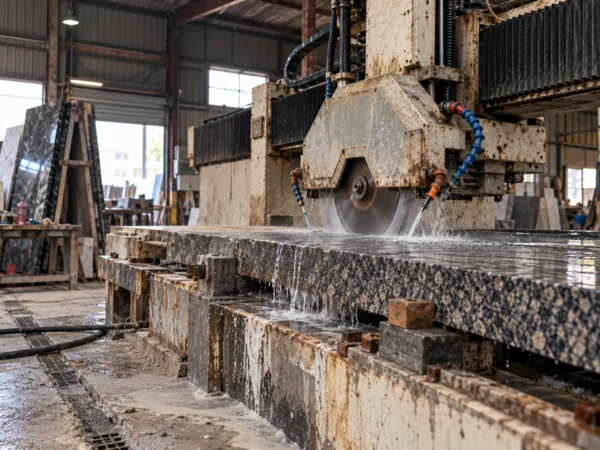
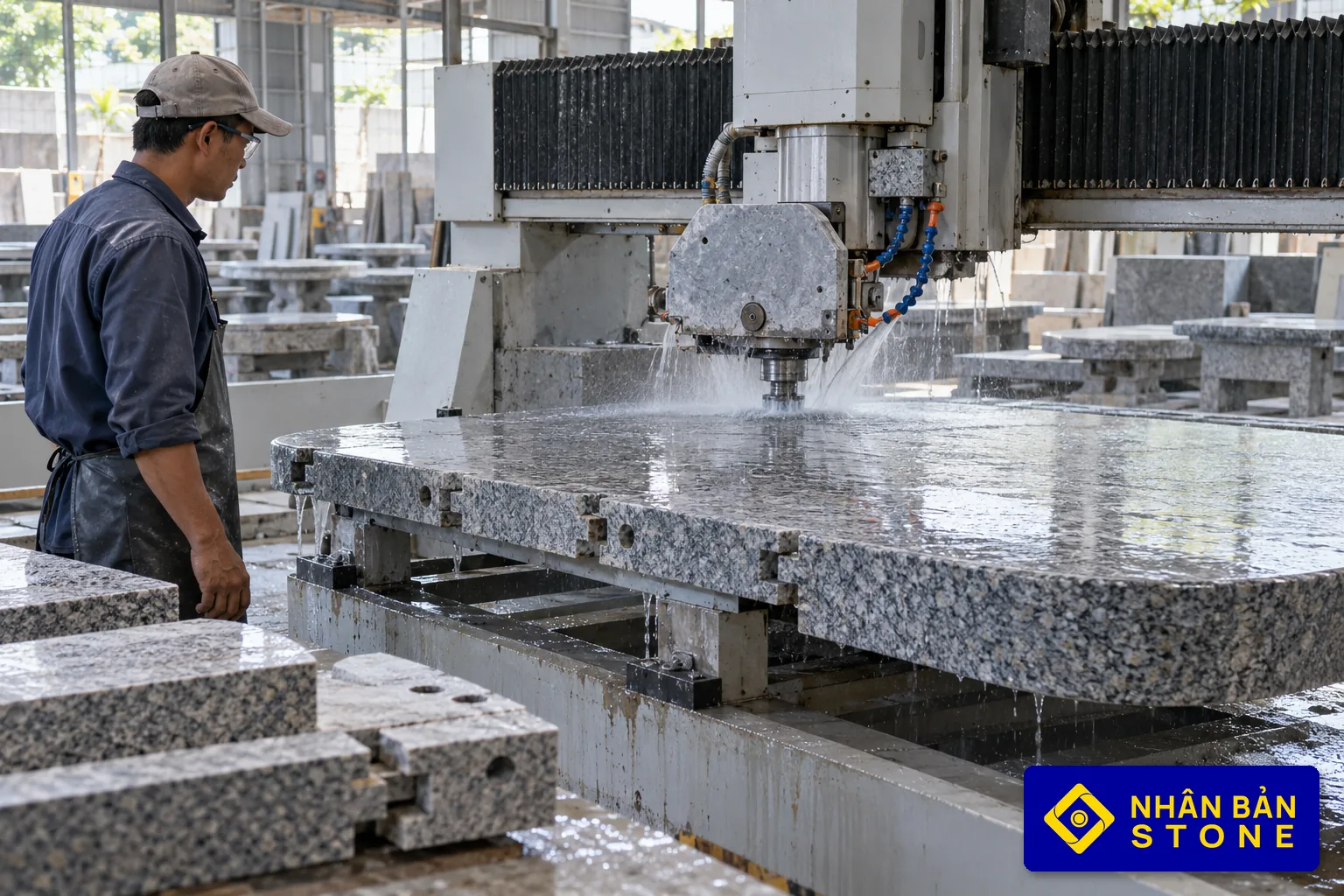
Step 2: Heavy-Duty Diamond Gangsawing and CNC Joinery
CNC bridge millers carve interlocking male-female recesses and core pin channels across connecting joints. This millimeter-exact joinery ensures self-centering gravitational stability upon assembly.
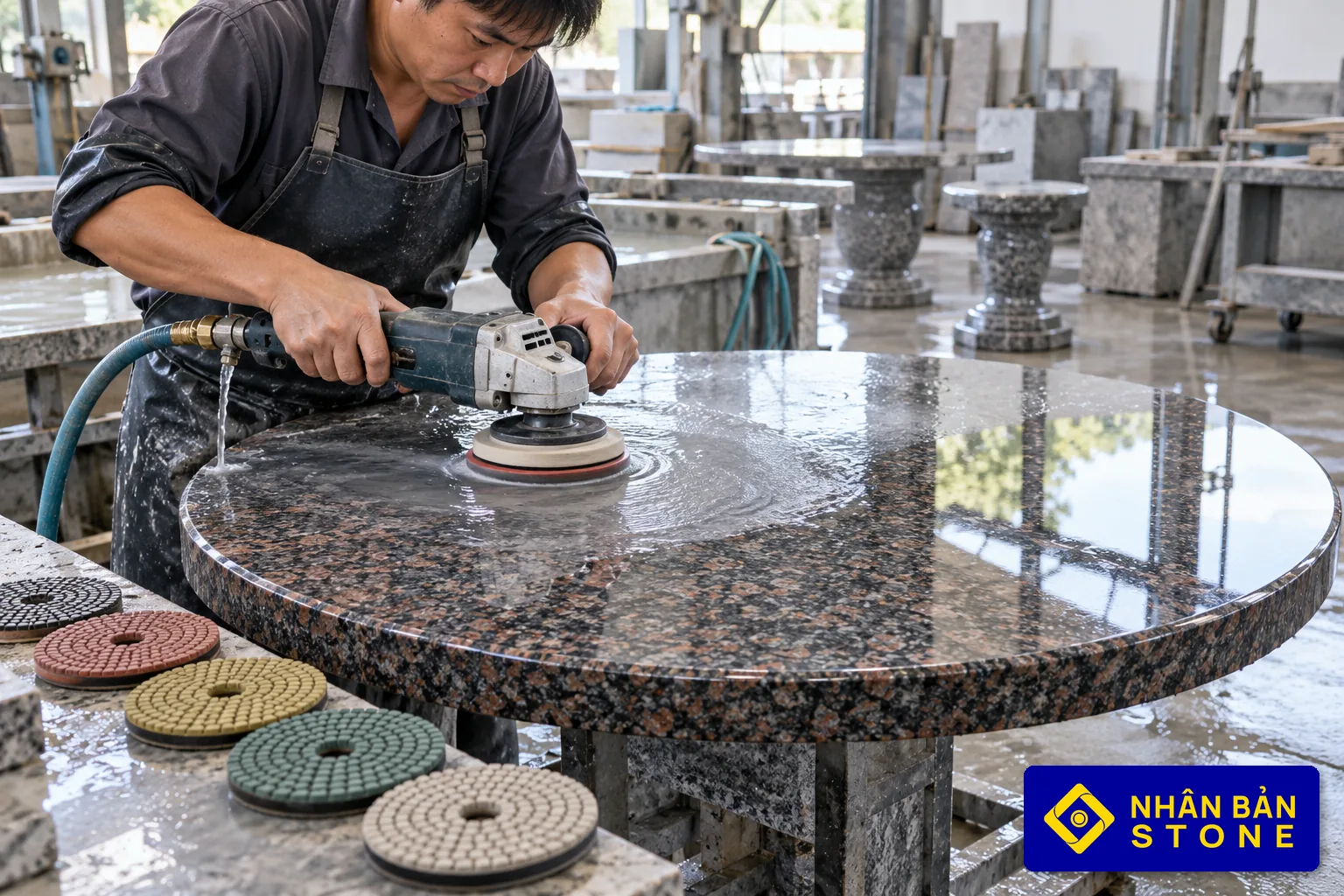
Step 3: 6-Stage Diamond Wet Water Polishing
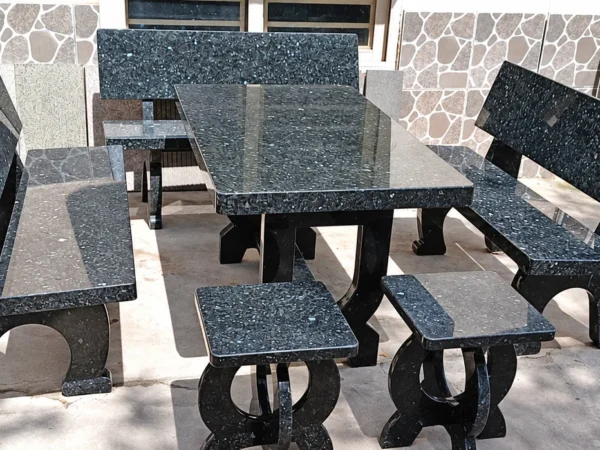
Natural granite requires low synthetic lacquers. Instead, mirror sheens are attained through wet abrasive honing across six diamond grit steps: coarse grits (#50, #100) achieve planar leveling; medium grits (#200, #400) smooth the face; and ultra-fine grits (#800, #1500, #3000) bring forth deep natural mineral gloss. You can also refer to our guide on “Masterpiece Solid Granite Garden Furniture: Raw Crust and Mirror Polish Artistry” to compare technical suitability for your installation.
Continuous chilled water prevents thermal burns, highlighting quartz and feldspar crystals in their authentic splendor.
6. On-Site Installation and Commissioning Protocols
- Subbase Laser Verification: Verifying level datum lines with laser levels before lowering stone pedestals onto ground pavers.
- Structural Epoxy Interlocking: Injecting structural two-part epoxy into the CNC male-female core pin joints to secure connection points against micro-vibrations.
- Planar Spirit Level Calibration: Fine-tuning horizontal planes so spirit level bubbles settle precisely dead-center, ensuring natural rainwater runoff without puddle retention.
- Final Handover Detailing: Cleaning all surfaces with specialized stone protectors prior to issuing warranty and acceptance documentation to property owners.
Checks before ordering
Measure the intended area and allow circulation space around the furniture. A suitable footprint supports comfortable use and gives installers enough room to move and position heavy components without damaging walls, planting, or adjacent finishes. You can also consult our technical reference on “Natural Stone Surface Finishes: Technical Guide” for comprehensive engineering specifications.
The supporting surface must be level, stable, and designed for the expected load. Support points, joints, and any anchoring method should be shown on the drawings; the weight of the stone alone is not evidence that every configuration will remain stable.
Review pieces that will sit next to one another. Natural stone can vary in tone, grain, and veining, so numbering and dry-layout photographs are useful before packing and again during installation.
Check seat edges and tabletop profiles by sight and touch, especially for homes with children or public spaces. Chips, sharp arrises, uneven joints, and rocking components should be resolved before handover.
For routine care, begin with clean water, a soft cloth, and a pH-neutral cleaner. Blot spills early, and use sealers or restoration products only when they are suitable for the specified stone and supported by the product instructions.
Price: Contact us