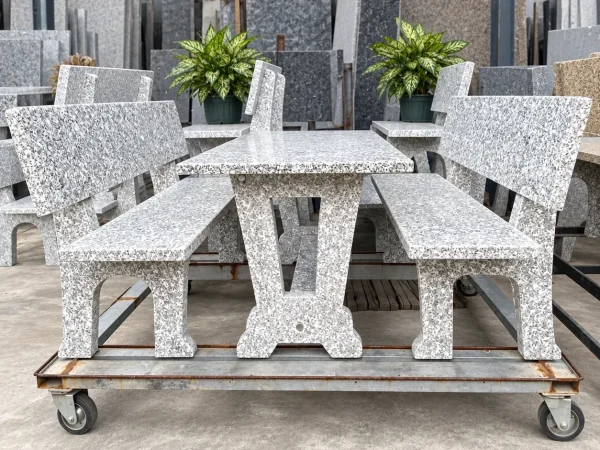


When considering solid granite garden furniture, compare the actual surface, intended application, and installation requirements instead of relying on the trade name alone. This guide focuses on checks that can be completed before material approval.
Natural stone varies from slab to slab and batch to batch. Water absorption, strength, thickness, and load capacity should only be quoted from documentation for the specified product, alongside the approved sample and project drawings.
1. The Art of Contrast: Natural Stone Crust and Mirror-Polished Seating
Unlike mass-produced, geometrically squared commercial stone tables, monolithic granite sets are sculpted directly from singular natural boulders selected for character and sound Main density. You can also refer to our guide on “Natural Granite Table Sets: Anatomy, Dimensions and Engineering Standards” to compare technical suitability for your installation.
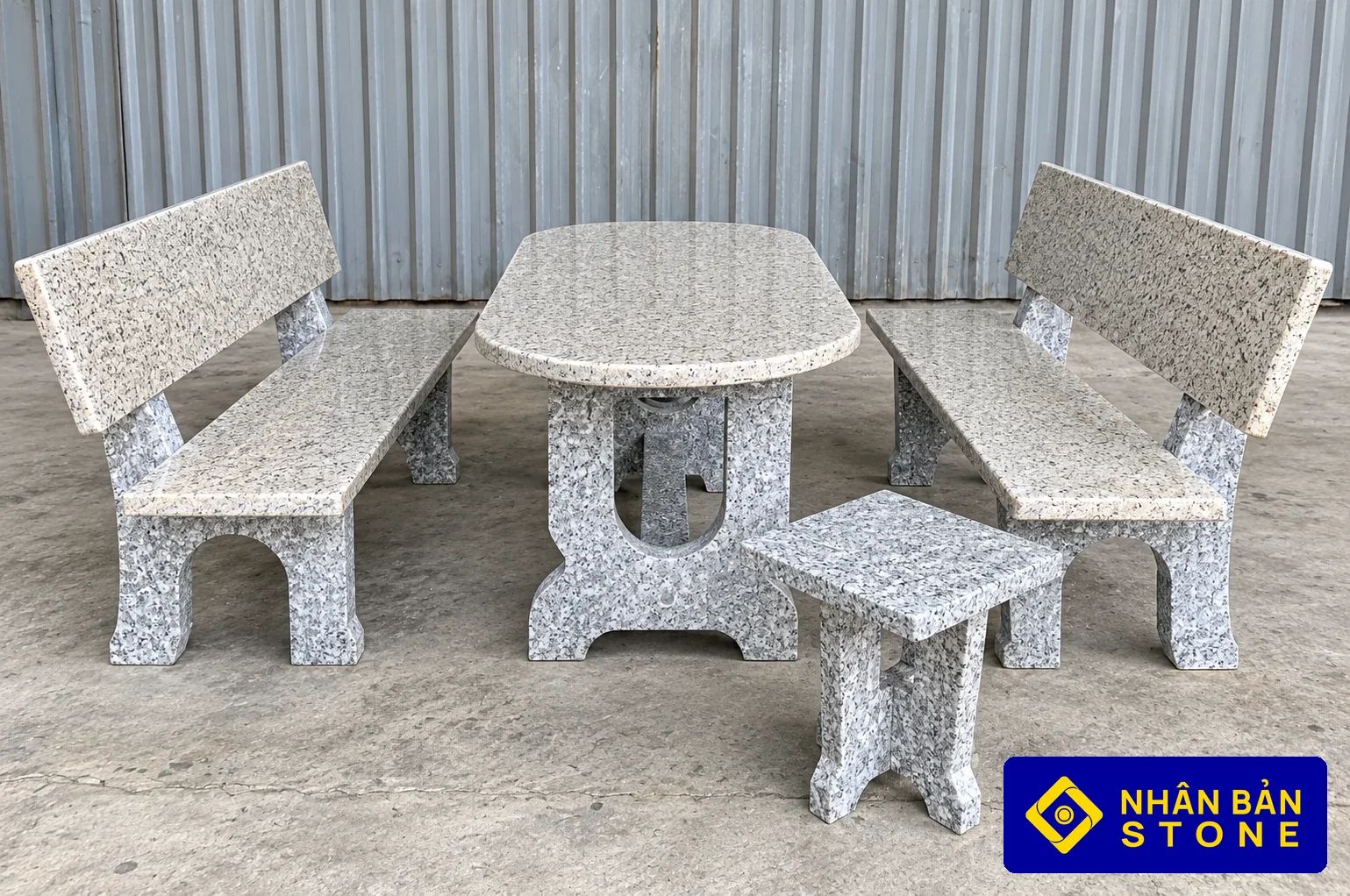
Their defining aesthetic is the intentional juxtaposition of textures: the flanks of the table and stool pedestals retain their original weathered split-face crust, displaying rustic fissures and mineral patinas sculpted by rain and mountain wind. In striking contrast, the upper dining slab and individual seat tops are diamond-milled flat and polished to a notable mirror sheen. This dialogue between raw geological power and refined craftsmanship creates captivating visual depth under natural sunlight.
2. A Unique Piece for Every Project
This imparts an aura of exclusivity and permanence to private courtyards, reflecting the owner’s appreciation for timeless natural collectibles. You can also refer to our guide on “Outstanding Benefits of Natural Granite Outdoor Garden Furniture” to compare technical suitability for your installation.
3. Leveling and Center-of-Gravity Balancing Techniques
Sculpting naturally irregular boulders demands high technical proficiency. Because boulders possess asymmetrical mass distribution, carvers must calculate the true center of gravity so that when seated upon grass, stone pavers, or gravel, the polished table plane rests well level without shimming.

4. Feng Shui Meaning and the Character of Naturally Weathered Stone
Granite rocks formed over geological epochs bring an aura of grounded stability to a landscape. Positioned beneath specimen trees or beside a tranquil water feature, monolithic stone seating anchors the outdoor living space in enduring harmony. You can also consult our technical reference on “Natural Stone Surface Finishes: Technical Guide” for comprehensive engineering specifications.
5. Choosing the Right Location for Monolithic Stone Furniture
To maximize the architectural presence and grounded harmony of monolithic solid granite furniture, landscape placement warrants thoughtful site planning:
- Backed by Greenery, Facing Water: Position the set backed by mature specimen plantings or architectural perimeter walls, facing an open turf expanse, Koi pond, or reflecting pool to create visual stability and tranquil outlooks.
- Natural Canopy Integration: Place the set beneath mature shade trees or beside flowering pergolas to temper midday solar intensity, ensuring comfortable tea-tasting across all seasons.
- Path Connectivity to Main Residence: Establish intuitive stepping-stone connections 5 to 10 meters from living terraces, balancing intimate garden privacy with convenient entertaining access from the indoor kitchen.
6. Preservation of Weathered Natural Boulder Features
To ensure that monolithic garden furniture preserves its organic character without environmental degradation, simple annual maintenance is sufficient. Avoid harsh pressure washers focused close to weathered crusts; instead, rinse with clean garden water and gentle natural bristle brushes. The contrast between rustic boulders and diamond-polished stone surfaces will endure as an heirloom garden feature for generations.
Checks Before Ordering
Measure the intended area and allow circulation space around the furniture. A suitable footprint supports comfortable use and gives installers enough room to move and position heavy components without damaging walls, planting, or adjacent finishes.
The supporting surface must be level, stable, and designed for the expected load. Support points, joints, and any anchoring method should be shown on the drawings; the weight of the stone alone is not evidence that every configuration will remain stable.
Review pieces that will sit next to one another. Natural stone can vary in tone, grain, and veining, so numbering and dry-layout photographs are useful before packing and again during installation.
Check seat edges and tabletop profiles by sight and touch, especially for homes with children or public spaces. Chips, sharp arrises, uneven joints, and rocking components should be resolved before handover.
For routine care, begin with clean water, a soft cloth, and a pH-neutral cleaner. Blot spills early, and use sealers or restoration products only when they are suitable for the specified stone and supported by the product instructions.
Price: Contact us