


When considering Cambodian Black granite technical guide, compare the actual surface, intended application, and installation requirements instead of relying on the trade name alone. This guide focuses on checks that can be completed before material approval.
Natural stone varies from slab to slab and batch to batch. Water absorption, strength, thickness, and load capacity should only be quoted from documentation for the specified product, alongside the approved sample and project drawings.
1. Geographic Provenance of the Snoul Deposits (Kratie, Cambodia)
Extracted in Snoul District, Kratie Province (Cambodia), the quarry complex lies upon ancient Indochinese mafic fault zones adjoining Vietnam’s Binh Phuoc border gate. This proximity allows raw block transport directly to processing mills across Binh Duong and Ho Chi Minh City with minimal land freight overheads. You can also refer to our guide on “Cambodian Black Granite: Petrology, Engineering Strengths and Project Applications” to compare technical suitability for your installation.
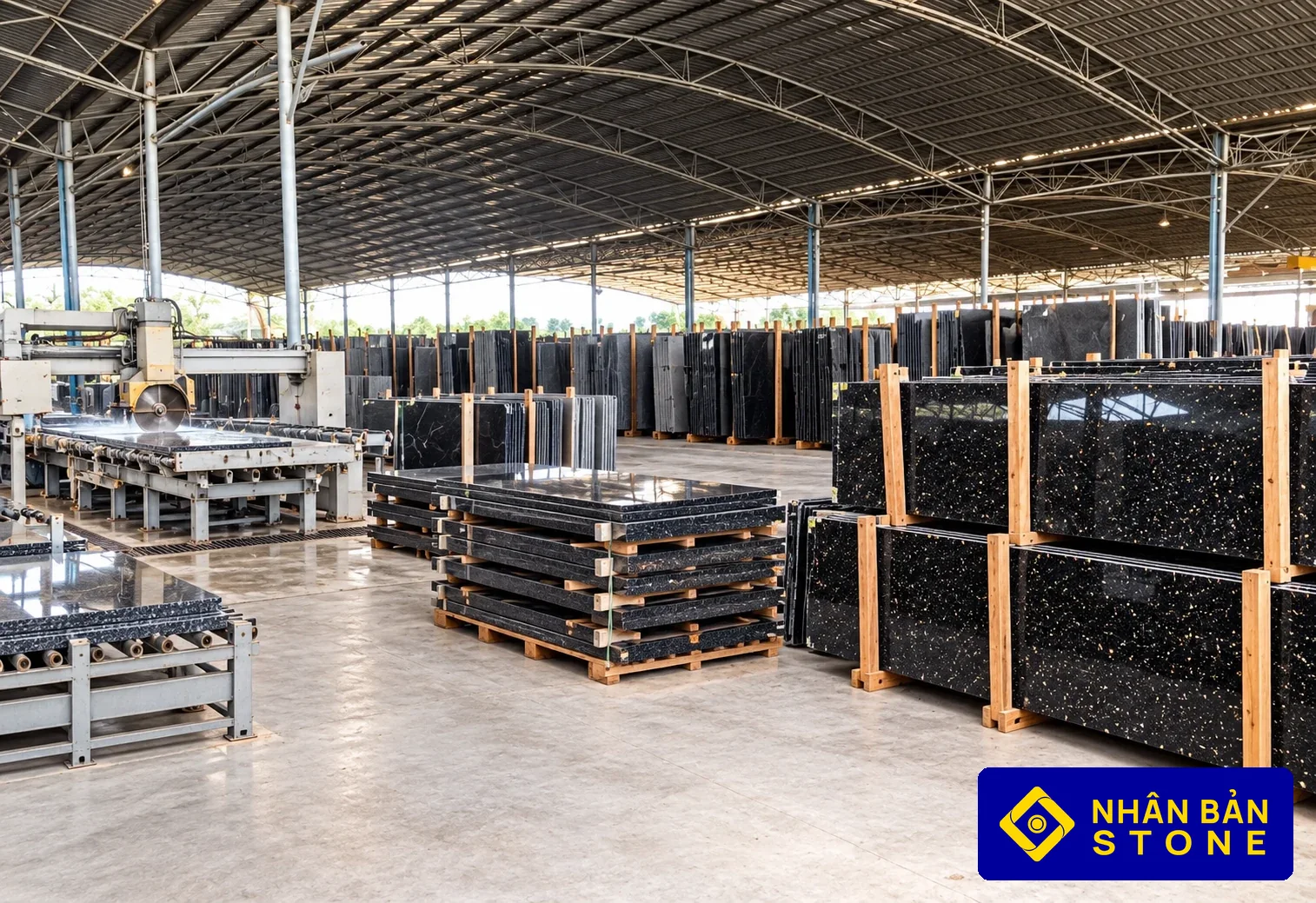
2. Quarry Stratigraphy: Shallow vs. Deep-Mine Horizons
Material quality varies dramatically across quarry extraction elevations:
- Shallow Horizon (Upper Weathered Bench): Sawn from top layers exposed to groundwater percolation and weathering. It displays slightly muted charcoal-black hues and modest polish reflectivity. Suitable for budget-conscious municipal paving.
3. Mandatory 6-Sided Solvent Impregnation Protocol
Although Cambodian Black Granite features ultra-low porosity, installing unsealed slabs atop wet cement mortar exposes back and edge faces to alkaline capillary migration. As Portland cement cures, calcium hydroxide ($Ca(OH)_2$) moisture can wick toward joint lines, producing cloudy white efflorescence along perimeter seams. You can also refer to our guide on “Cambodian Black and Suoi Lau White Granite in Common Applications” to compare technical suitability for your installation.
- Clean and thoroughly bake-dry stone slabs prior to site installation.
- Allow full cure for 12 to 24 hours before setting slabs in approved polymer-modified stone mortar.
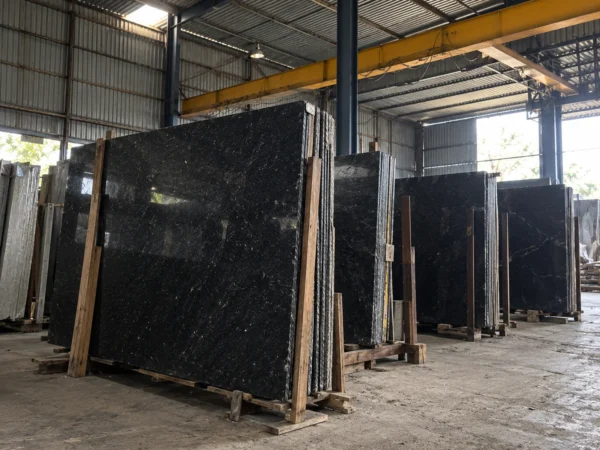
4. Warehouse Quality Assurance and Slab Grading Protocol
- Iron Oxide and Pyrite Inclusion Screening: Side edges and slab backs are scrutinized to identify oxidized ferruginous streaks. Any blocks bearing volatile iron veins are segregated to prevent downstream weathering discoloration.
- Edge Integrity and Right-Angle Squaring: Slab corners are verified with precision squares, confirming crisp, chip-free perimeter edges ready for job-site installation.
Approving the material for its application
A trade name identifies a material family but does not replace slab review. Inspect the actual stone under lighting close to the intended space, compare lighter and darker areas, and agree on an acceptable range of colour and vein variation.
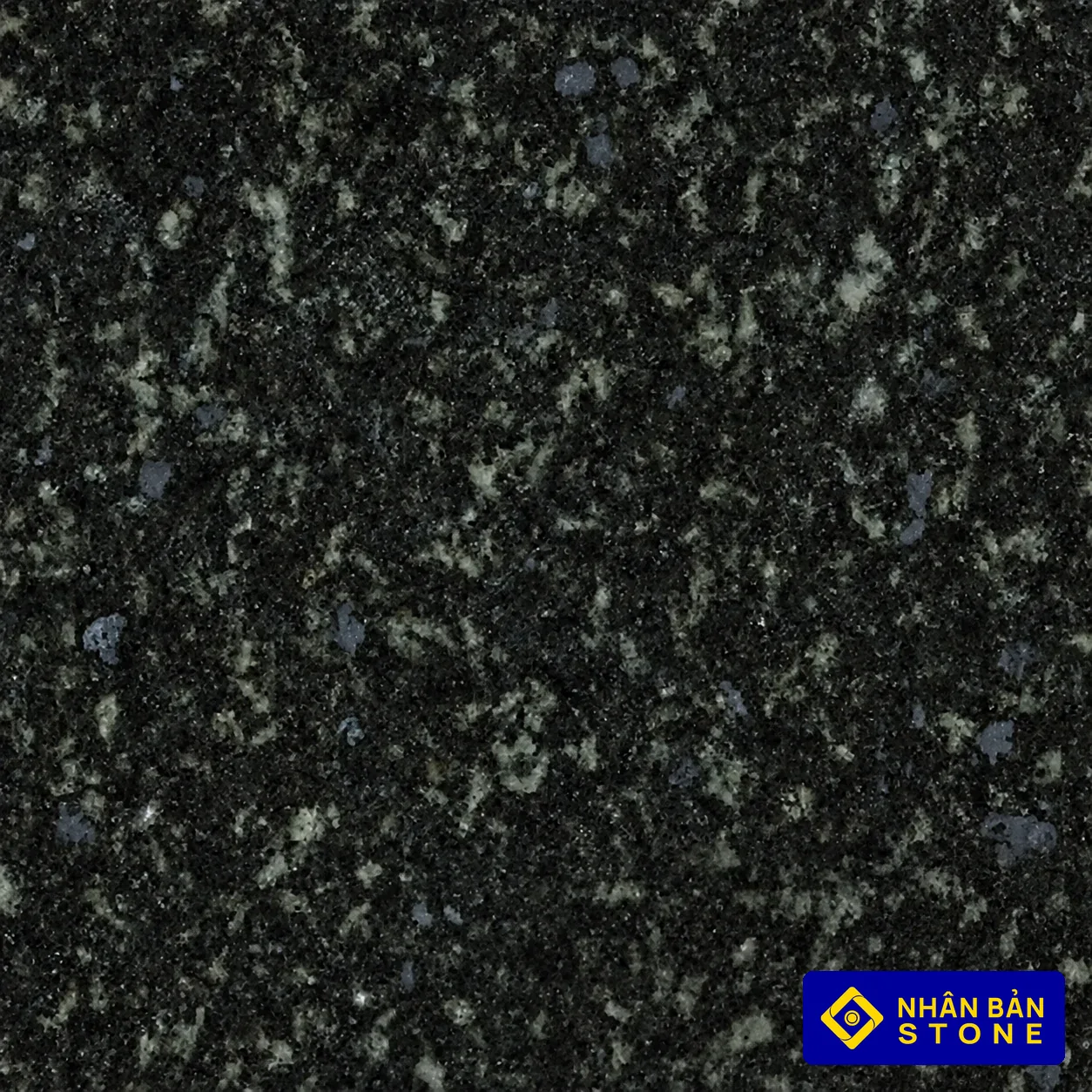
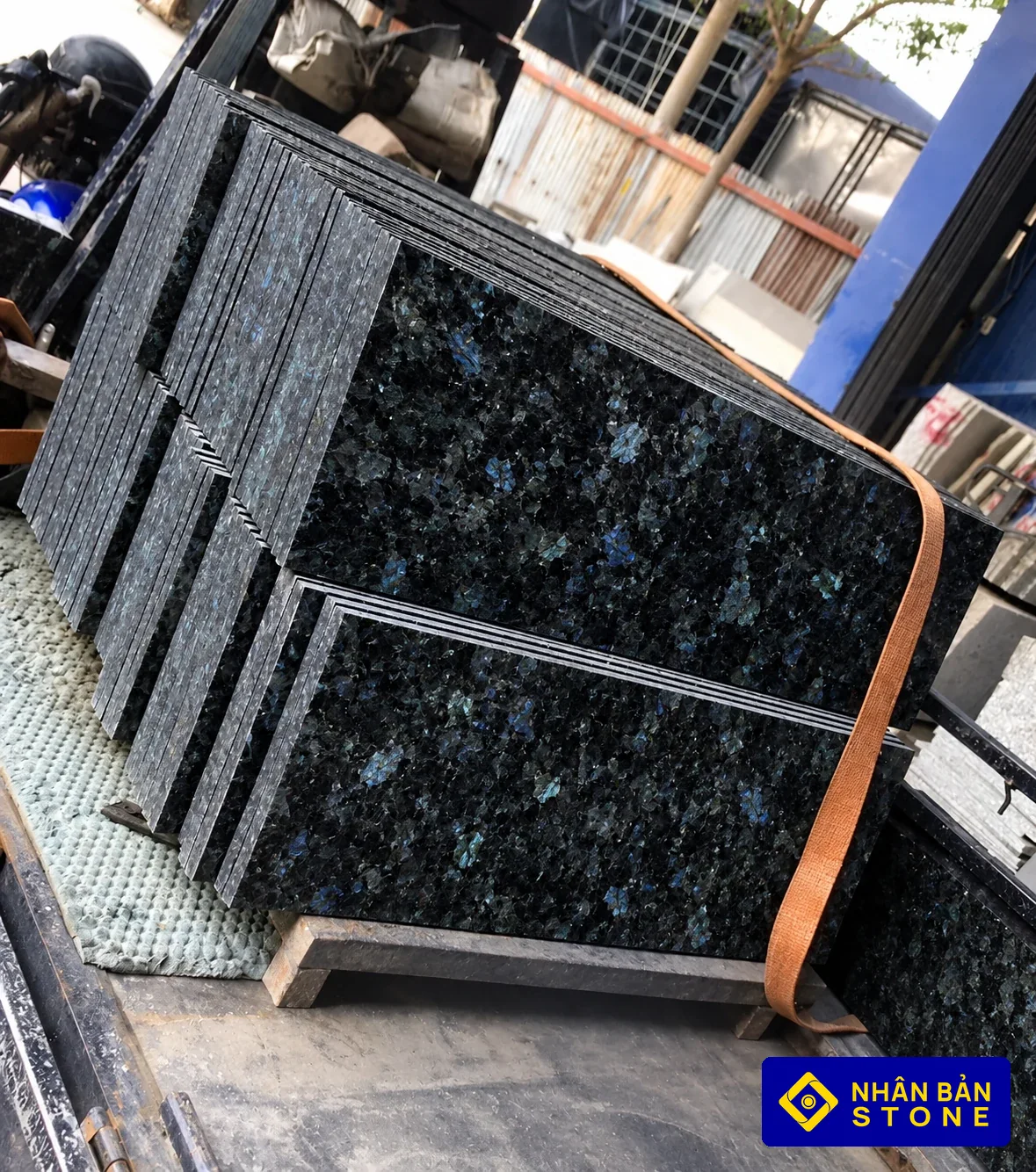

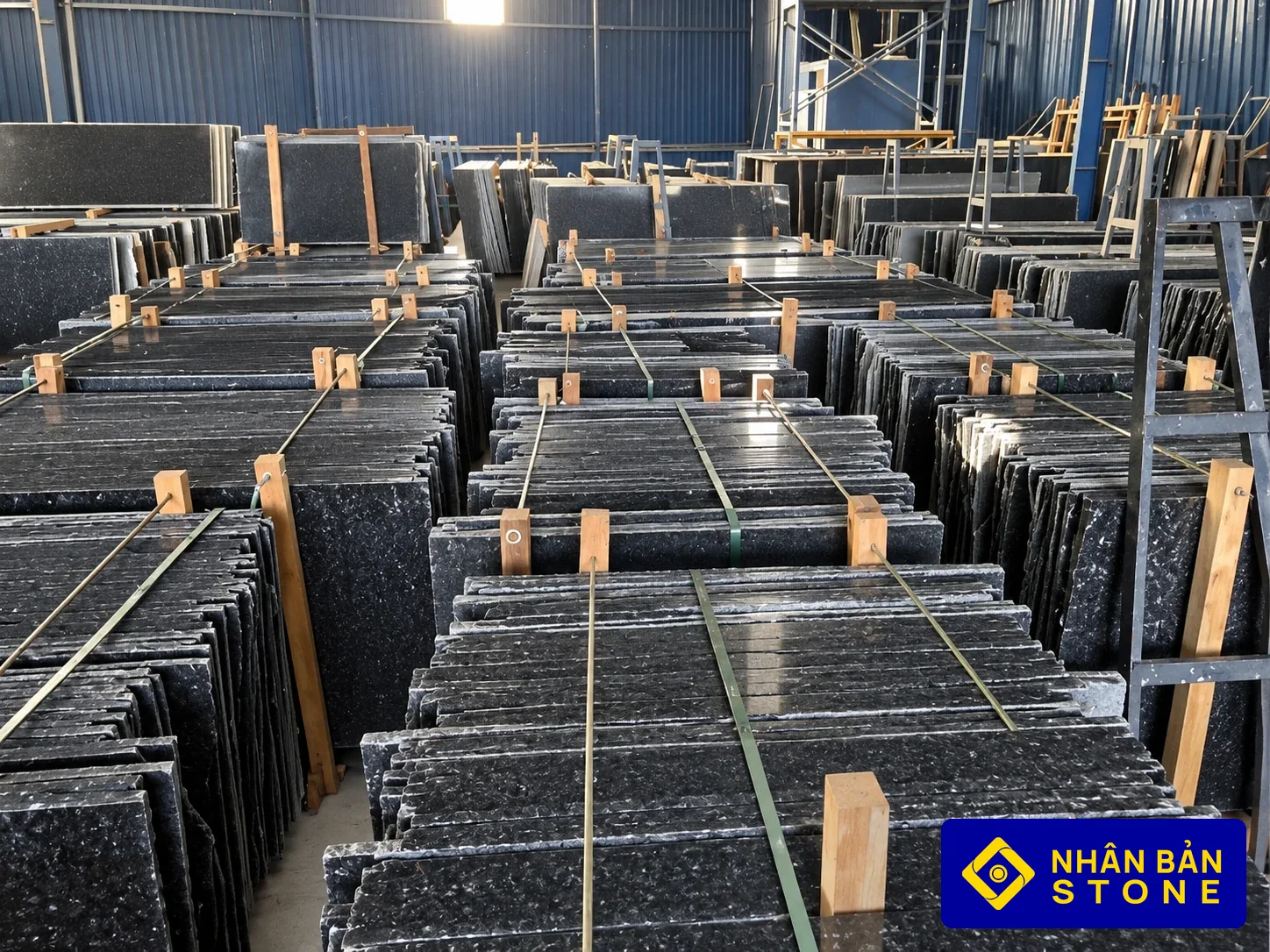
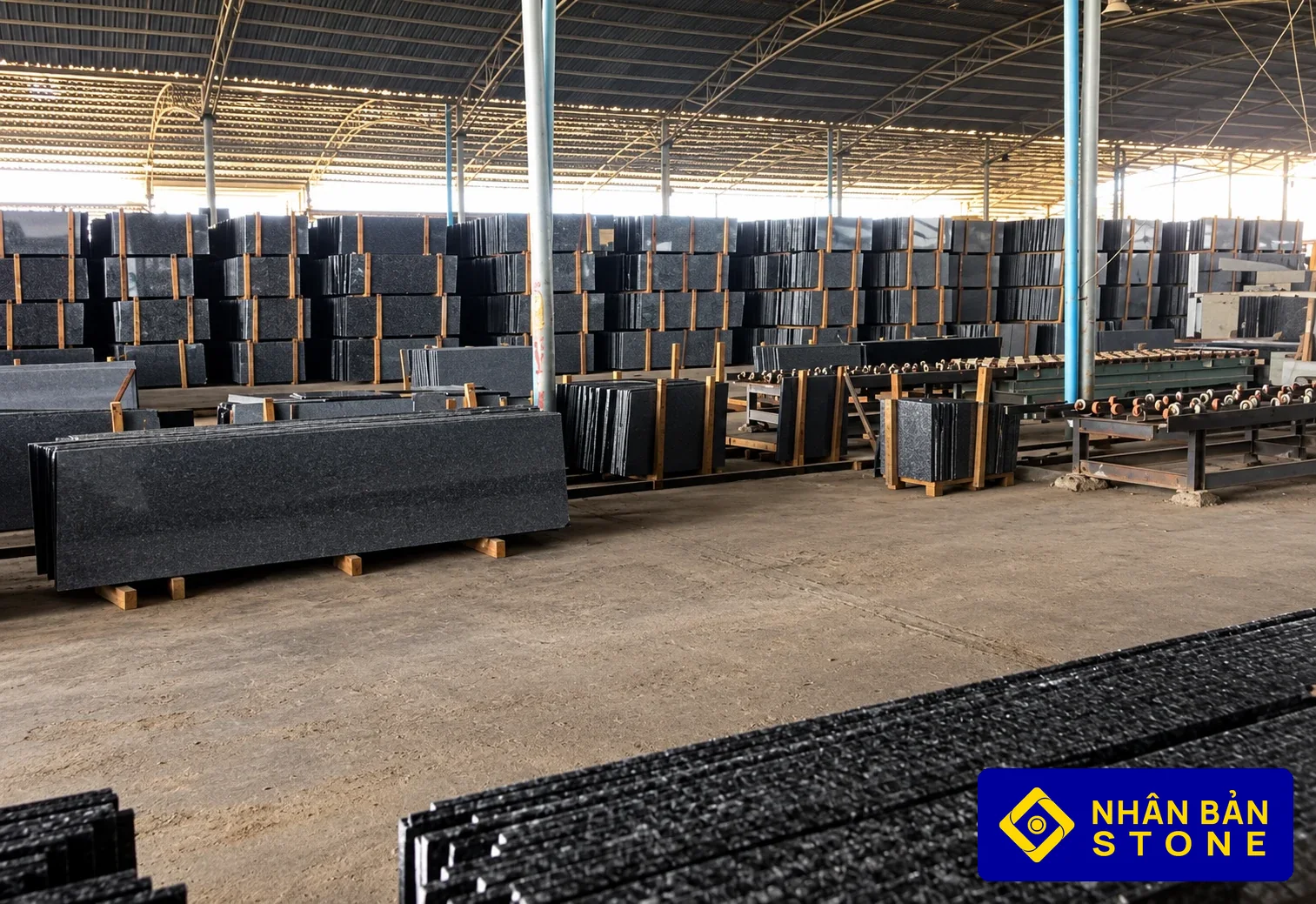
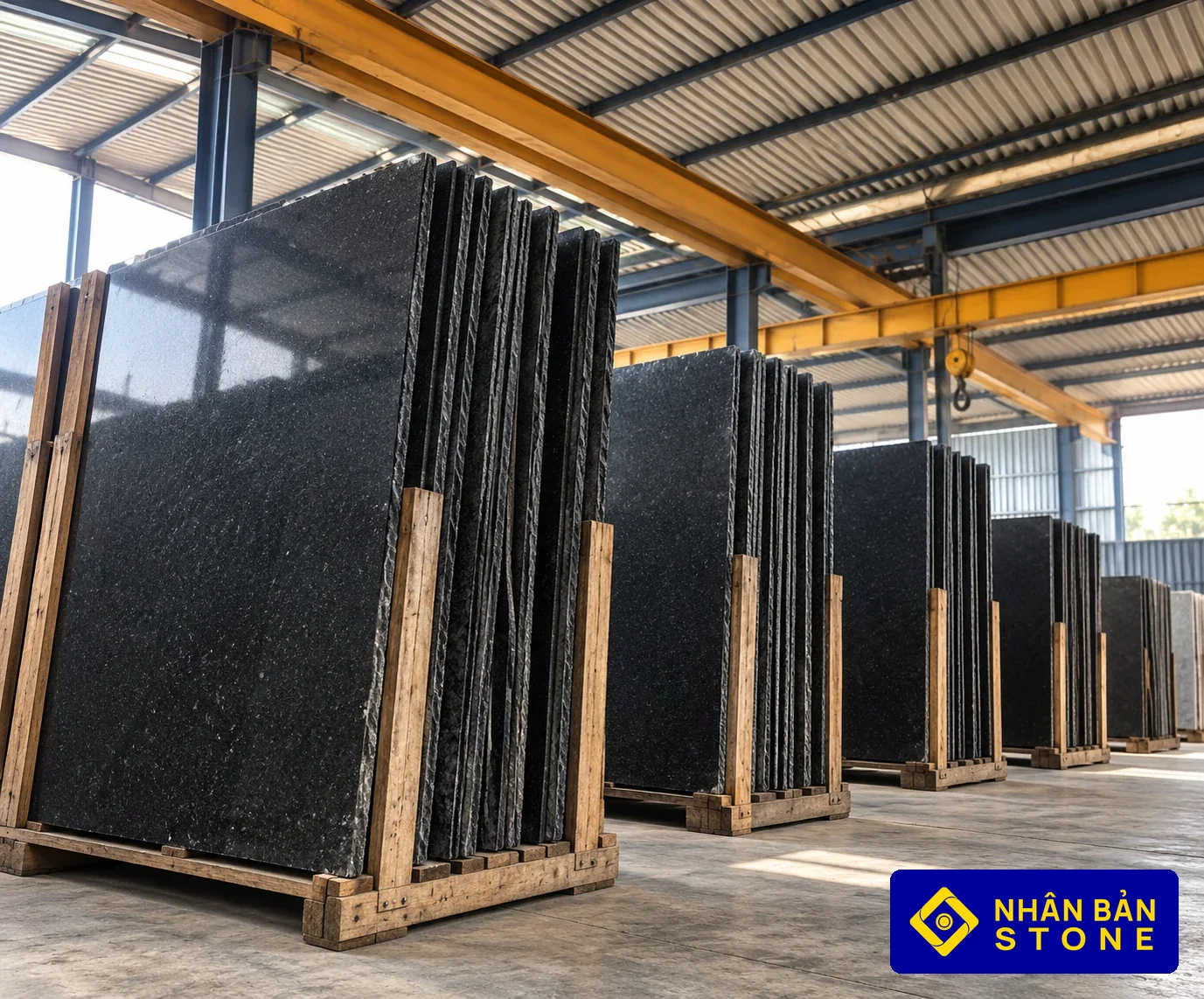
Polished, honed, flamed, and textured finishes differ in appearance and maintenance. Select the finish for the indoor or outdoor location, expected moisture, foot traffic, and cleaning requirements rather than assuming one finish suits every use. You can also consult our technical reference on “Granite Slabs: Patterns and Architectural Applications” for comprehensive engineering specifications.
Before cutting, verify field dimensions, vein direction, joint locations, openings, and the supporting structure. These details affect layout and breakage risk; a trade name or promotional image cannot replace coordinated drawings.
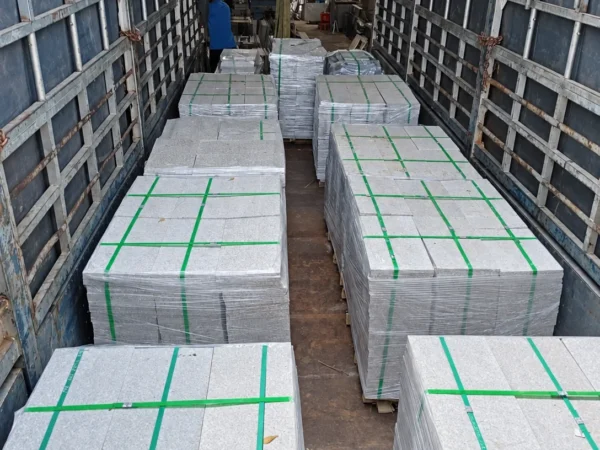
At delivery, check batch references, quantity, ordered thickness, edges, and surface condition. Use technical values only from the test report for the specified product or batch.
For routine care, use a soft cloth, clean water, and a pH-neutral cleaner. Blot oils, coffee, and coloured spills early, and use trivets in heated areas. Sealing intervals should follow the stone, exposure, and product guidance rather than a universal schedule.
Price: Contact us