


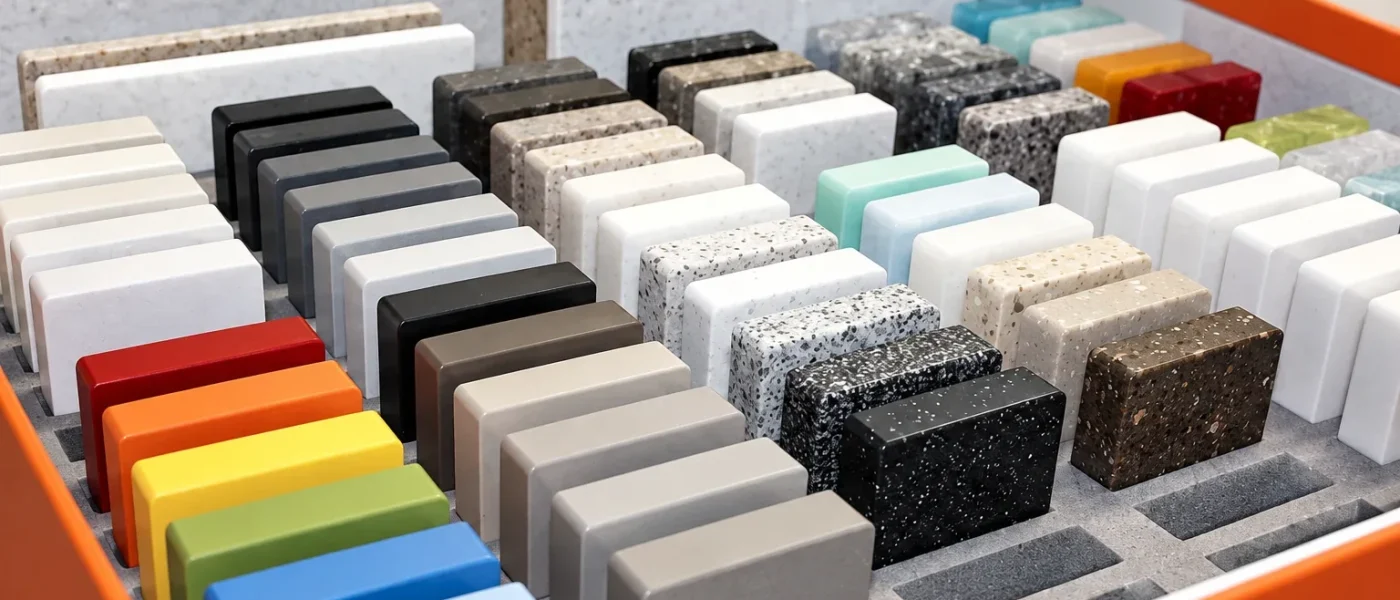
When choosing a material for a worktop or basin, many people hesitate between natural and engineered stone. This article explains what engineered stone is, the main types, where it is used and what to watch for.
1. What is engineered stone?
Engineered stone is an industrially produced material made from minerals or stone powder combined with a binder (resin), pigments and additives, then pressed or cast into slabs. Because it is made deliberately, colour and pattern are more uniform than natural stone, and it can offer shades that nature rarely produces.
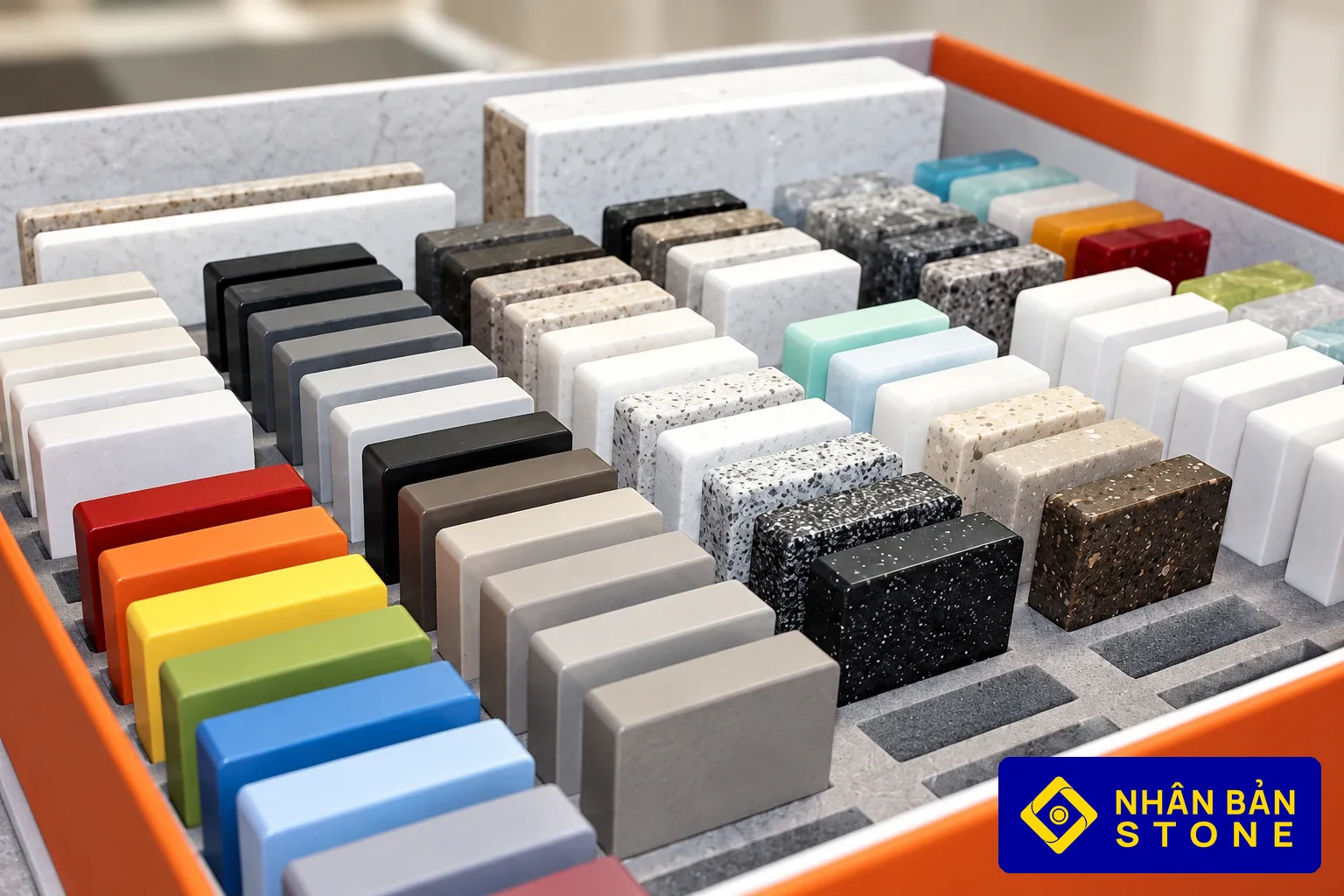
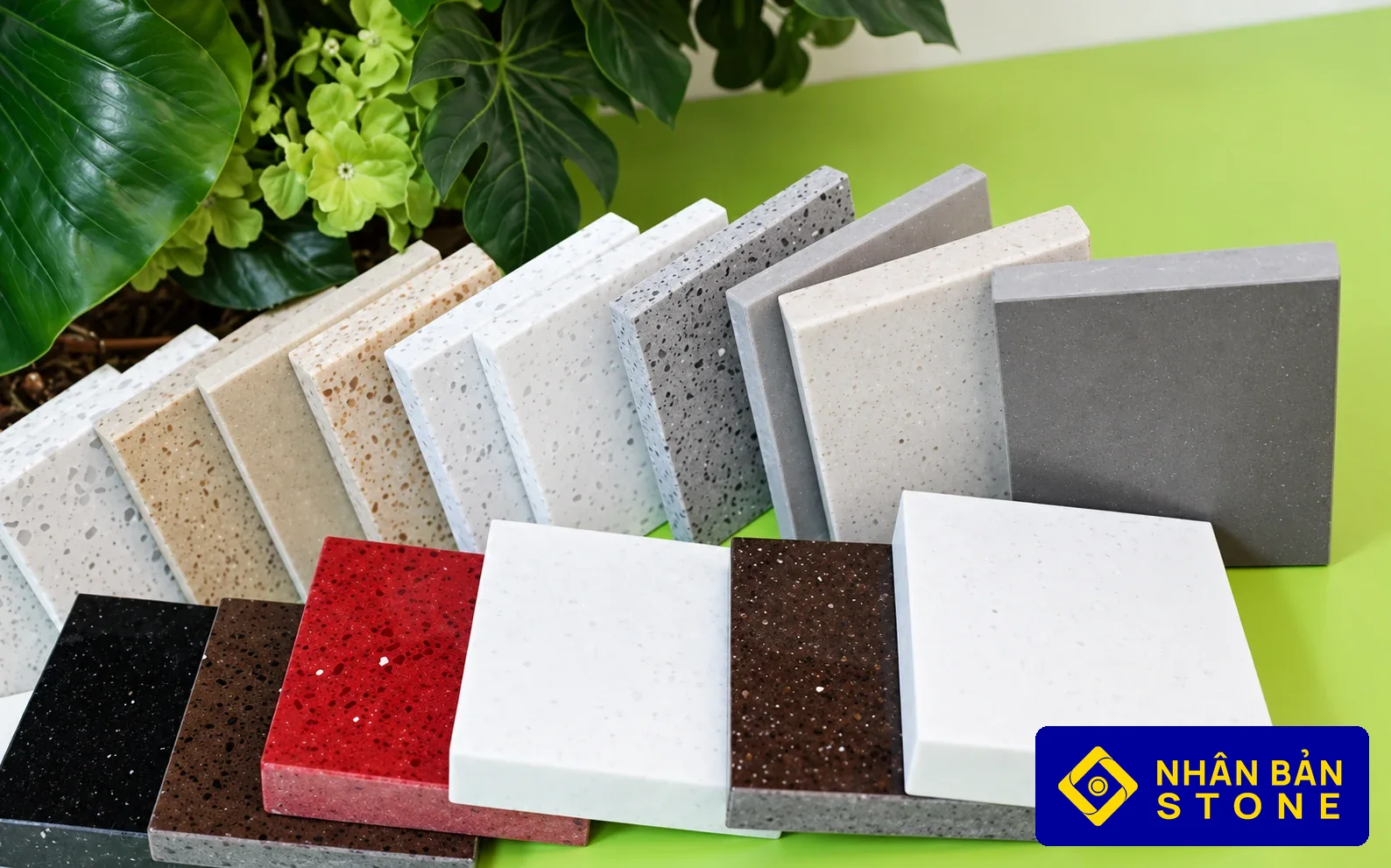
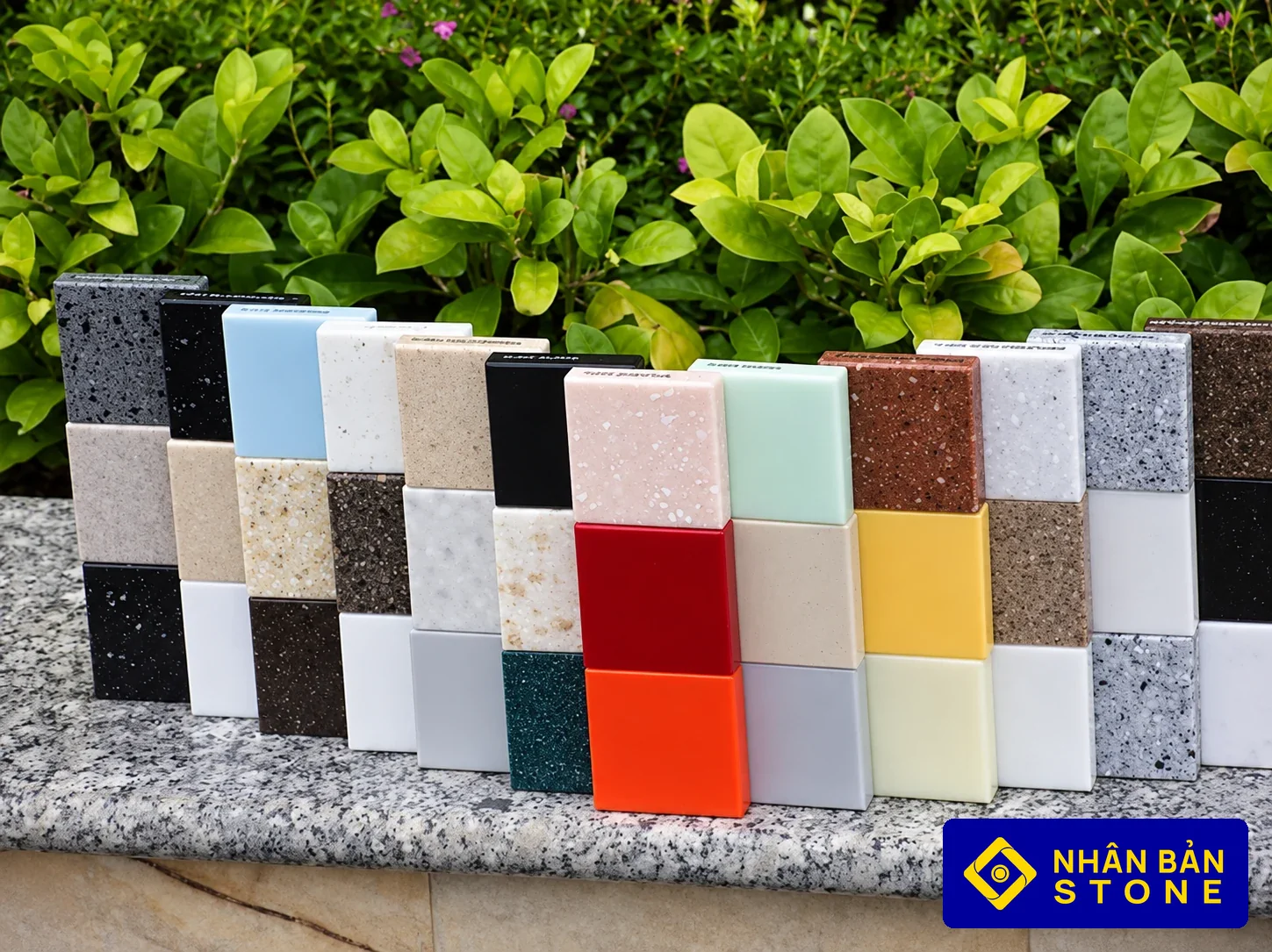
The exact composition differs by manufacturer and product line, so when buying, ask for the product code and the technical data that comes with it. You can also refer to our guide on “Natural Granite Patterns: How to Choose for Each Application” to compare technical suitability for your installation.
2. Two common groups
- Solid surface. Typically mineral powder, an acrylic or polyester resin and fillers such as aluminium trihydrate (ATH). Its advantage is seamless joining and the ability to form curves, so it is often used for one-piece basins and counters.
- Quartz-based engineered stone. Mostly quartz powder or grains bound with resin. The surface is hard, has low porosity and comes in many colours, so it is commonly used for kitchen worktops.
3. Strengths
- Uniform colour and pattern. Easy to coordinate with interiors and to match across several slabs.
- Low-porosity surface. The dense structure resists staining better than many natural stones, so daily cleaning is easy. Even so, wipe strong stains such as fish sauce, tea, coffee and cooking oil promptly.
- Flexible design. It can be cut, bonded into a continuous surface, or in some product types such as solid surface, thermoformed.
- Can be restored. Light scratches on some products can be re-polished. How far it can be restored depends on the product.
4. Limits to know about
- Lower heat tolerance than natural stone. Use a trivet under hot pots, especially with resin-rich products.
- Outdoor UV exposure. Some products may change colour after long exposure to sun, so ask the manufacturer before using outdoors.
- Safe fabrication. Quartz-based stone creates silica dust when cut dry. The fabricator should cut with water, use dust extraction and equip workers with protection.
- Workmanship matters. Poorly made joints and cut-outs show marks or crack more easily.
5. Engineered stone in interiors
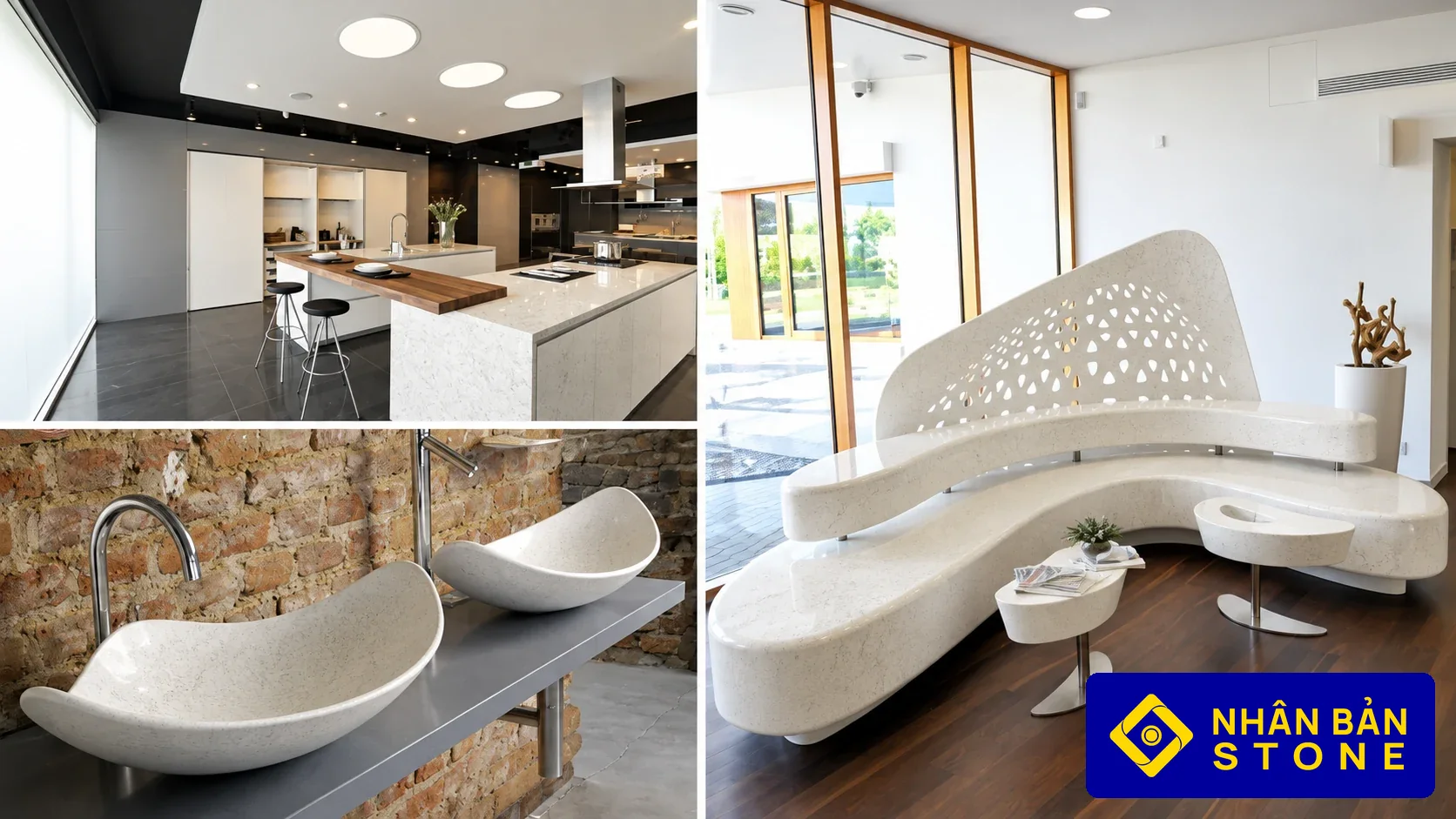
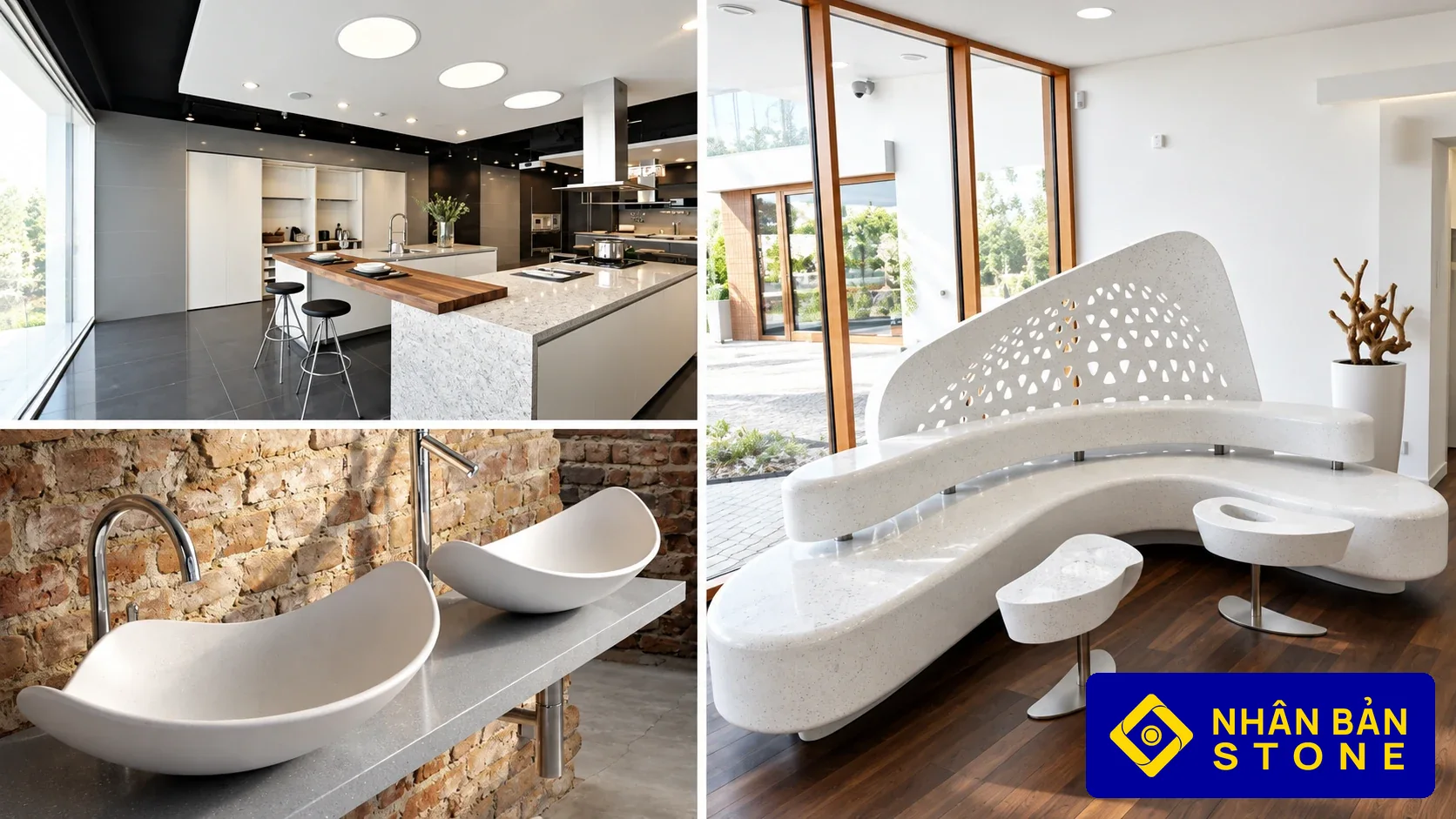
- Kitchen worktops. Low porosity and a wide colour range make it a familiar choice for worktops and islands. Choose thickness and edge profile to suit the design.
- Basins and vanities. Solid surface allows the bowl and top to be formed as one piece, leaving few gaps where dirt can collect.
- Wall and floor cladding. A uniform light colour makes a space feel larger and cleaner. It needs a flat base and correct installation.
- Reception counters and desks. One-piece forms and softly rounded edges, easy to combine with lighting.
6. White engineered stones people ask about
Moka White, Dental White, Crystal White and Porcelain White are asked about often. Each differs in whiteness, gloss and grain, so choose from the actual sample and confirm batch supply.
If you are deciding between natural and engineered stone for a project, send drawings and a description of your needs to NHAN BAN STONE for advice and a suitable quotation. You can also refer to our guide on “Should You Use Granite? Performance and Cost Factors” to compare technical suitability for your installation. You can also consult our technical reference on “Comparing Granite, Marble, Quartzite and Engineered Quartz” for comprehensive engineering specifications.
Price: Contact us