

Select the surface by application
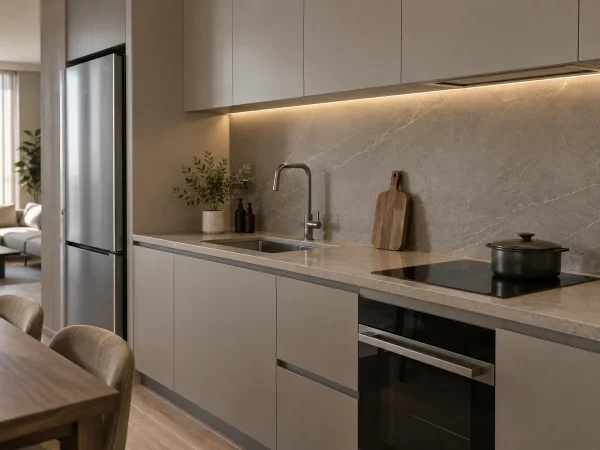
Kitchens, vanities, tables, counters, and interior walls do not face the same conditions. Kitchen worktops may involve heat, food, colored liquids, and several cutouts; vanities involve water and cleaning products; tables require attention to edges and use; walls place more emphasis on panel size, weight, joints, and visual composition.
Granite, marble, quartzite, engineered quartz, and sintered stone each include products with different characteristics. Avoid assigning one performance claim to an entire material family. Review each option against a physical sample, the exact product documentation, and the intended conditions of use.
Questions to confirm by location
| Location | What to prioritize | Information to confirm |
|---|---|---|
| Kitchen worktop and island | Use around heat, food, colored liquids, and frequent cleaning | Appliances, cutouts, clearances, joints, edges, support zones, and product guidance |
| Vanity and wet countertop | Details around the basin, tap, edges, and adjoining areas | Basin type, tap holes, any water upstand, expected cleaners, and surface-protection requirements |
| Table, counter, and shelf | Main viewing face, exposed edges, and projection | Dimensions, edge profile, frame/support, and loads confirmed by the structural designer |
| Wall and decorative panel | Panel size, weight, joint positions, and vein layout | Substrate/support, fixing method, and access confirmed by the responsible party |
This table is a prompt for coordination, not a structural design or installation guide. Supports, fixings, and appliance clearances must be confirmed by the responsible party before fabrication drawings are finalized.
Information required before fabrication drawings
- Current drawings with dimensions, area codes, and primary viewing faces.
- Appliance data showing cutout dimensions, clearances, and accessory positions.
- Edge profiles, joint locations, vein direction, and areas where visual continuity has priority.
- Support construction, projection limits, and fixing requirements supplied by the responsible designer.
- Material code, finish, and the approved sample or full-slab image.
- Expected use, cleaning routine, and chemicals likely to contact the surface.
If equipment or dimensions change, the related cutouts and details need to be checked again. Estimated dimensions from a different appliance model should not be used as fabrication data.
Review samples, vein layout, and lighting
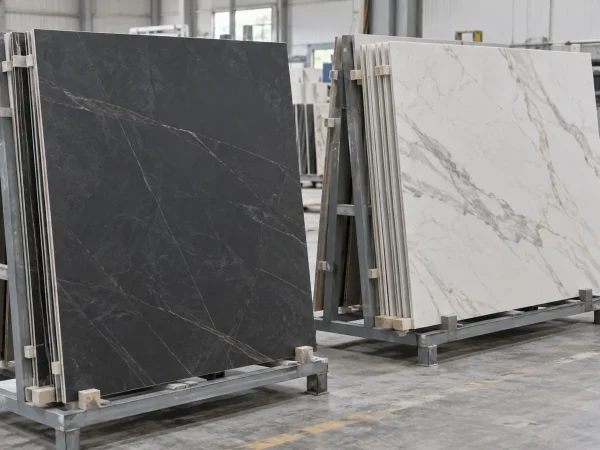
A small sample helps review color and finish, but it cannot show the full movement of a slab. For an island, table, or large wall, review a full-slab image or proposed layout and record the primary face and joint positions. Natural stone varies; manufactured materials may also differ from a showroom sample because of batch or finish, so confirm the actual product code.
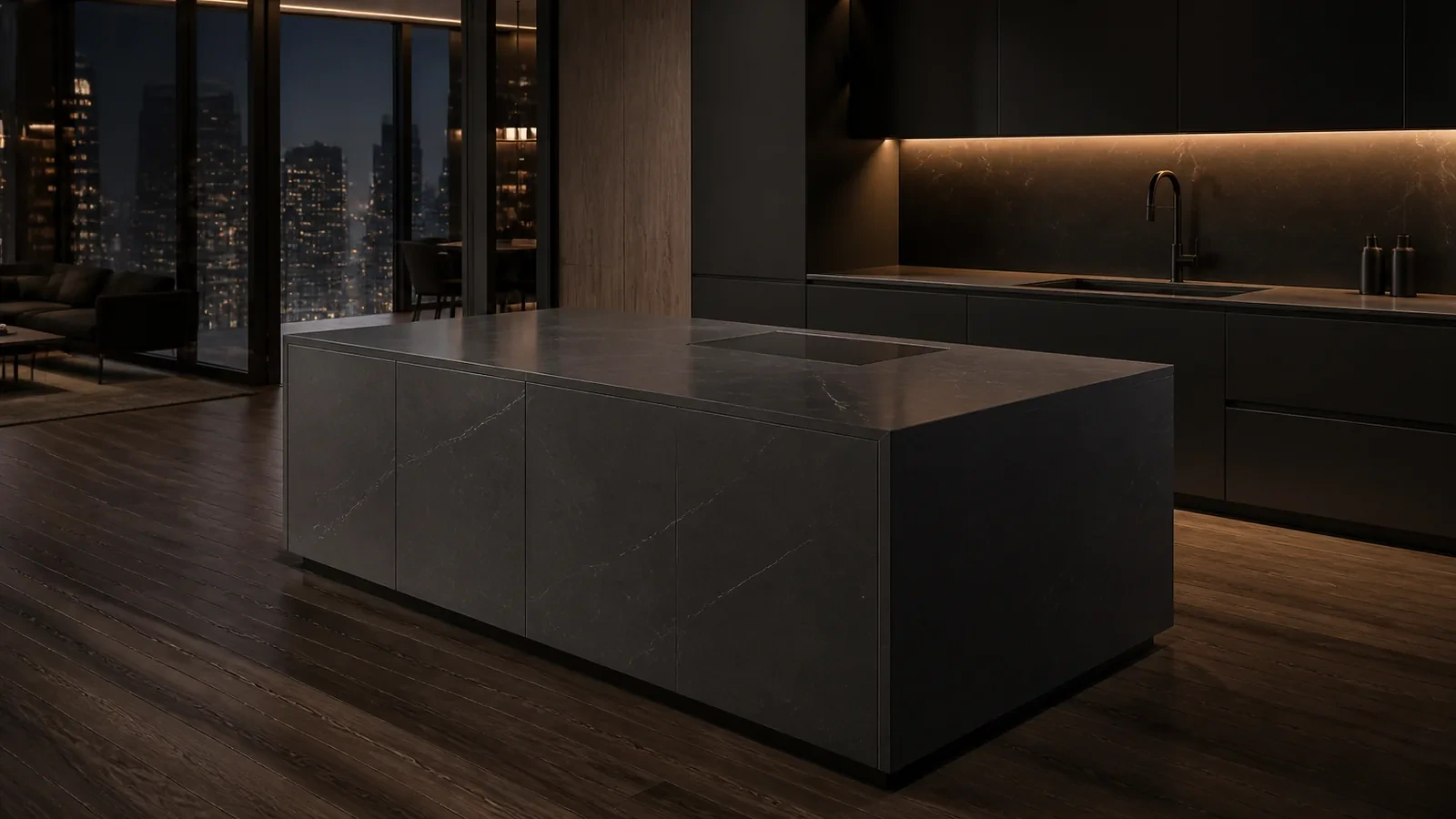
Warm light, cool light, daylight, and viewing angle can change the perception of color and veining. Review samples under conditions close to the intended space. The Natural Stone Institute’s Natural Stone Countertops considerations provide further questions for natural stone in kitchens and bathrooms; manufactured products should follow their relevant manufacturer guidance.
Reference images


Use and care for the selected material
General precautions include wiping spills promptly, using cutting boards and trivets, and avoiding cleaners that have not been confirmed for the surface. Care requirements are not identical for natural stone, engineered quartz, and sintered stone. With natural stone, surface protection also depends on the stone type, finish, and actual condition.
Handover records should state the exact material name or code, finish, and the manufacturer or supplier guidance for that product. Do not apply one general procedure to every surface simply because they look similar.
Prepare your requirements for discussion
To help NHAN BAN STONE compare materials and define the workshop-fabrication scope, provide current drawings, appliance data, application locations, reference samples, edge and joint requirements, and expected care conditions. Site survey, measurement, structural work, construction, and installation are not included in the scope described in this article.