

Customers often ask us the same question: “Which stone looks good without costing too much?” There is no single best stone for every project. A pattern is only a good choice when it suits the application, the lighting of the space and the budget.
This guide walks through eight natural granite patterns that are widely specified, with notes to help you compare them.
1. Indian ruby red
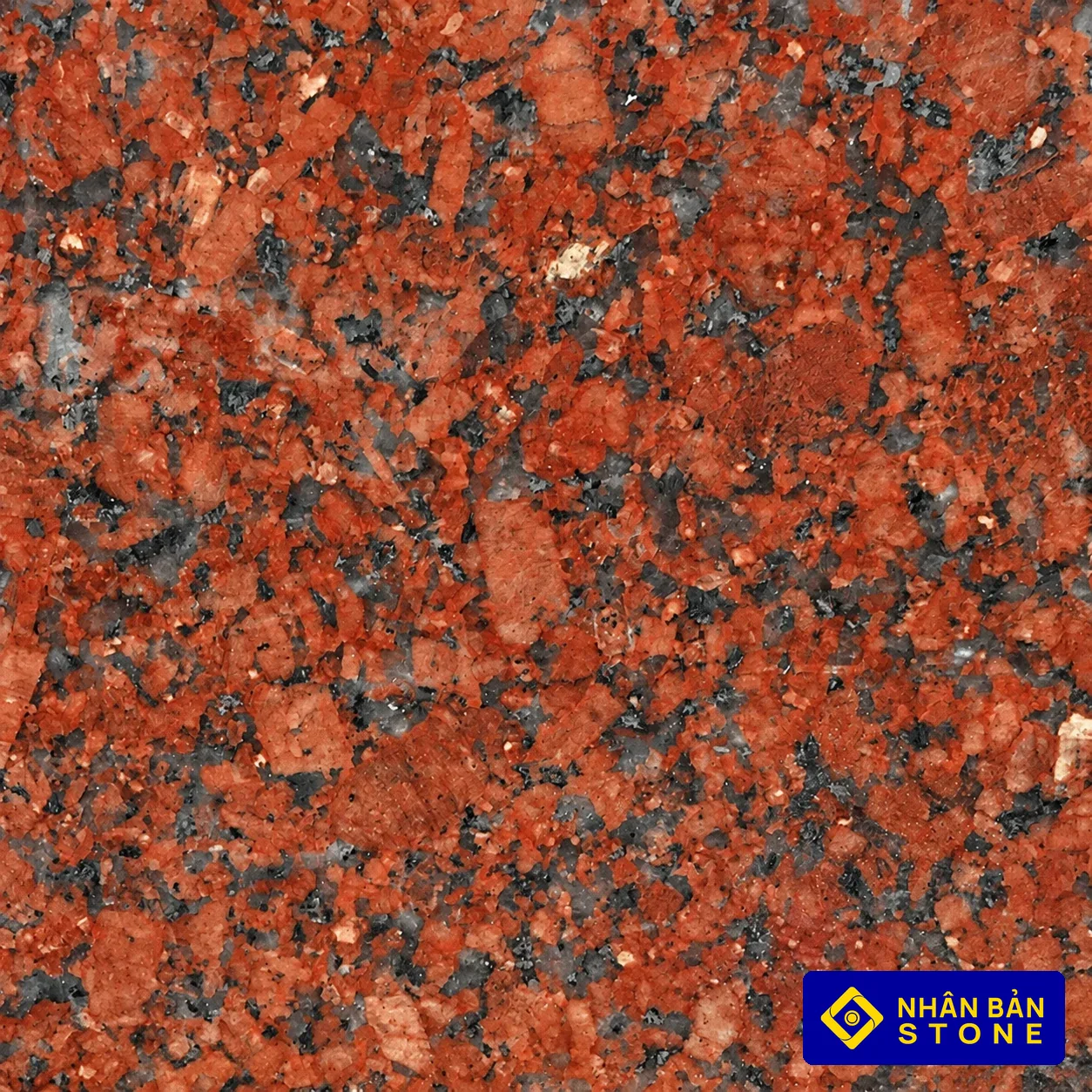
A deep red base with a fine grain and clear character. It makes an immediate impression, so it is often used for entrance steps, small facades, altars or a feature in a lobby. The colour is strong, so pair it with neutral tones to keep the space from feeling heavy. You can also consult our technical reference on “Selecting Natural Stone by Architectural Application” for comprehensive engineering specifications.
2. Desert red
An orange-red tone mixed with brown, with veining that runs in bands. It is softer than ruby red and suits homes that want some warmth. Because the movement changes from slab to slab, view the whole lot before you commit.
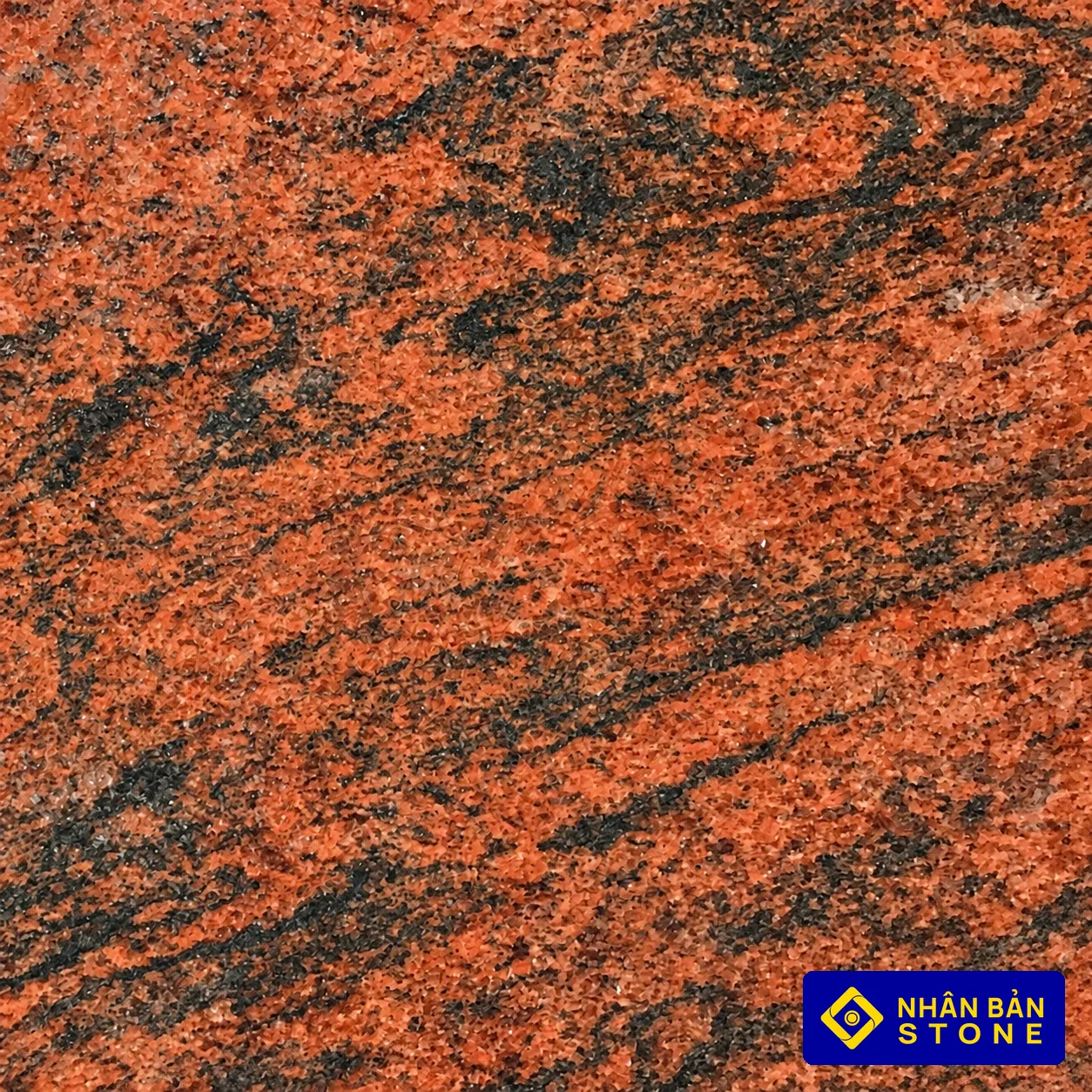
3. Black galaxy
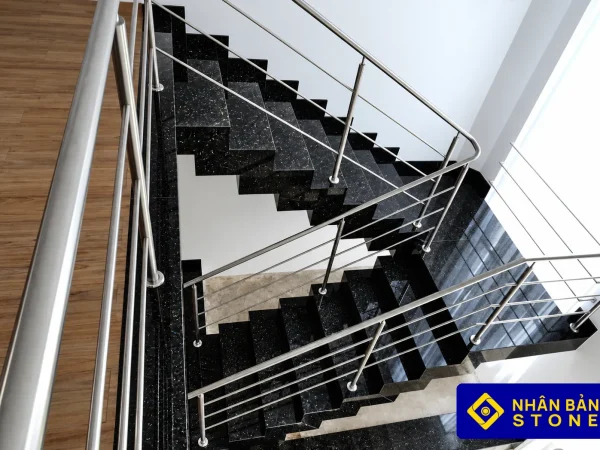
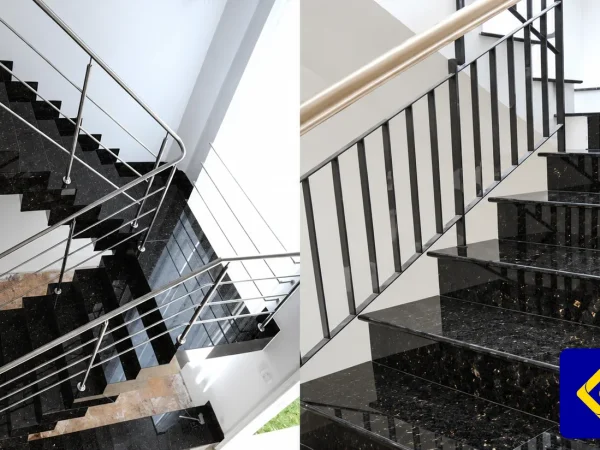
A black base scattered with tiny copper-coloured flecks, like a night sky when you look closely. It is a familiar choice for kitchen worktops, stairs and vanity tops because it is easy to coordinate. Look at it under the real lighting of the space, since the sparkle changes noticeably with the light source. You can also consult our technical reference on “Granite Slabs: Patterns and Architectural Applications” for comprehensive engineering specifications.
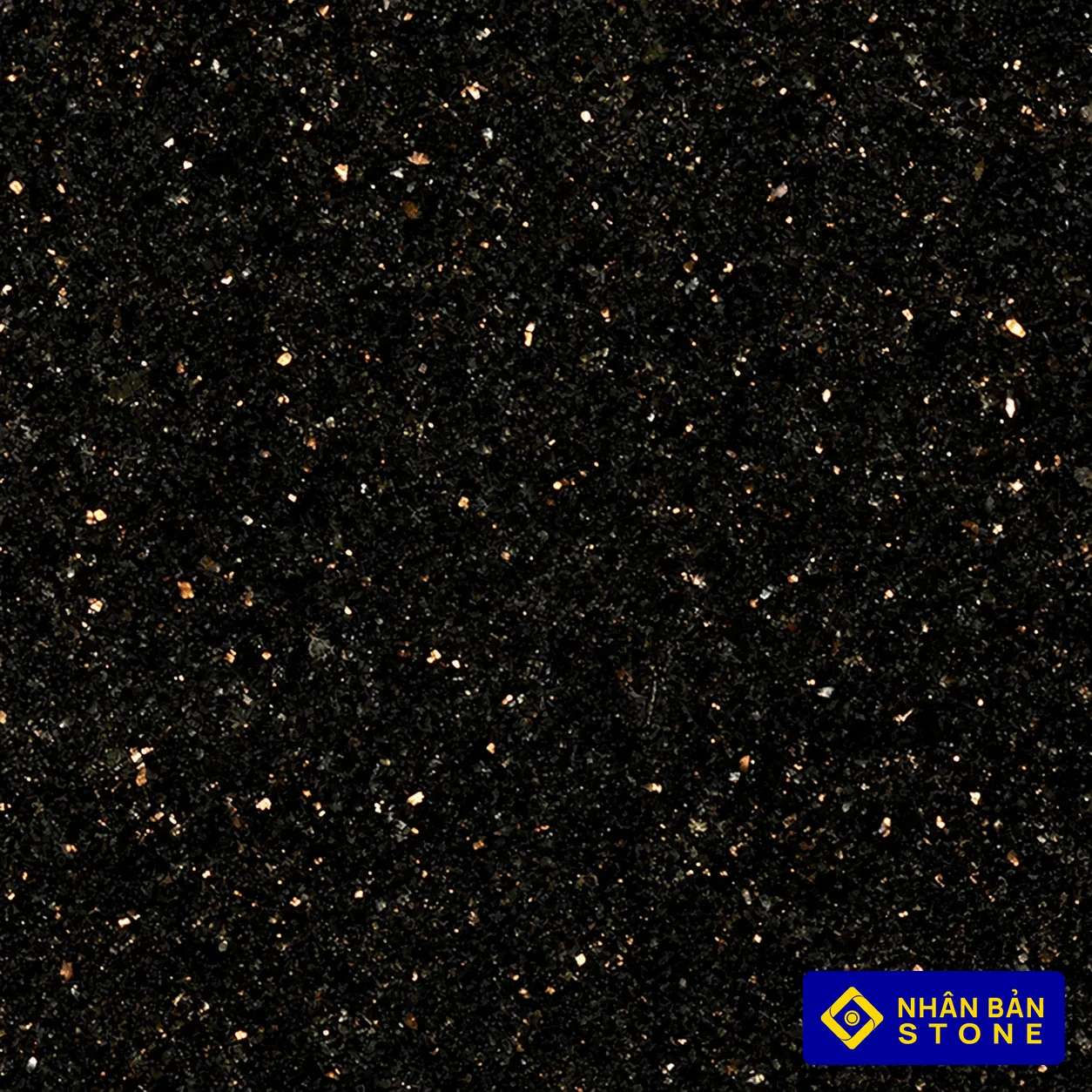
4. English brown
A reddish-brown base with large round grains, giving a warm, traditional feel. It suits living rooms, bars and dining tables in classic interiors.
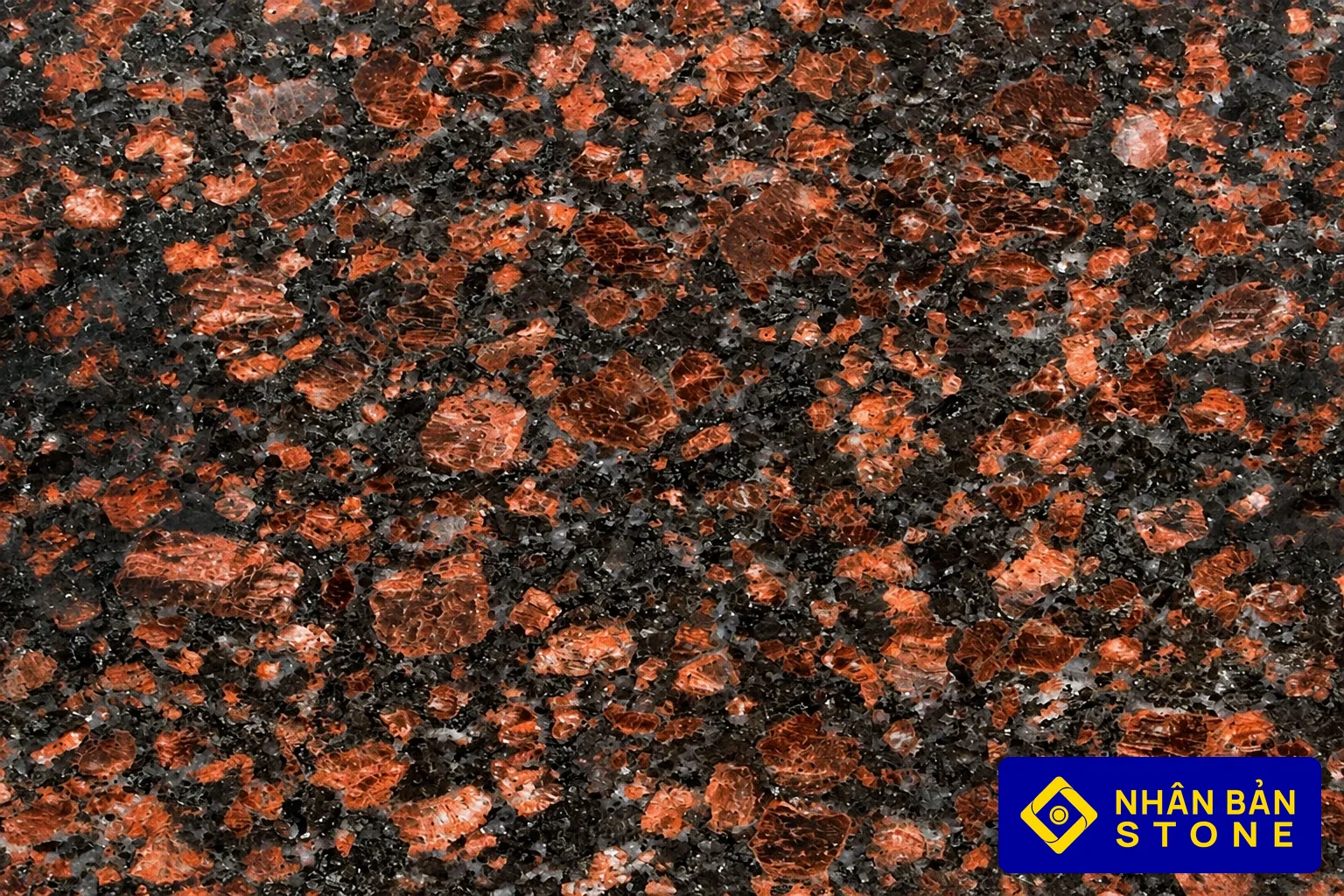
5. Dragon-eye white
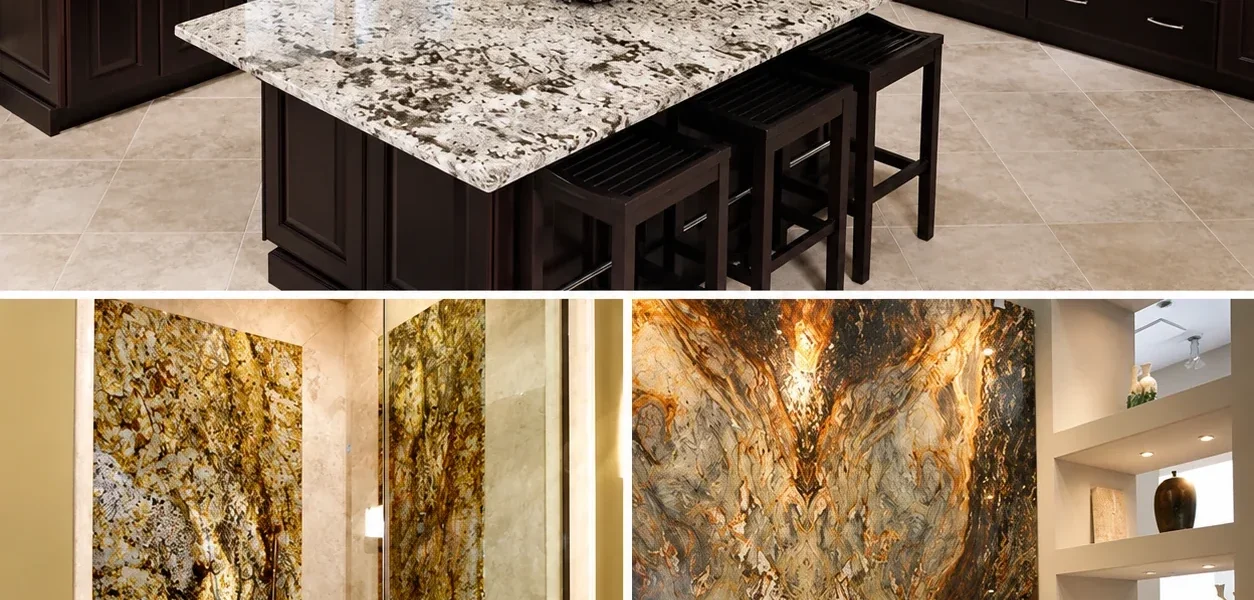
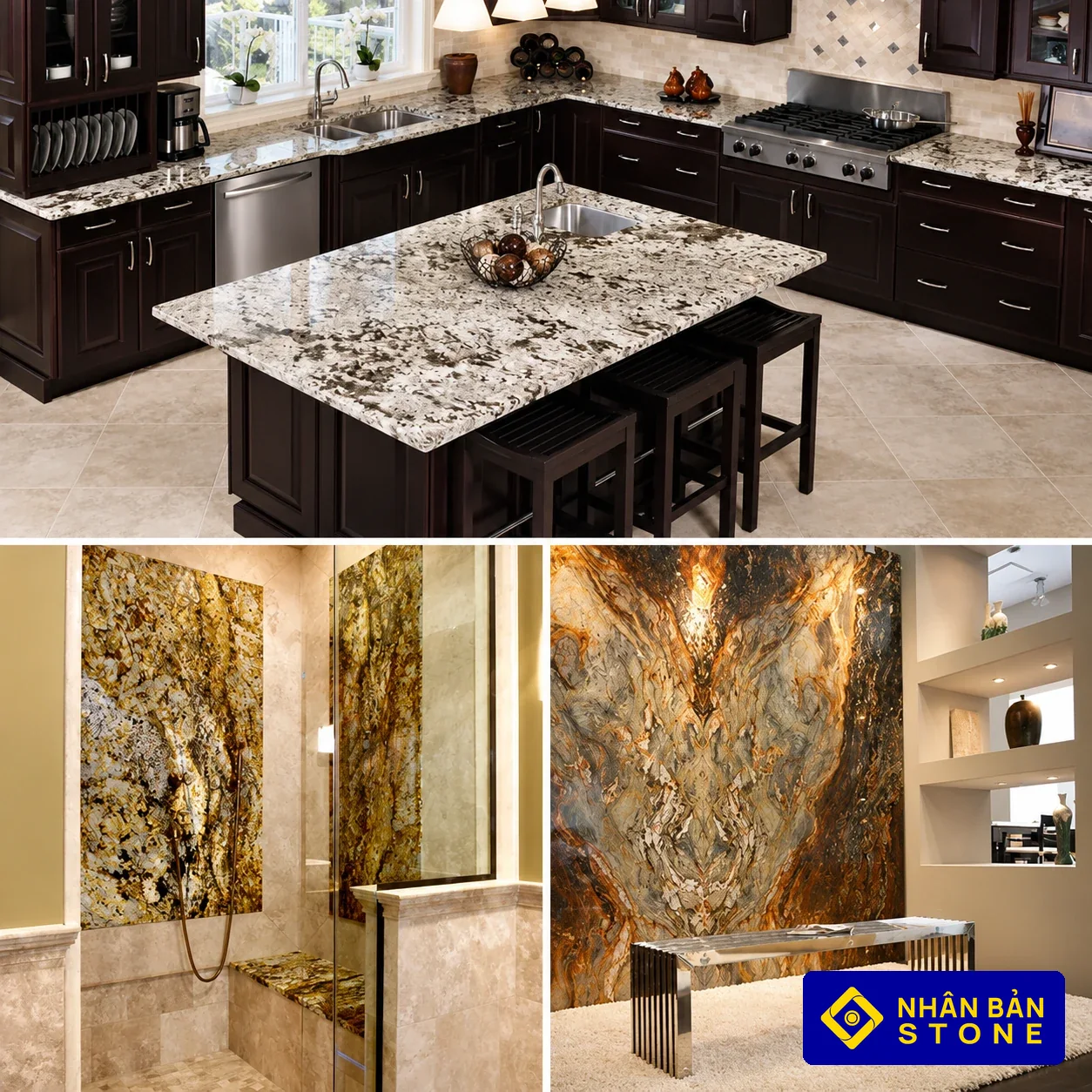
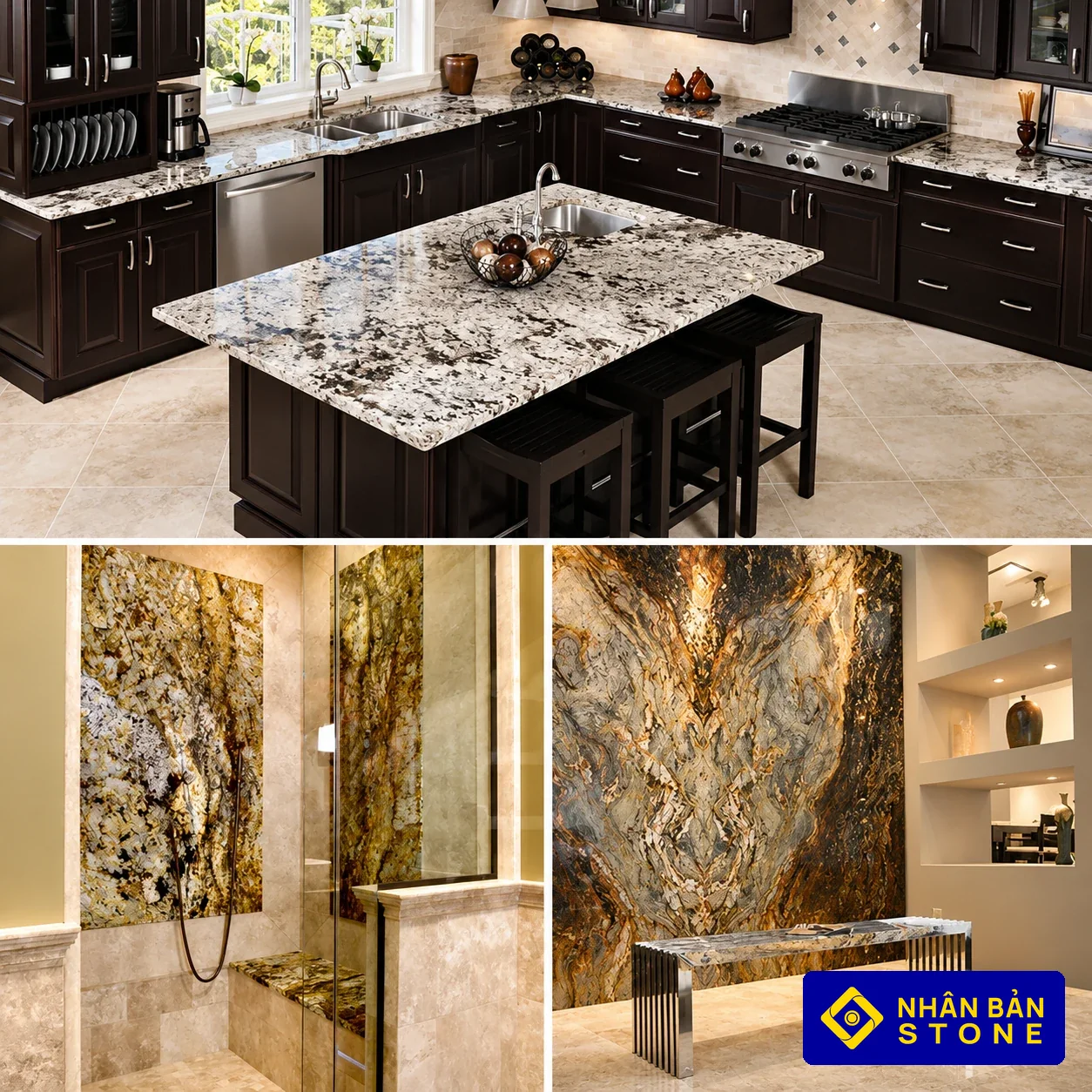
A light base with grey and black veins flowing in wave-like bands. It is a decorative choice for wall cladding, kitchen islands or any place that needs a feature while keeping the room bright. You can also consult our technical reference on “Natural Stone Surface Finishes: Technical Guide” for comprehensive engineering specifications.
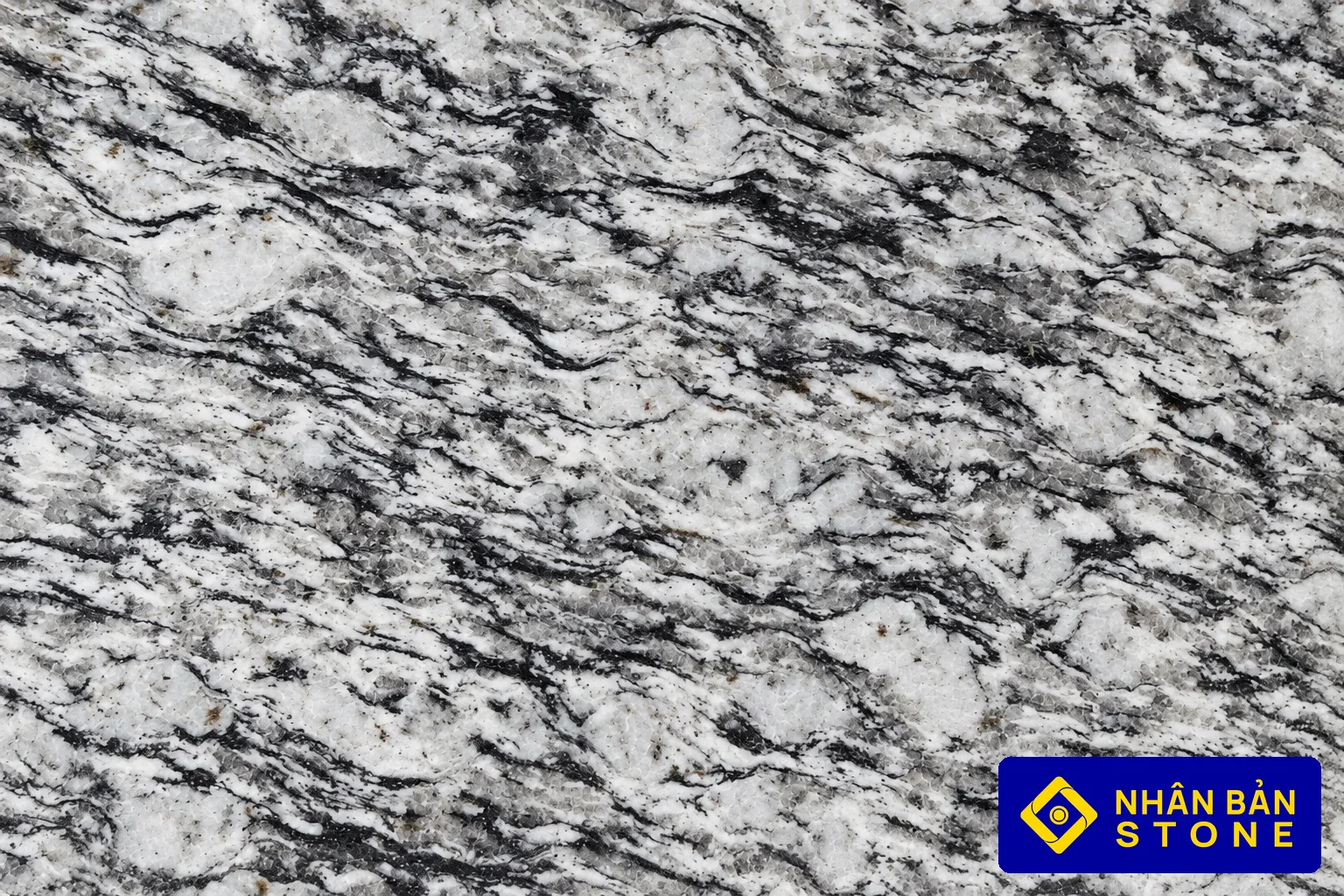
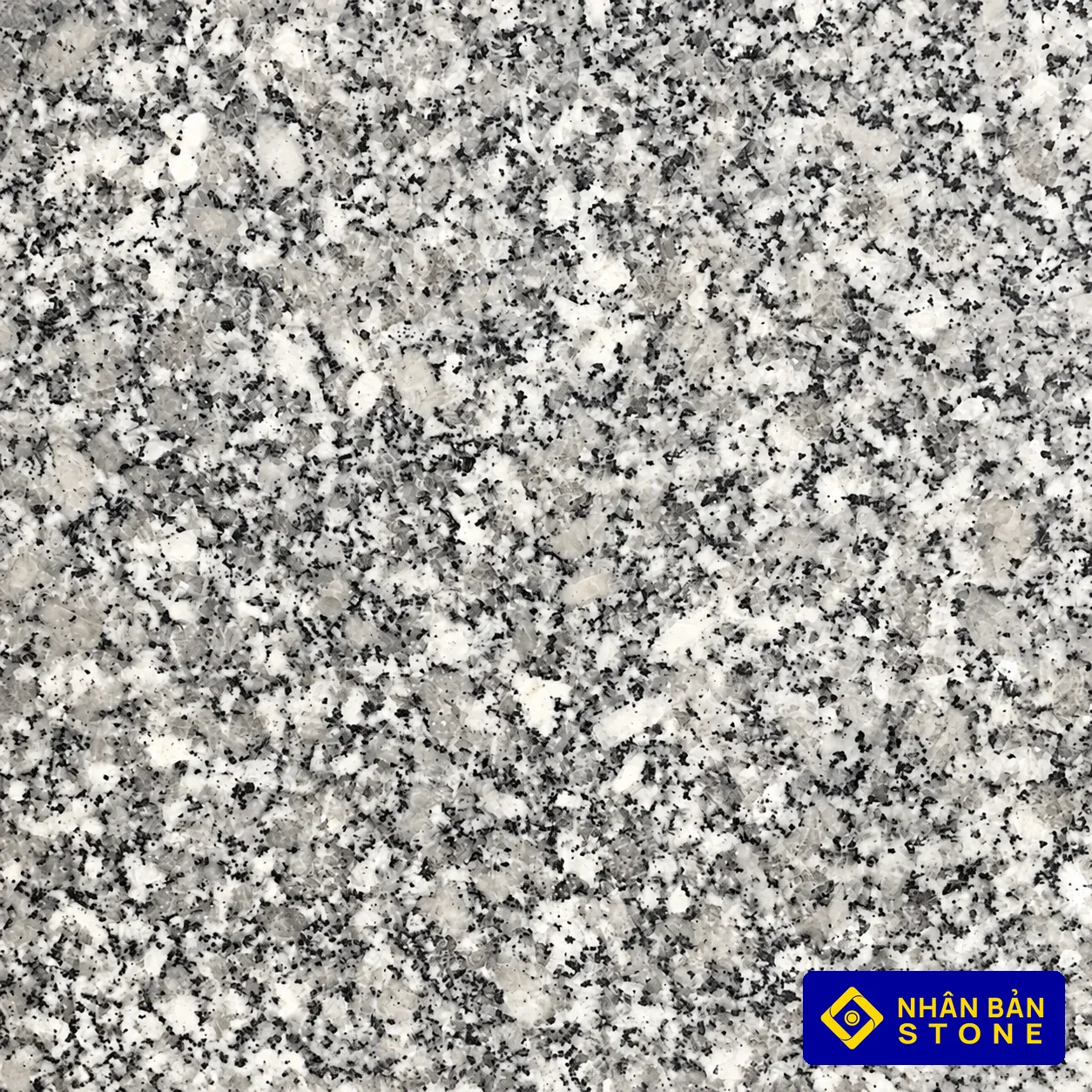
6. Suoi Lau white
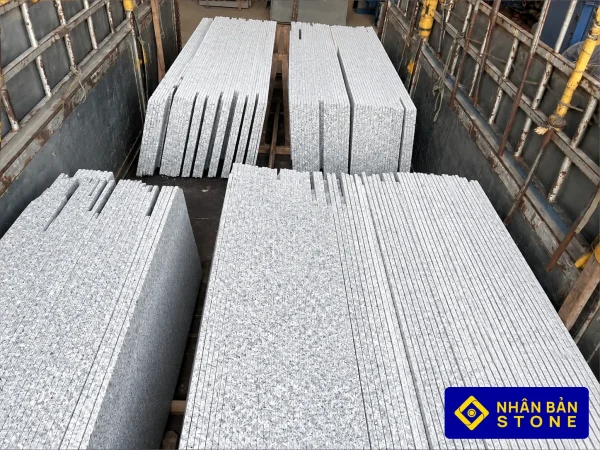
A domestic stone from central Vietnam, grey-white with fine black grains. The pattern is simple and easy to match, and the price is usually accessible, so contractors often choose it for floors, pavements, steps and facades. A separate article on this website covers Suoi Lau white in more detail.
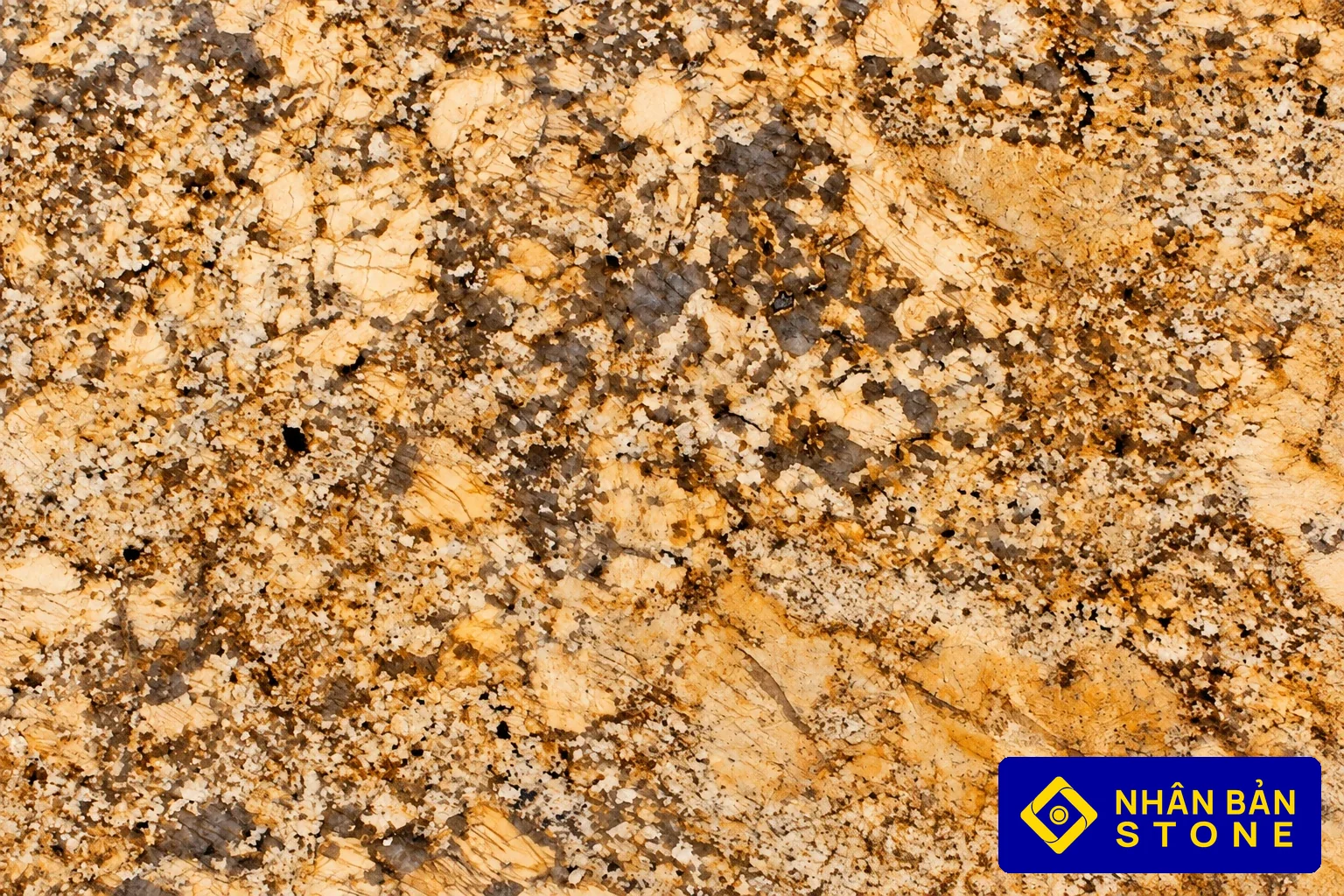
7. Imperial yellow
A cream-yellow base with brown veins and deeper golden tones. It gives a rich look and is often chosen for lobbies, reception counters or classic-style kitchens. The yellow stands out, so consider cabinet and floor colours carefully.
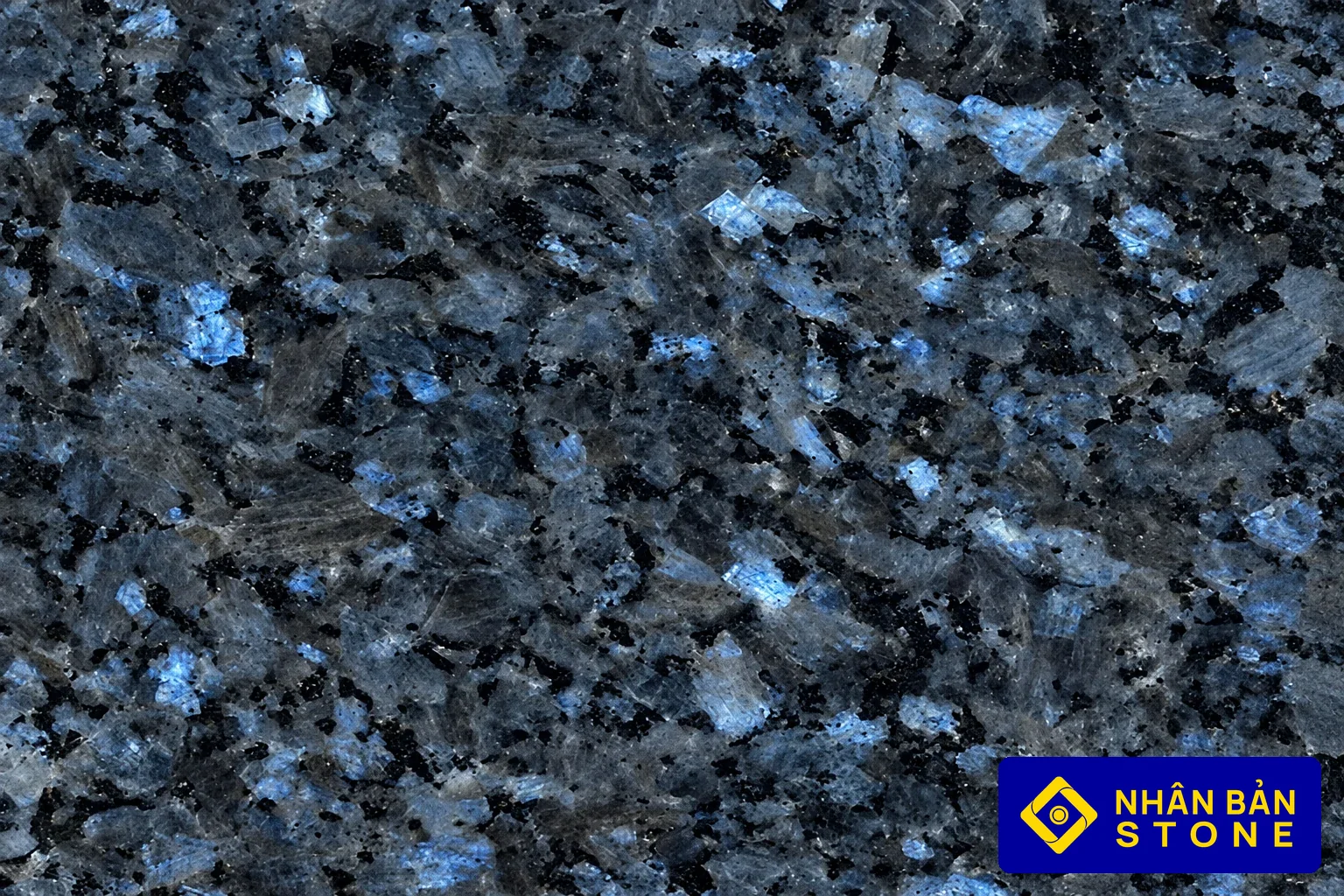
8. Blue pearl style
A blue-grey base with patches that flash blue when they catch the light. It adds a cool, refined accent and suits worktops, bathroom cladding and vanities.
How to choose well without overspending
- Start from the application. Floors, steps, worktops and outdoor tables need different finishes and thicknesses. Tell your fabricator before you choose.
- See the real slab, not only photographs. Colour and pattern vary between slabs, and screens can distort colour.
- Look at the full cost. Stone price is only one part. Cutting, edge work, openings, transport and installation all affect the total.
- Match the finish to the use. Polished surfaces look rich; honed or flamed finishes are more suitable where water or outdoor exposure is likely.
- Keep the approved sample. Use it as the reference when the material is delivered.
Prices vary with the batch, thickness, size and amount of fabrication, so we do not publish one fixed price for the whole group. For an accurate quotation, send drawings or dimensions to NHAN BAN STONE.
Price: Contact us