

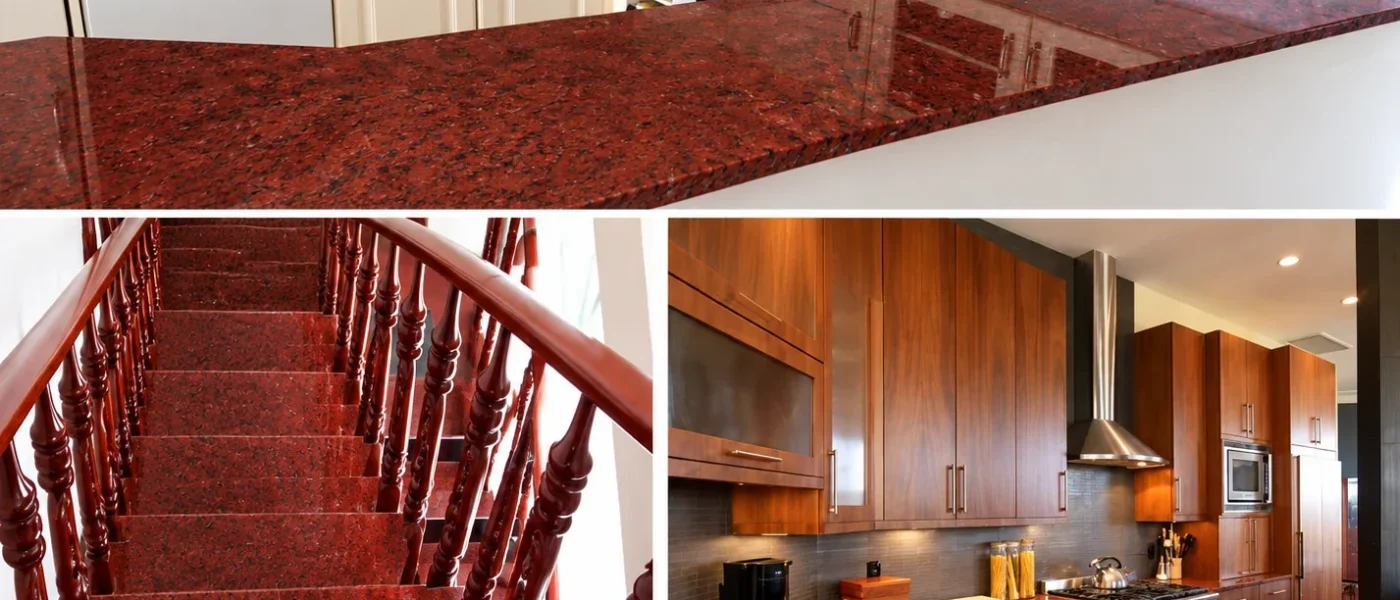
Indian ruby red granite and colour-treated red stone, usually of Chinese origin, look very similar in photographs. The differences only show over time once the stone is laid on an entrance step or facade. This guide explains what to compare so you can choose the right option for your needs and budget.
1. What do the two stones have in common?
- The same group: granite. Hardness and abrasion resistance are broadly similar, so when used in the right place and installed correctly, durability does not differ greatly.
- A dominant red with black spots. The size of the spots varies by stone.
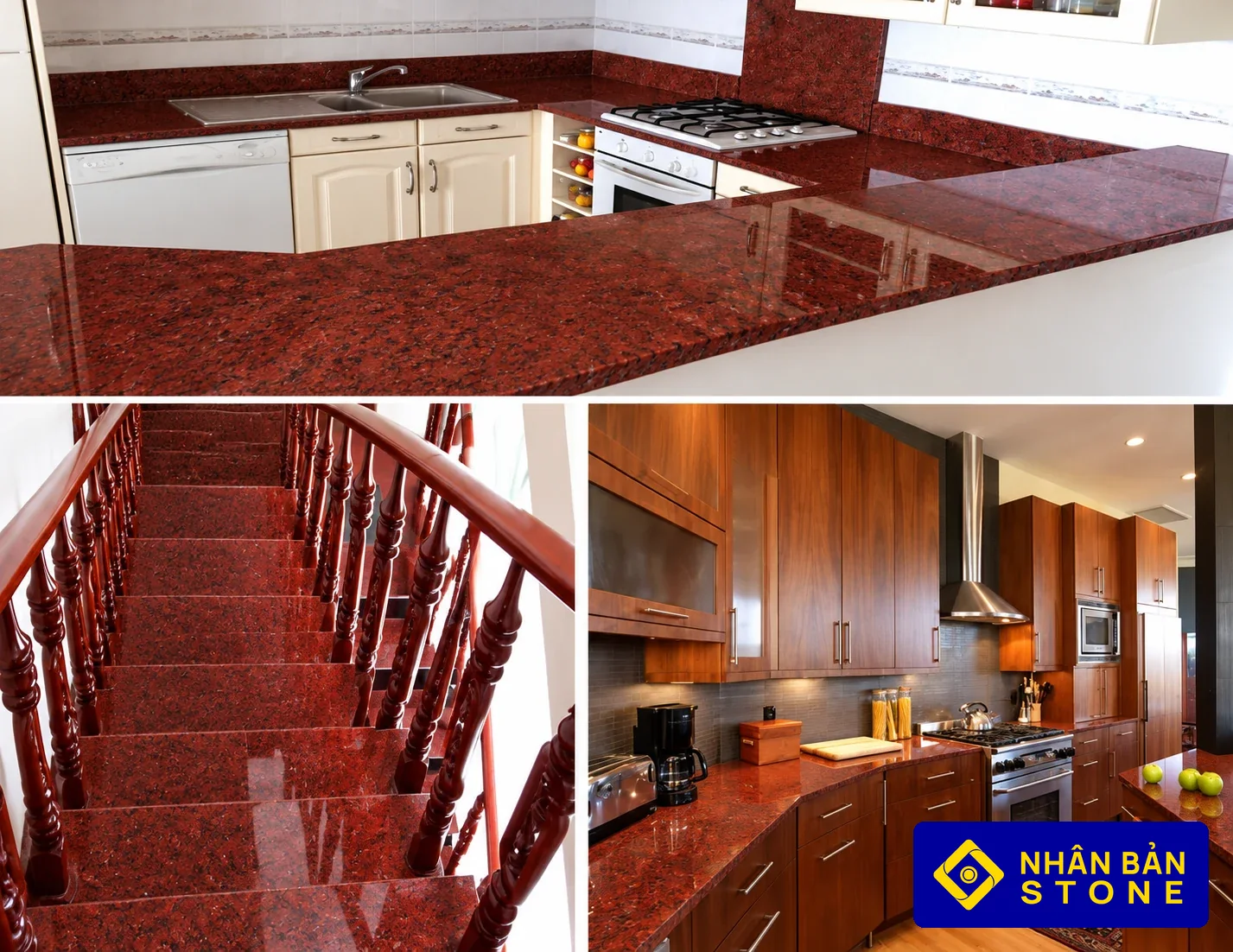
- The same applications. Stairs, entrance steps, worktops, facades, floors and lobbies. The red stands out, so it is easy to use as an accent and to pair with other stones.
2. Where they commonly differ
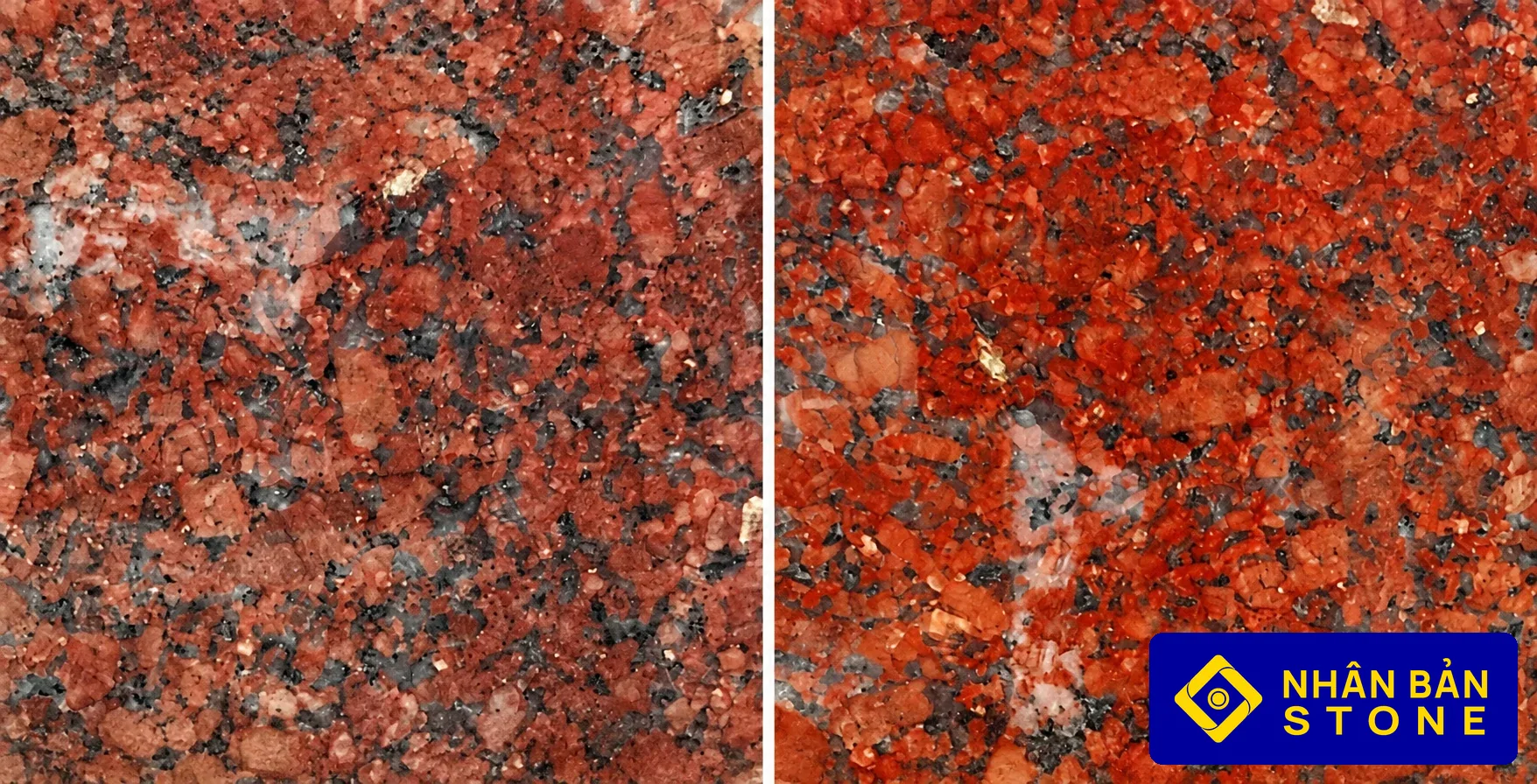
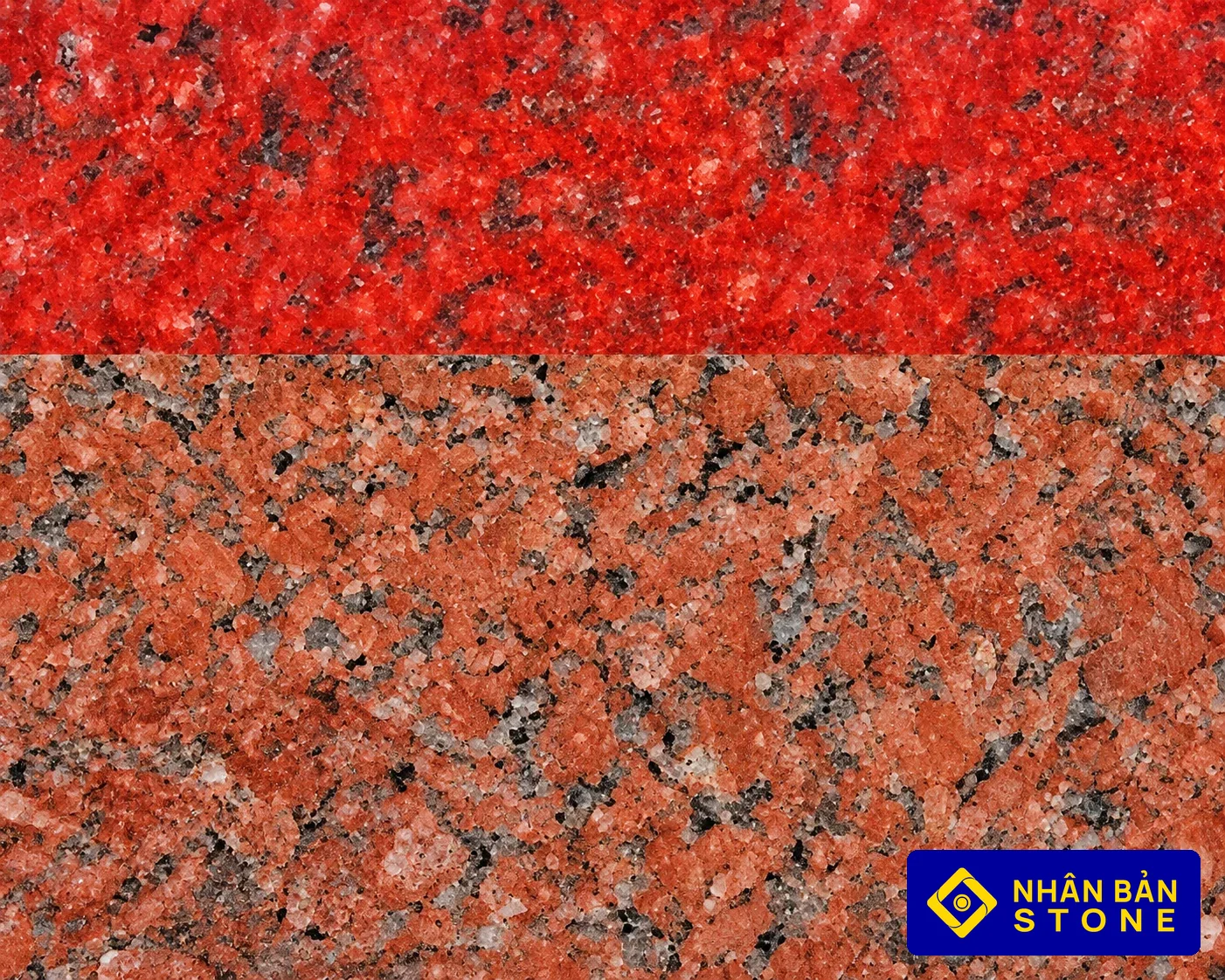
- Colour. Indian ruby red keeps the natural colour of its minerals. Colour-treated stone starts with a red that is not very vivid and is processed to look brighter.
- Gloss. In our experience, Indian red often has a slightly softer surface, while treated red tends to look glossier.
- Thickness. Confirm dimensions and thickness against the actual slab, approved drawings, and the load requirements of the application.
- Slab width. Confirm dimensions and thickness against the actual slab, approved drawings, and the load requirements of the application.
- Price. Indian red usually costs more.
These figures are common market values rather than a standard for every batch, so always measure and inspect the actual material.
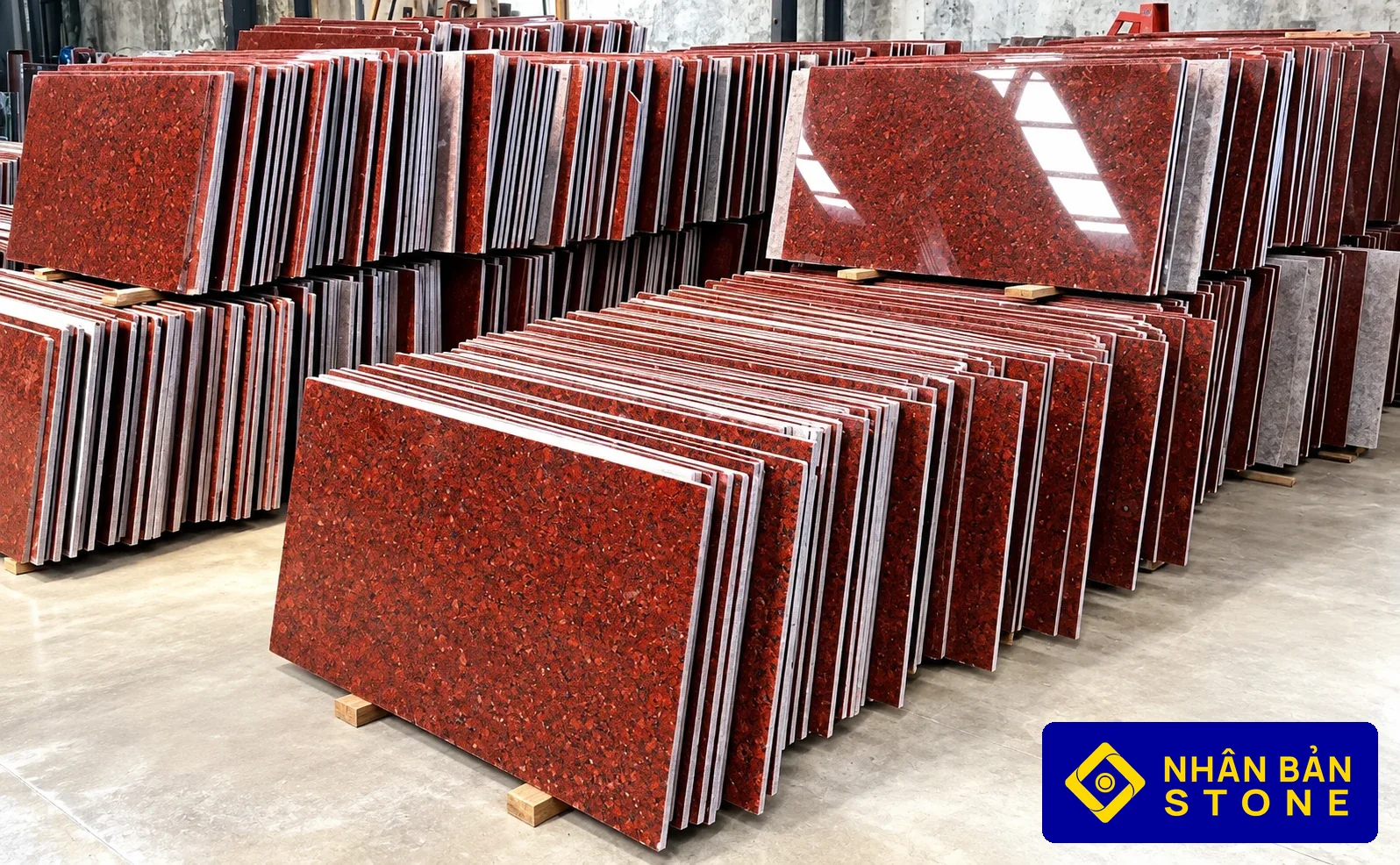
3. How to check before buying
- Look at the cut edge and the back. Whether the colour is even throughout or only in the outer layer is something to watch.
- Compare uniformity between slabs. Treated stone can be unusually uniform, while natural stone usually shows slight changes in tone.
- Measure real thickness. Use a gauge at several points on the same slab.
- Ask for documents. Ask the supplier about origin, batch and technical information for the exact stone you are viewing.
- Request a test sample. Leave it outdoors for a few days to observe colour stability, especially for sun-exposed applications.
4. Which should you choose?
There is no universal answer. It depends on where the stone will be used and on your budget. You can also refer to our guide on “Natural Granite Patterns: How to Choose for Each Application” to compare technical suitability for your installation.
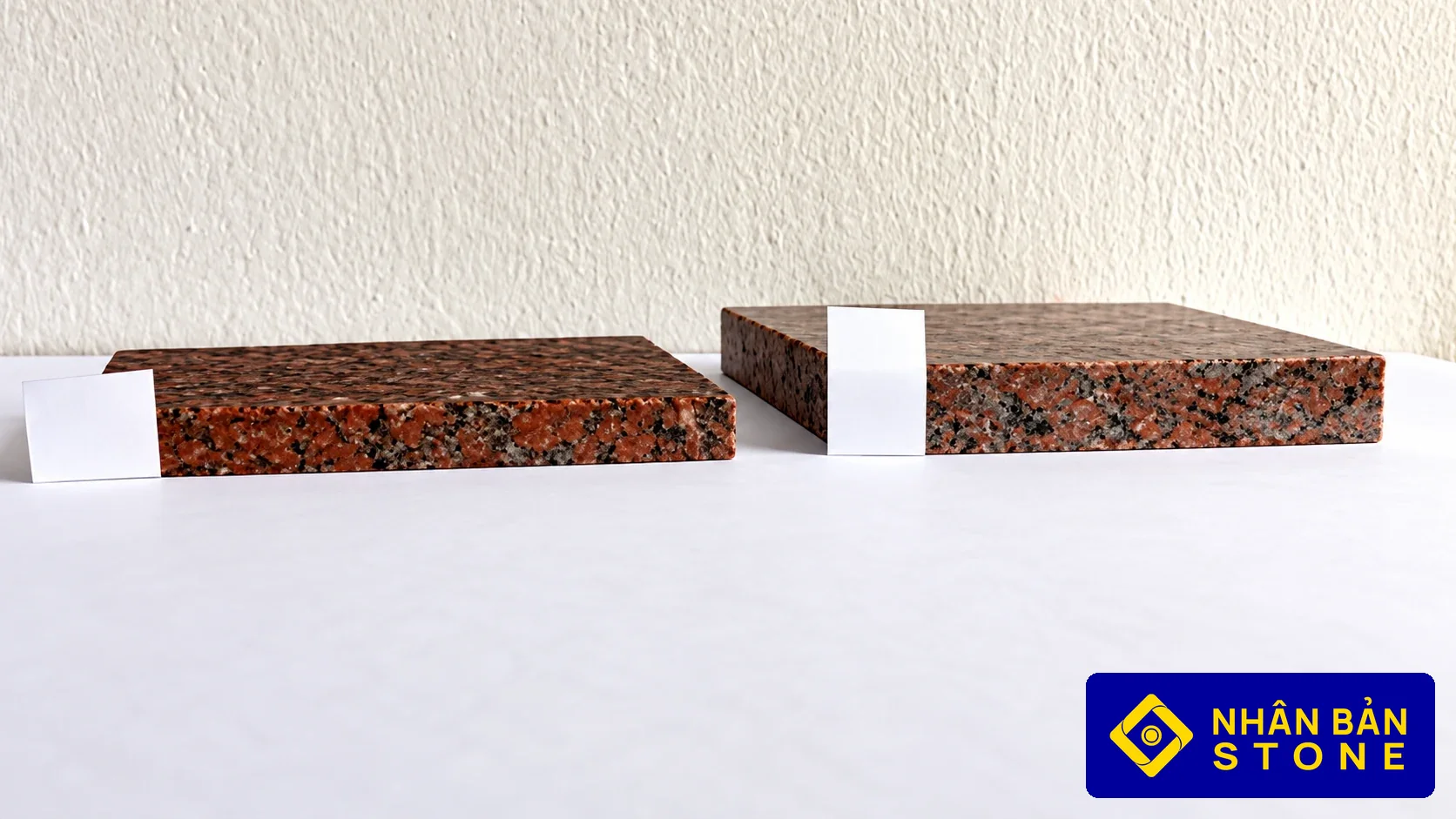
- Indian red suits you if you want long-lasting natural colour and good thickness, for stairs, entrance steps or weather-exposed areas.
- Colour-treated red may suit indoor areas with little sun exposure when you want a vivid red on a moderate budget. For facades or places in long-term sun, consider carefully because colour may change over time.
5. Notes on using granite
Over a long period any stone may lose some gloss to weather and foot traffic. Regular cleaning, correct maintenance and re-polishing when needed help the surface keep its appearance for longer.
If you need help checking samples or comparing the two for a specific project, send photographs and dimensions to NHAN BAN STONE. You can also consult our technical reference on “Selecting Natural Stone by Architectural Application” for comprehensive engineering specifications. You can also consult our technical reference on “Natural Stone Surface Finishes: Technical Guide” for comprehensive engineering specifications.
Price: Contact us