Dimension-Stone Quarrying in India: Main Process Stages

A practical guide to evaluating dimension-stone quarrying in india: main process stages, including samples, specifications, fabrication and care.

Share this article:
Published on

Small quarries, divided like farmland

According to the team’s notes, Rajasthan has around 3,000 quarries of different sizes. Most block-producing quarries cover less than 5 hectares, because land for extraction is divided in a way similar to farmland in Vietnam. Each quarry therefore chooses technology to suit its size rather than applying one standard model.

Two methods by quarry size

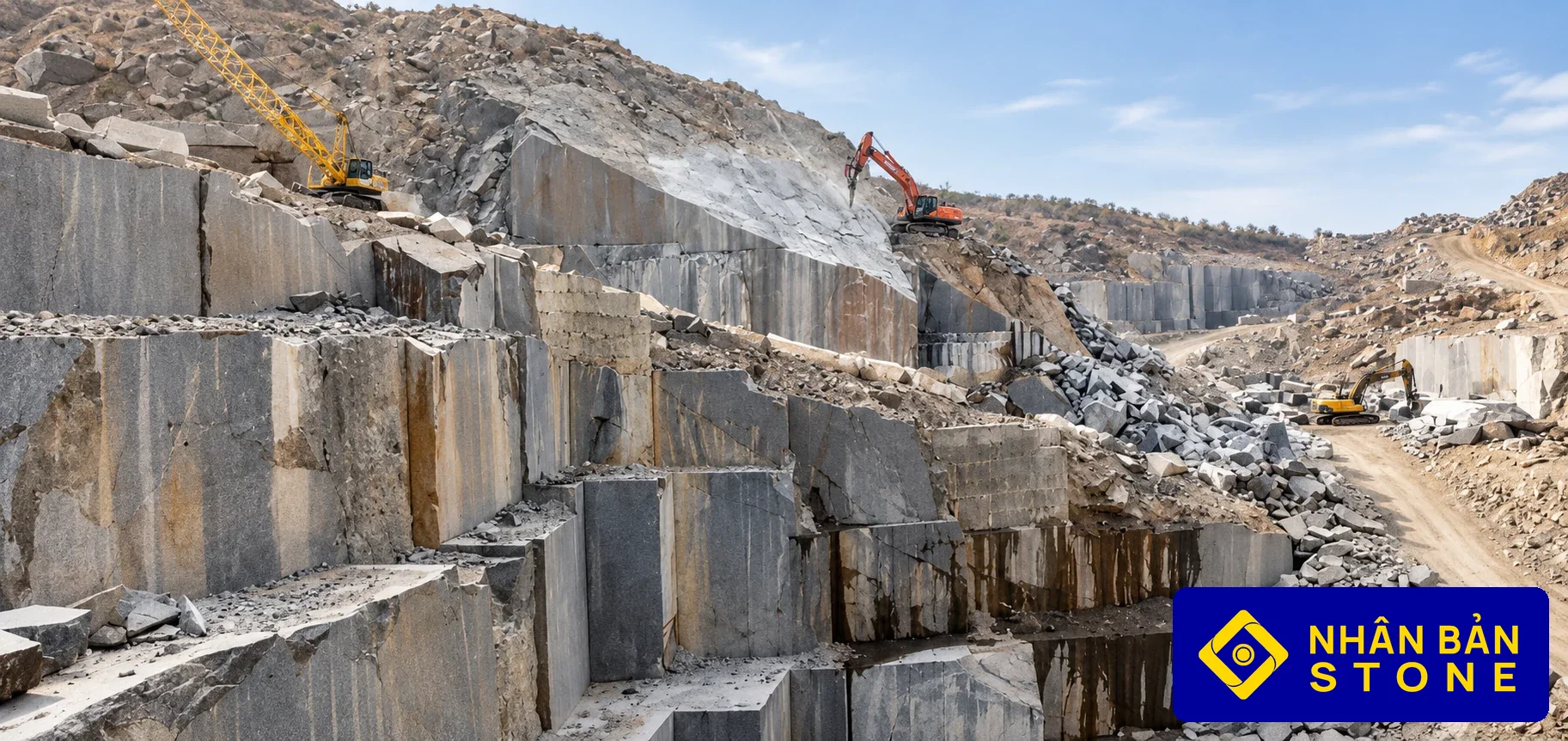
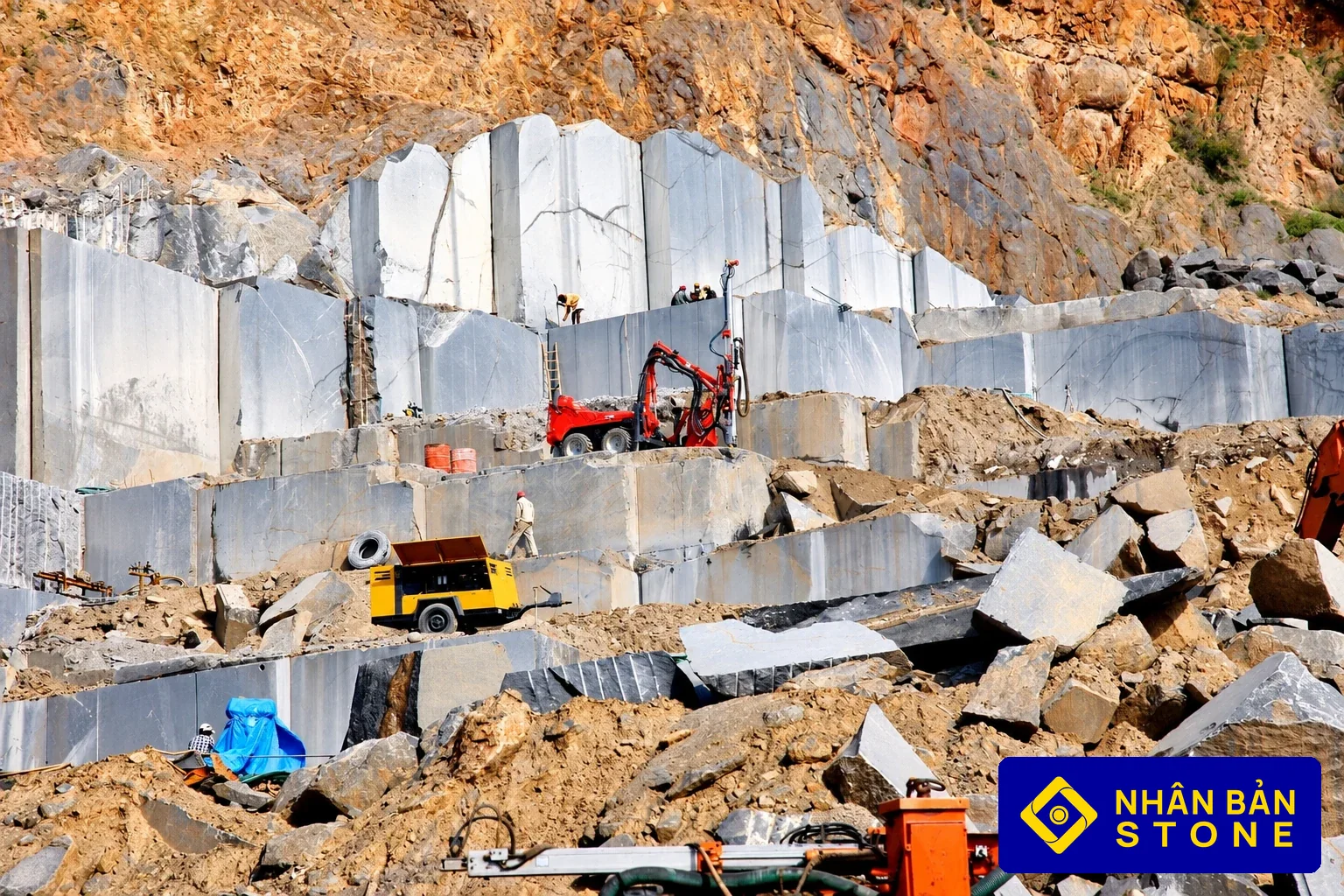
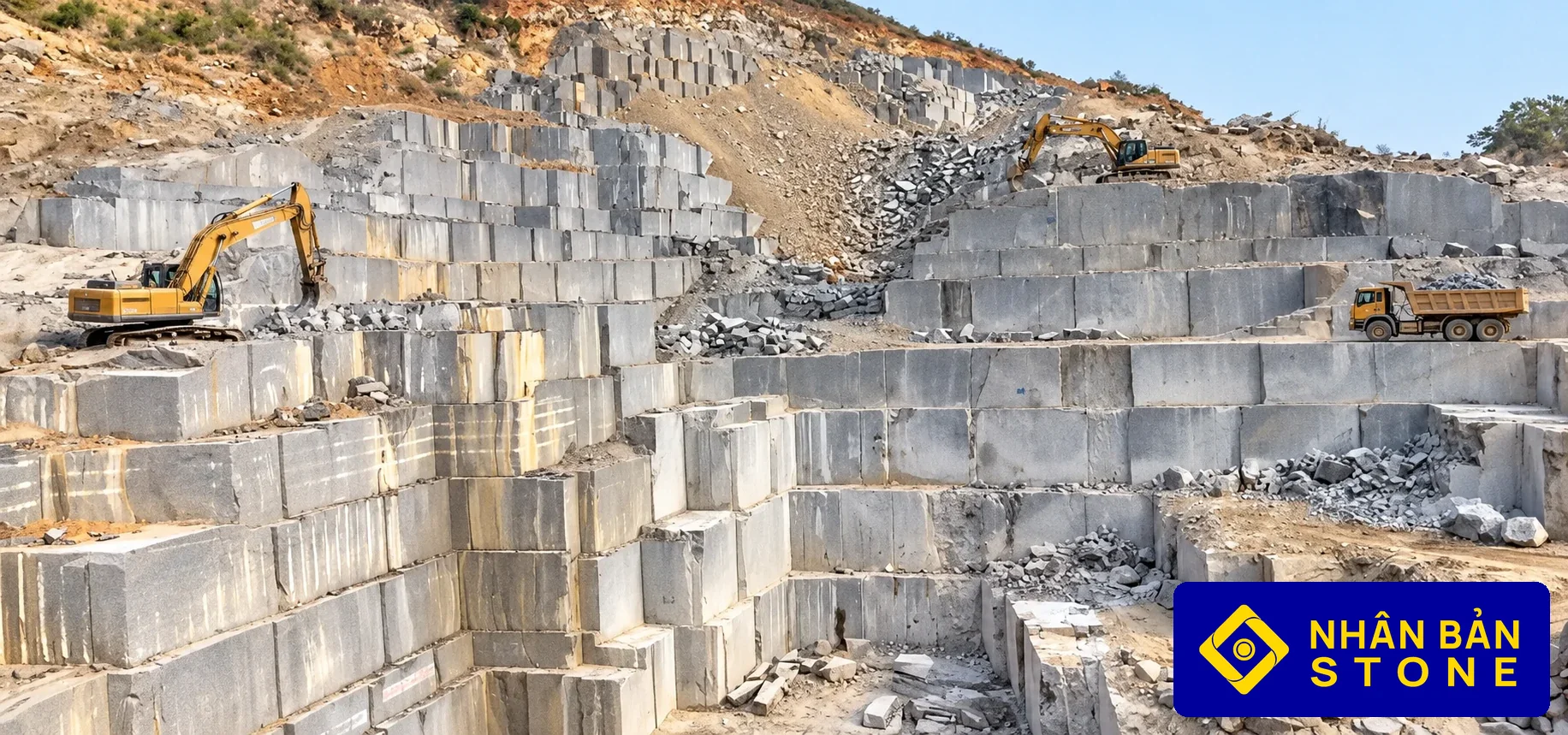
Large, concentrated quarries. Overburden is stripped across a wide area. Diamond wire saws, hydraulic jacks and excavators separate the blocks, and wheel loaders lift them onto trucks.
khai thac da kim sa An Do 1 1024x481
khai thac da kim sa An Do 2 1024x480
khai thac da kim sa An Do 3 1024x483
kst khai thac

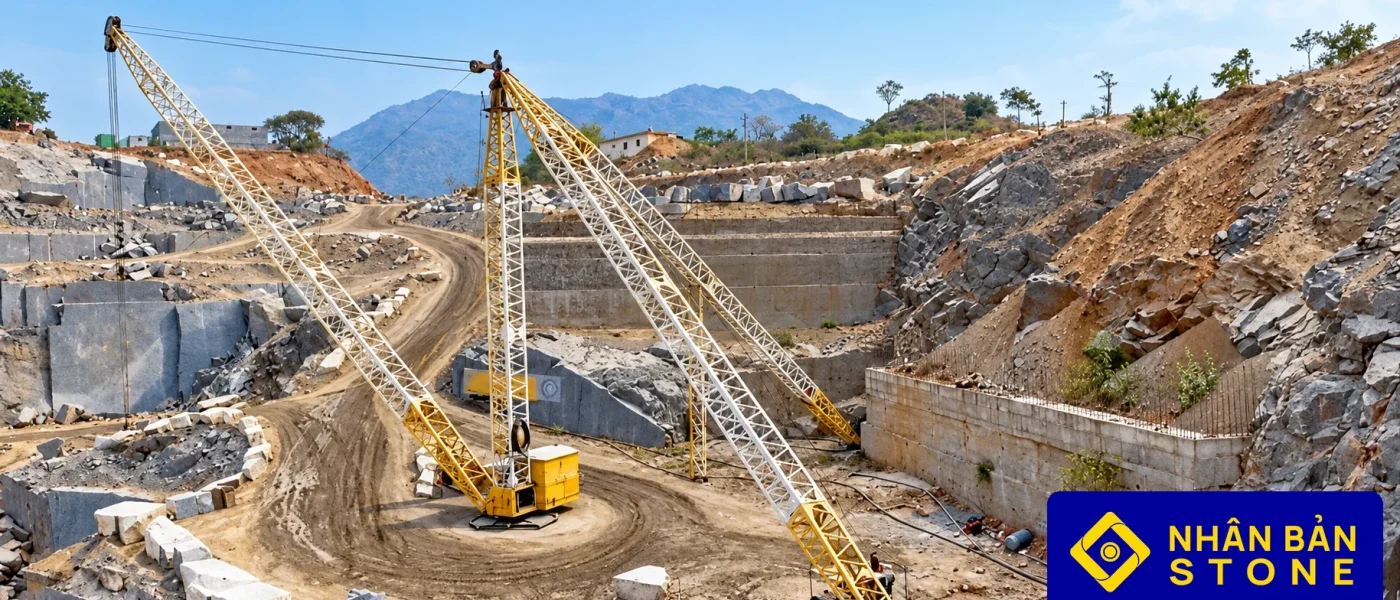
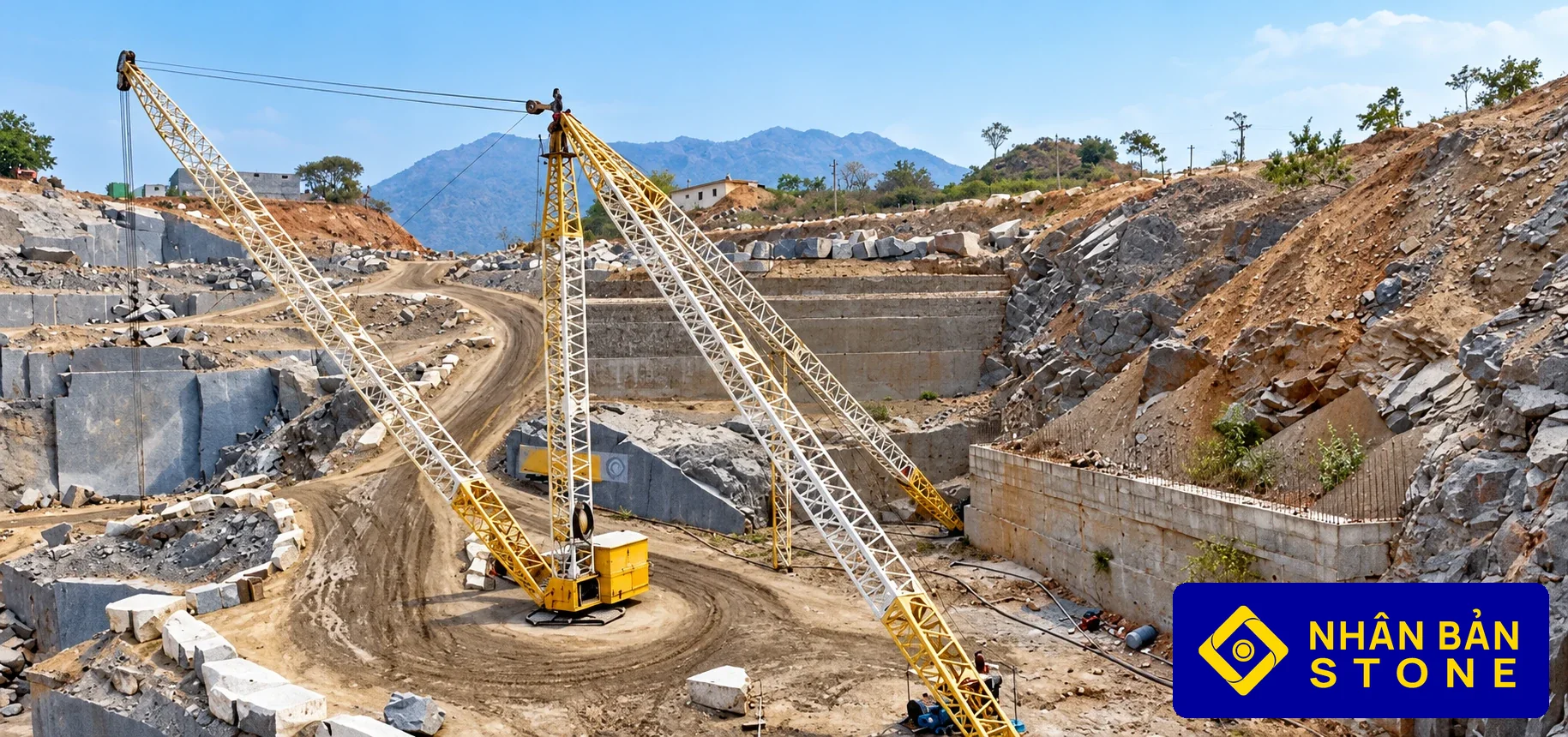
Smaller quarries. The same diamond wire saws, hydraulic jacks and excavators are used, but handling is done with a fixed three-leg derrick crane at the site. Equipment investment is lower, which suits quarries with limited area. You can also refer to our guide on “Natural Granite Patterns: How to Choose for Each Application” to compare technical suitability for your installation.

Three main stages at the quarry

  1. Opening the face. Survey and strip overburden to find a suitable position, often working from the top of the hill downward. This requires building an access road to the top.
  2. Cutting blocks. Drill guide holes, thread the wire and use saws to release large blocks, tens of metres high and wide and about 3 m thick. The blocks are toppled and then divided with lower-power saws to fit the gang saw, about 3 m × 2.5 m × 2 m.
  3. Handling and transport. Wheel loaders or fixed derricks lift the finished blocks onto trucks bound for the sawing plant.

What matters most: cutting along the grain

Each block should be cut along the grain and should keep a consistent pattern so that slabs can be matched. The direction of the drill holes for the wire is therefore important. The team found that hiring an adviser on drilling direction is a sensible cost if you want to get the most value from each block.

What could this mean for Vietnam?

From the visit, we believe the small-quarry approach is suitable for the first three to five years of a new project, as many small Indian quarries do. Once operations are stable, a gradual move to a larger scale can be considered. A foreign operator is already extracting certain granites in Vietnam with this technology on a large scale, which suggests that mechanised quarrying is beginning to take hold. You can also consult our technical reference on “Stone Slab Dimensions and Thickness Prior to Fabrication” for comprehensive engineering specifications.

Our takeaway

The trip was short, but combined with years of experience in granite and marble, it reinforced a view: slab quality starts with how stone is quarried and how blocks are selected, not only with final fabrication. Understanding origin helps us advise candidly on uniformity, pattern matching and the limits of each material. You can also consult our technical reference on “Natural Stone Surface Finishes: Technical Guide” for comprehensive engineering specifications.

Price: Contact us

Technical Consultation & Quotation

More from Similar Topics

Heated discussion: You might want to know

FABRICATION & MATERIAL SPECIFICATIONS FAQ

Frequently Asked Questions

Verified details on workshop CNC fabrication, shop-drawing submission, and stone material parameters at NHAN BAN STONE.

01 What stone fabrication specifications does NHAN BAN STONE provide for serviced apartments and residential projects in HCMC?

NHAN BAN STONE supplies raw stone slabs and provides workshop-based precision fabrication according to approved technical drawings: bridge saw cutting, undermount/overmount sink cutouts, edge profiling, and 45-degree mitered joints for kitchen countertops, vanities, stairs, and thresholds. Customers or contractors provide itemized dimension drawings, and finished components are fabricated on laser bridge saws and CNC machinery for collection at our workshop (District 12) or curbside delivery. Our scope focuses strictly on factory fabrication; we do not provide on-site measurement, installation, or construction services.

02 Which stone surface is recommended for rental property countertops balancing long-term durability and budget?

For serviced apartments and rental units with frequent cooking, dense Natural Granite varieties (such as Indian Black, Black Galaxy, or Suoi Lau White) are commonly preferred for their surface hardness, thermal resistance against hot cookware, and stain resistance against household liquids. Natural stone exhibits inherent variation in veining and tonal shade across quarries; NHAN BAN STONE recommends inspecting current batch slab samples prior to finalizing fabrication orders.

03 What specifications should customers prepare to receive an itemized fabrication quotation?

To receive a precise estimate, please prepare: (1) Detailed dimension drawings or cutting schedules (length, width, thickness); (2) Required edge profiles (beveled, bullnose, mitered) and cutout locations; (3) Specified stone code or preferred aesthetic tone; (4) Total quantity and requested completion timeframe at the workshop.

04 How are fabricated stone pieces treated and inspected prior to dispatch?

Following precision cutting on infrared bridge saws and CNC machines, components are verified against drawing dimensional tolerances. Prior to dispatch, cut edges and faces receive surface sealing using dedicated penetrating sealers for natural stone. Sealer longevity depends on specific mineral characteristics and post-handover care (prolonged contact with harsh acidic cleaners should be avoided).

05 Where is the warehouse located and how can customers inspect physical slabs?

Slabs and sample batches can be inspected directly at the NHAN BAN STONE Warehouse & Workshop: 1765 National Highway 1A, Tan Thoi Hiep Ward, District 12, Ho Chi Minh City (Hours: Monday – Saturday, 07:00 – 17:00). Alternatively, technical drawings can be sent via WhatsApp/Zalo (+84 909 221 083) for material suitability advice.