

Among imported architectural granites, Indian Ruby Red granite (also known internationally as Imperial Red or New Imperial Red) commands a distinguished reputation for its vibrant scarlet presence and enduring durability. This deep red igneous stone delivers striking visual impact and carries rich symbolic resonance in Asian spatial traditions.
This technical guide reviews its geological origins, mechanical properties, grain varieties, and best practices for site installation.
1. Geological Origins and Characteristic Colour
Indian Ruby Red is quarried primarily across igneous massifs in Rajasthan and Tamil Nadu. It formed through the slow deep-crust crystallization of magma heavily enriched in potassium feldspar and quartz crystals. You can also refer to our guide on “Indian Red Granite and Colour-Treated Red Stone: How to Check” to compare technical suitability for your installation.
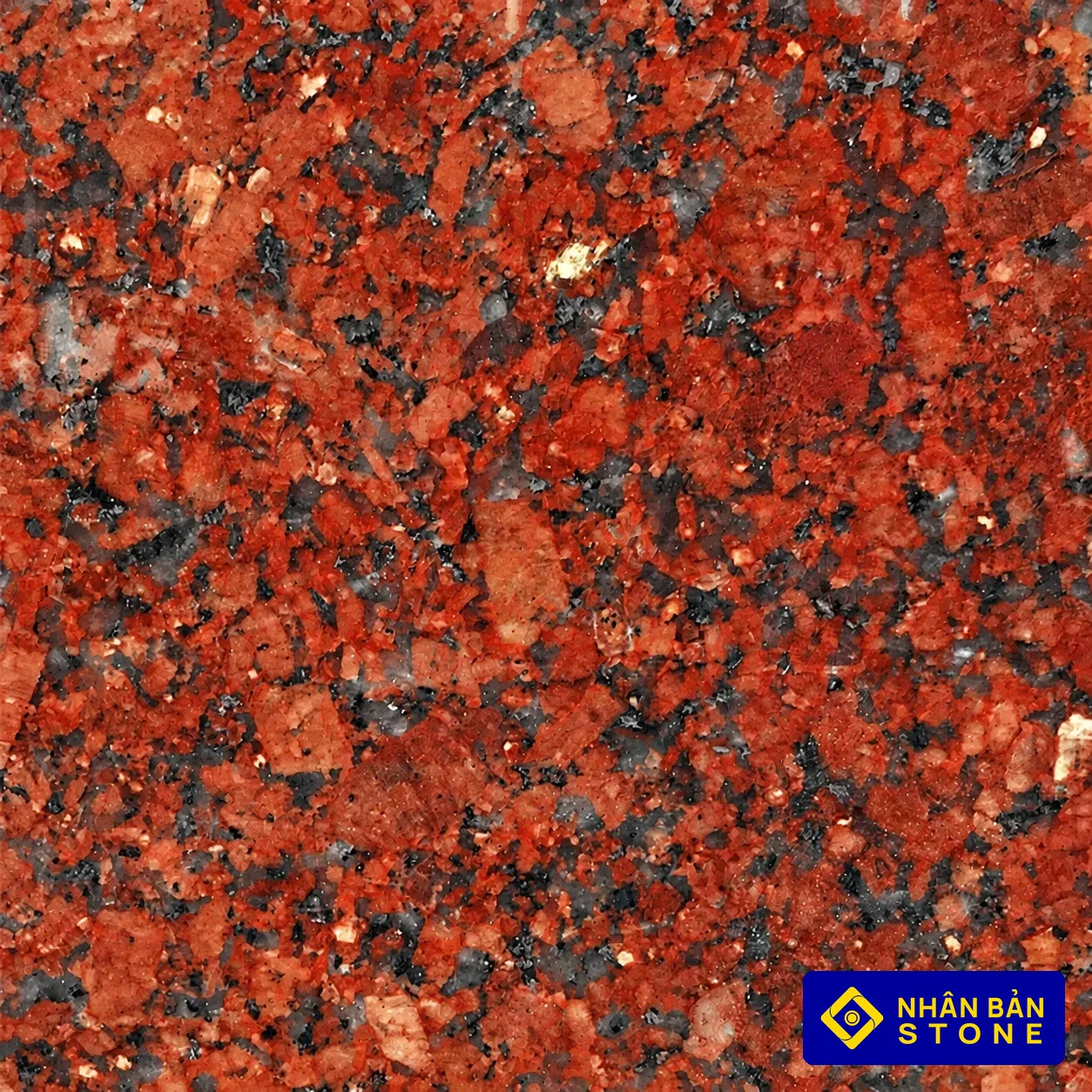
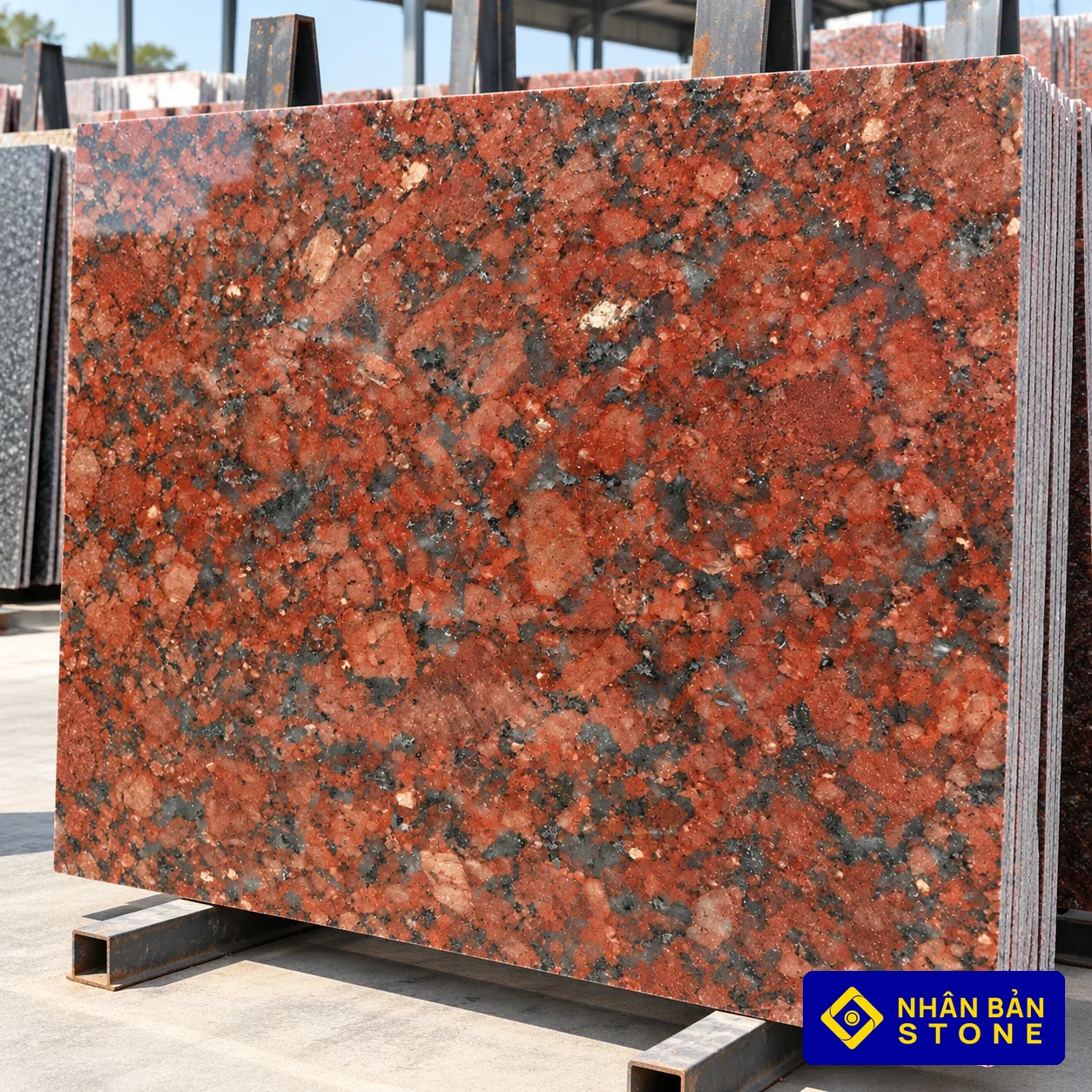
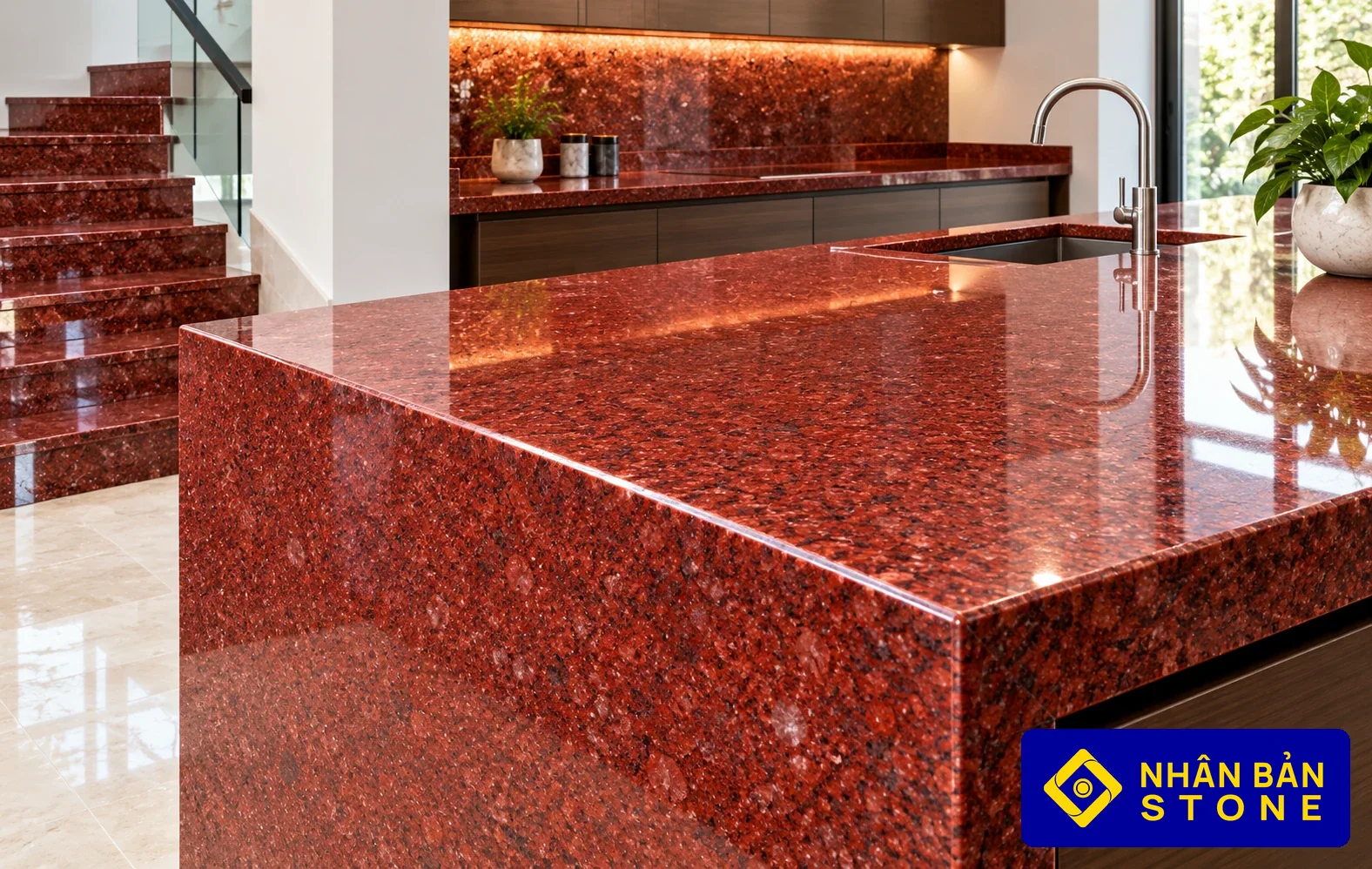
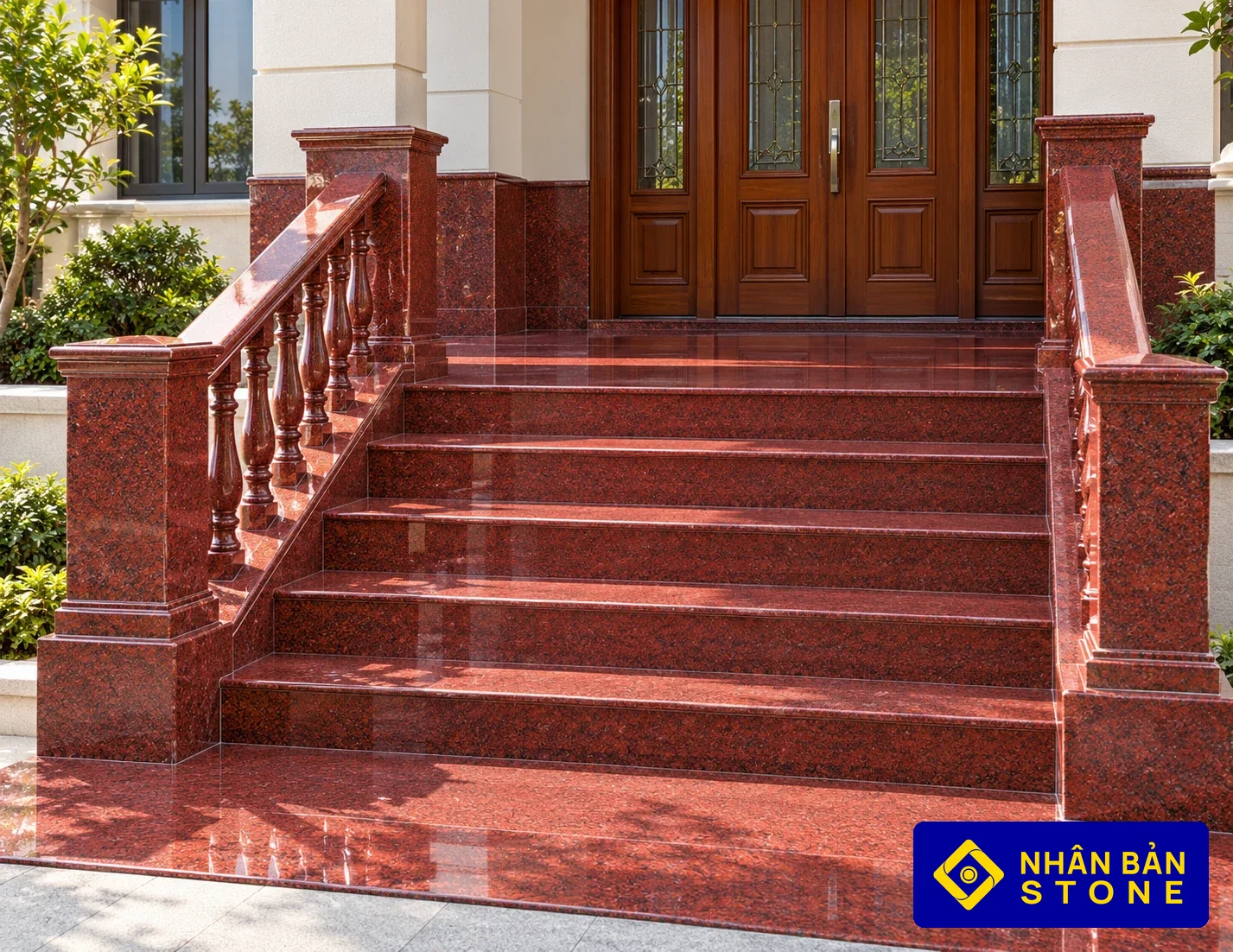
Mineral composition and grain distribution create the characteristic mottled red appearance. Colour and weathering can vary by slab, batch, and exposure, so the actual material should be approved.
2. Mechanical Performance and Structural Properties
- Confirm technical values and dimensions against the specified batch, its test documentation, the approved sample, and the project drawings.
- Abrasion Resistance: Slabs endure dense pedestrian shoe traffic without premature surface abrasion or loss of reflective luster.
- Moisture and Efflorescence Defense: Very low water absorption limits liquid penetration, inhibiting organic staining, fungal growth, and sub-surface moisture wicking.
- Thermal Tolerance: Surface integrity remains unaffected by hot cookware contact or kitchen steam cycles.
3. Grain Classifications and Pattern Varieties
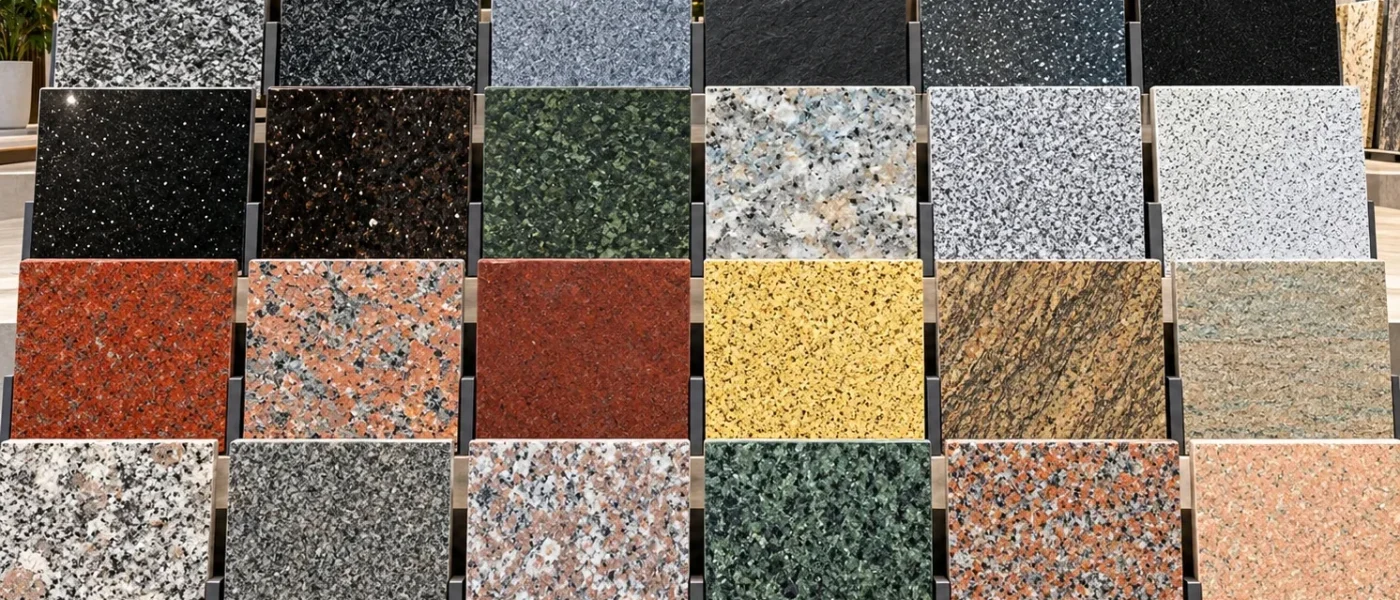
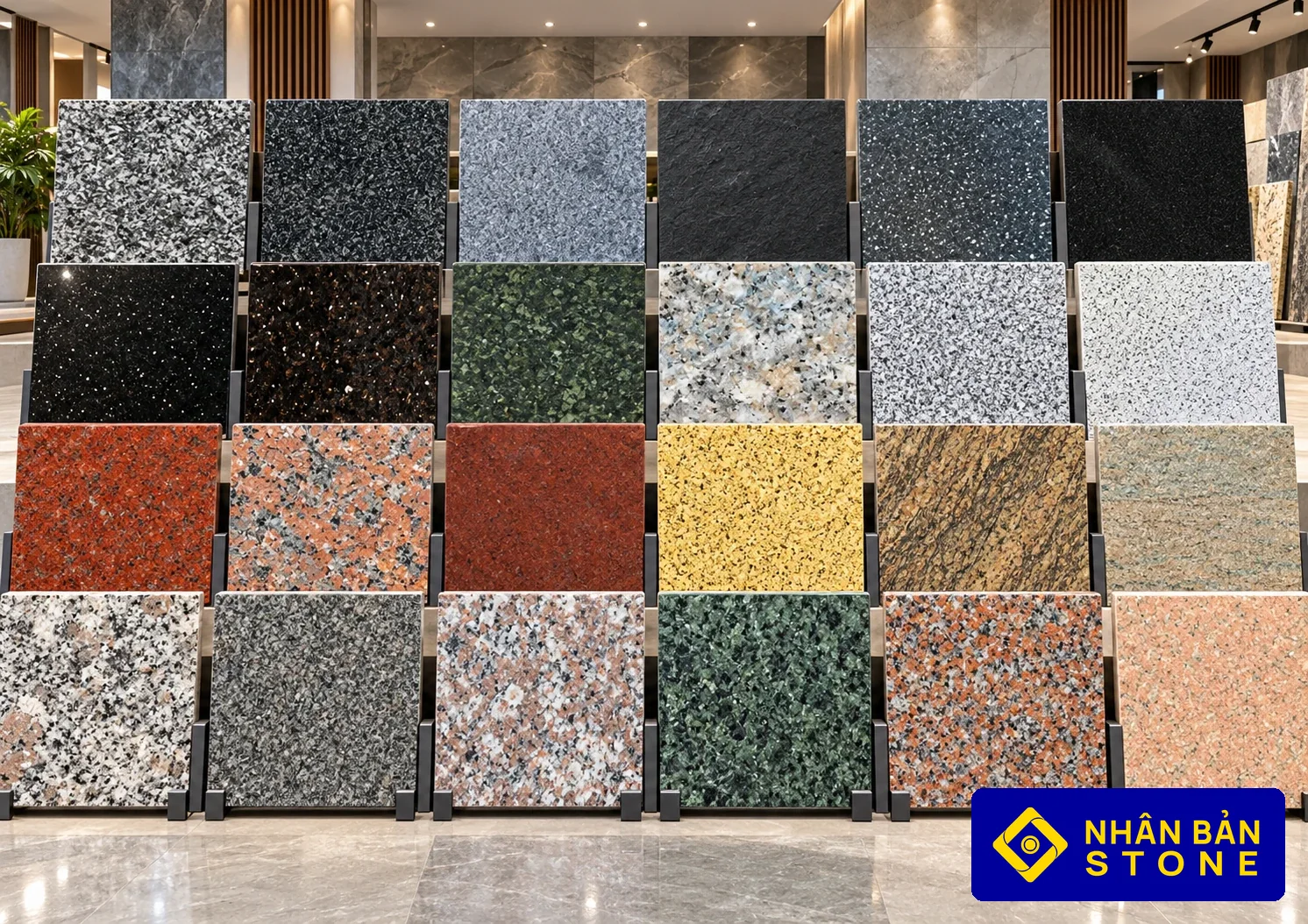
Based on the size of mineral crystalline clusters, fabricators typically distinguish three visual grades: You can also refer to our guide on “Natural Granite Patterns: How to Choose for Each Application” to compare technical suitability for your installation.
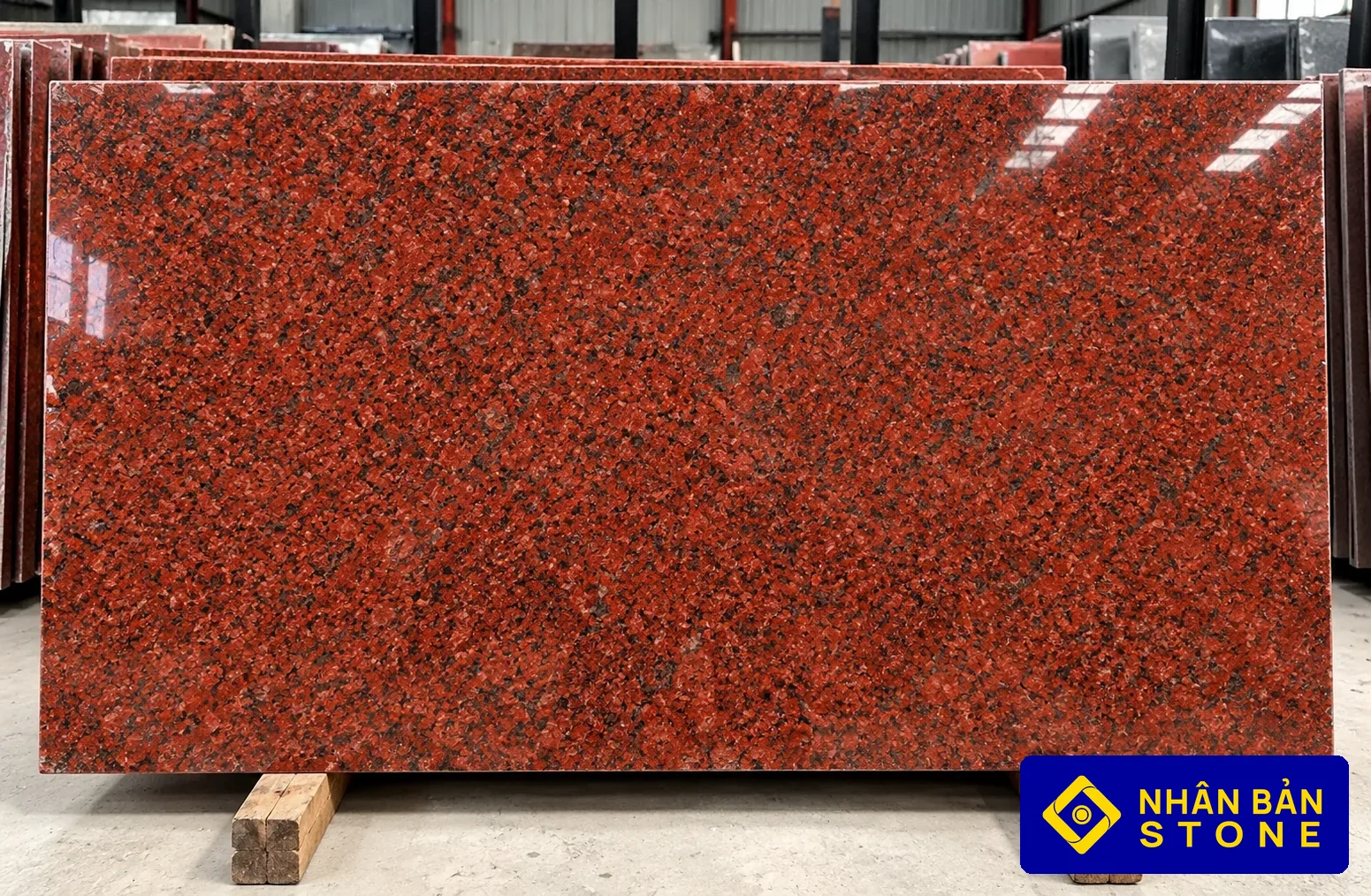
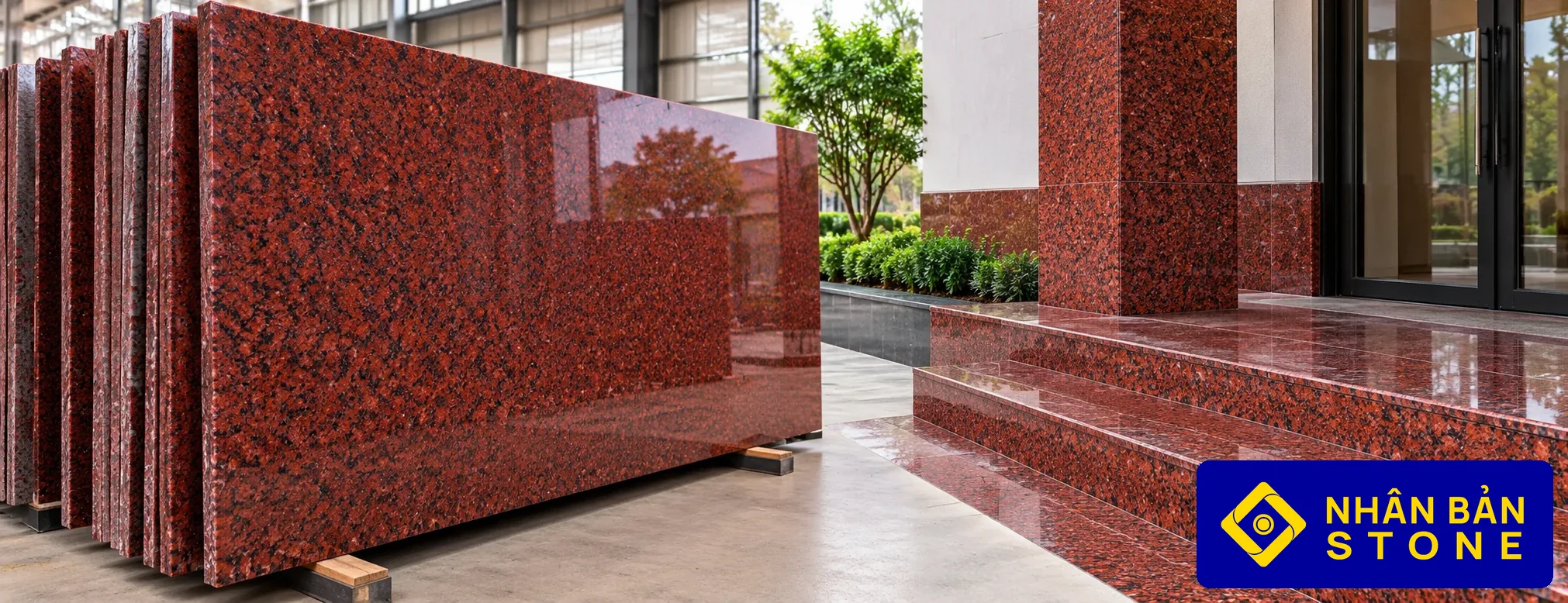
- Medium-Grain Selection (Most Popular): Balanced distribution of red feldspar clusters and dark flecks, delivering a harmonious, dignified appearance ideal for stair cores and facade panels.
- Coarse-Grain Selection: Larger mineral rosettes that convey bold geological mass, favored for monumental columns and exterior porticos.
- Fine-Grain Selection: Densely packed micro-speckles that present an intense, uniform red saturation across extended distances.
4. Key Architectural Applications
- Entrance Steps and Plinths: The threshold to any residence demands dignity and weather resistance. Ruby Red endures rain cycles and thermal shifts without cracking, especially when detailed with anti-slip nosing.
- Interior Staircases: The warm scarlet tone paired with neutral risers creates a vibrant vertical feature within open living layouts.
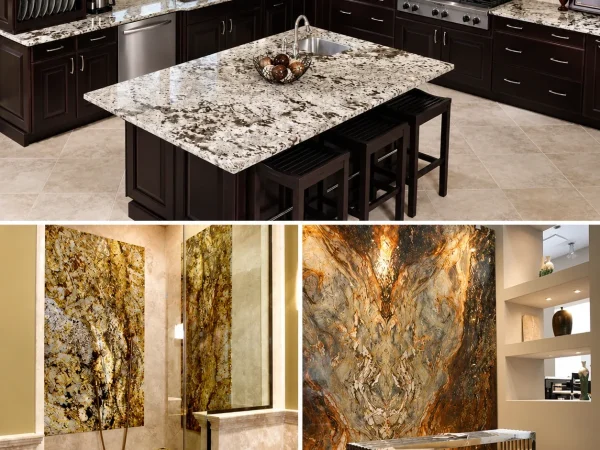
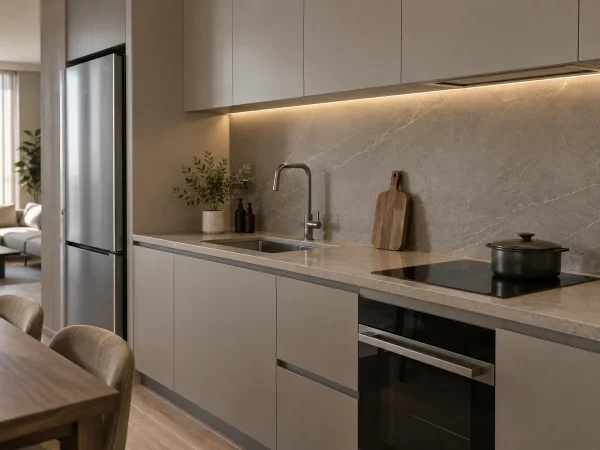
- Kitchen Worktops and Island Counters: Chemical inertness resists food acids and cooking oils; smooth water-polished surfaces wipe down effortlessly.
- Commercial Facades and Portals: Communicates permanence and structural authority for corporate headquarters, hospitality resorts, and civic institutions.
5. Fabrication Tolerances and Surface Maintenance
Given its exceptional density, fabricating Indian Ruby Red requires water-cooled diamond bridge saws and calibrated edge shapers. Prior to mortar setting, comprehensive 6-sided solvent-based impregnating seals are mandatory to prevent alkaline efflorescence.
Confirm supply scope, fabrication details, and quality documentation for each order before material approval. You can also consult our technical reference on “Natural Stone Surface Finishes: Technical Guide” for comprehensive engineering specifications.
Price: Contact us