


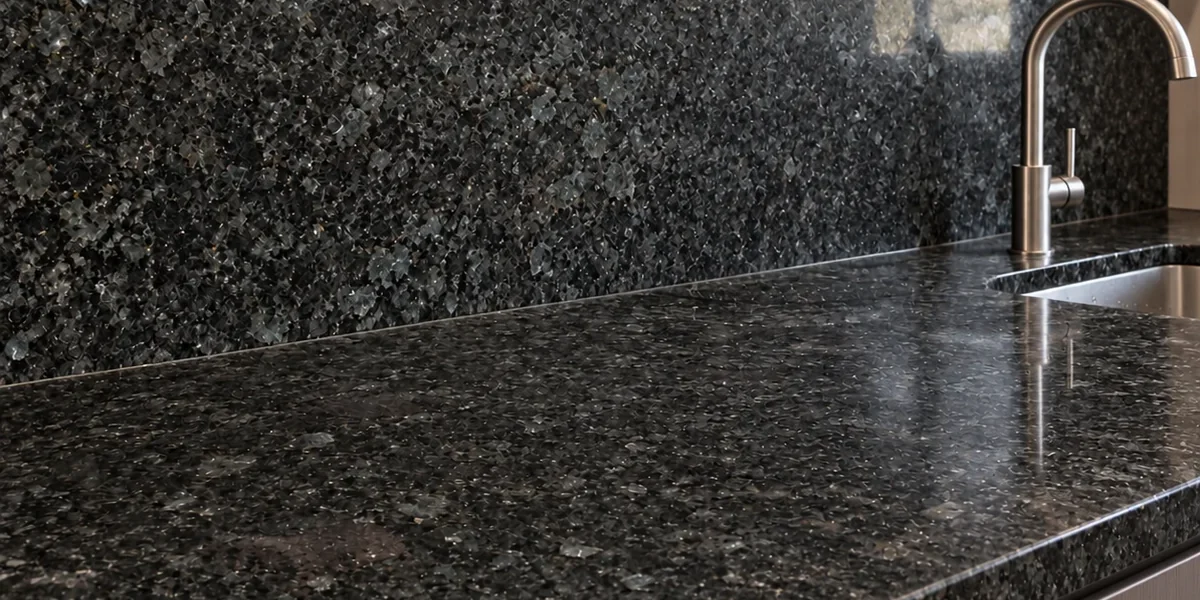
Daily Granite and Marble Care for Worktops and Interior Floors
Start with the stone code, finish and any existing surface treatment. Compare these with the product label and the care instructions supplied at handover before choosing a daily cleaner.
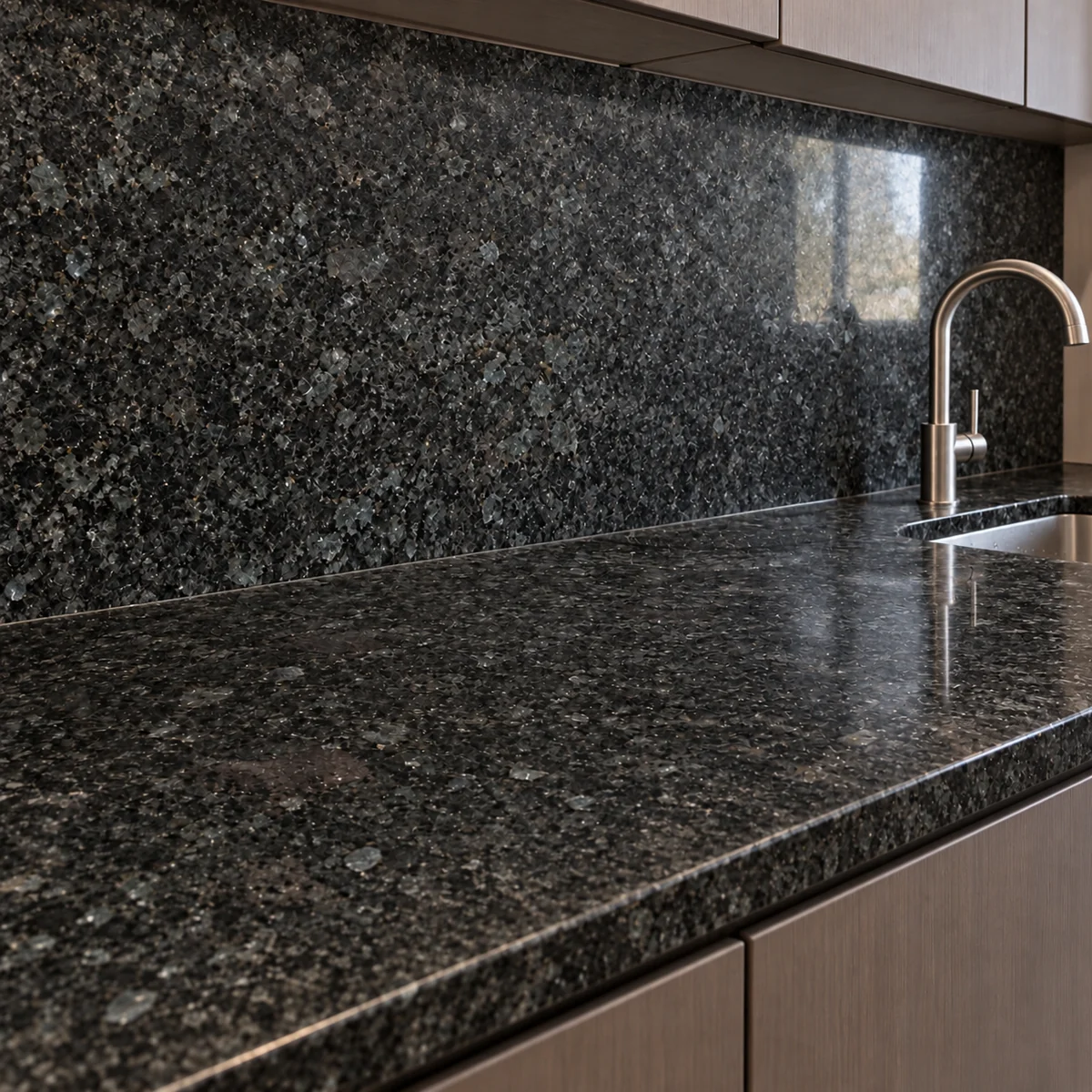
Avoid products that can change the surface
The Natural Stone Institute advises caution with unsuitable acidic or abrasive products. Lemon and vinegar can affect acid-sensitive marble. Check granite cleaners too, since the finish and surface treatment determine product compatibility.
Use a compatible neutral cleaner and soft cloth
Start with a suitable neutral cleaner and a clean, soft cloth. Follow the label for dilution, use and rinsing. Excess cleaner may leave a film, so change dirty rinse water and use clean tools. Seek specialist help with persistent marks.
Adjust care to where the stone is used
| Location | Daily care | Avoid |
|---|---|---|
| Worktops and tables | Use coasters and trivets, and blot spills promptly | Direct contact with hot items and spreading spills |
| Interior floors | Remove grit and use suitable mats at entrances | Dragging grit across the surface |
| Bathrooms | Squeegee water after use where suitable | Applying an unapproved acidic descaler |
Keep the care instructions at hand
At handover, record the stone code, finish, any treatment and approved cleaners. The party holding the material record and the product manufacturer supply their respective information. Ask the installer or responsible specialist to confirm the care routine for the completed assembly.
Clean in five steps
- Lift loose grit with a clean, soft tool suited to the surface.
- Blot spills promptly and avoid spreading the liquid.
- Wipe gently with a compatible cleaner used as directed.
- Rinse as instructed to remove cleaner residue.
- Dry with a clean cloth and record any mark that remains.
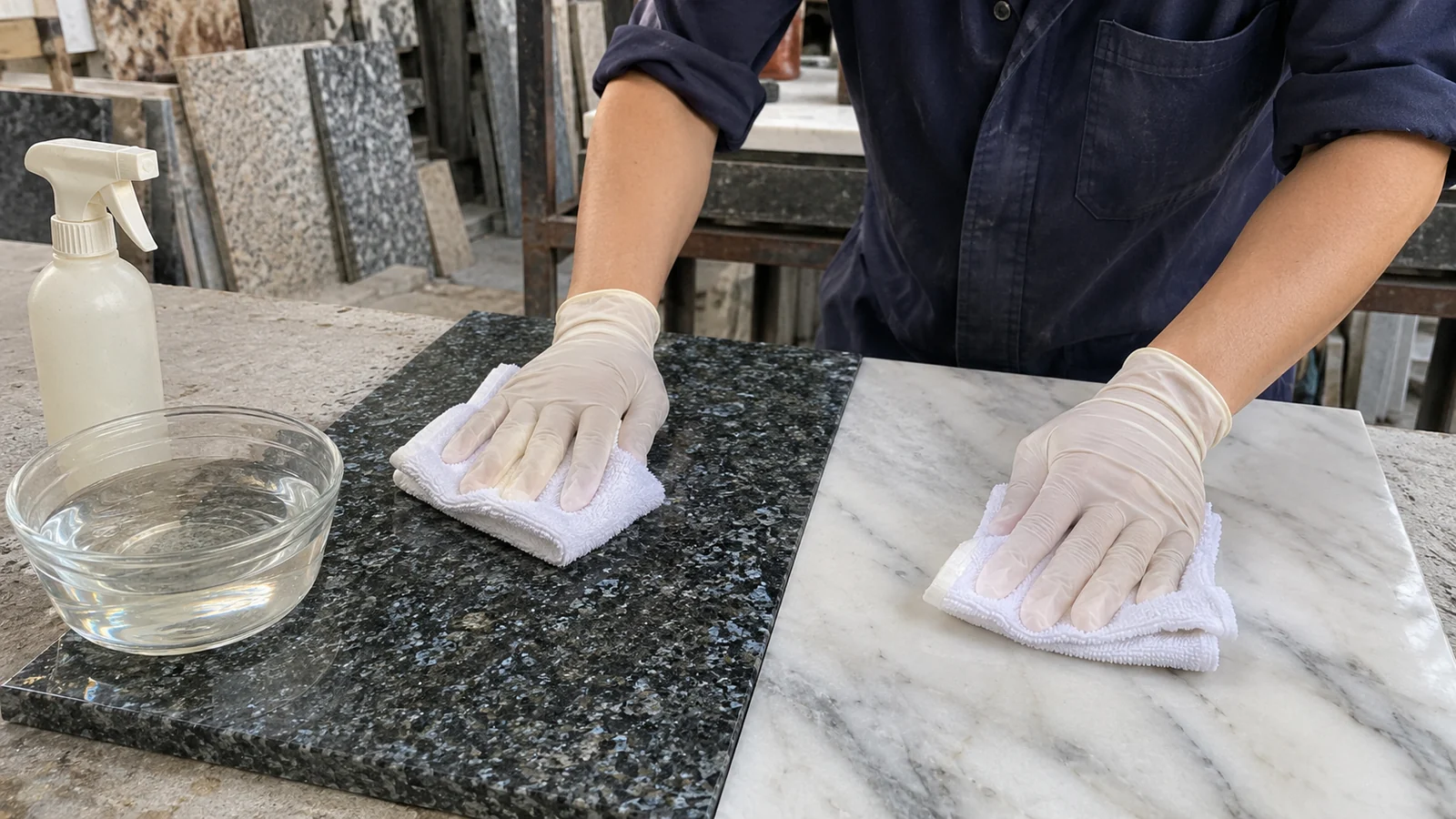
Check the label and cleaning tools
| Check | Evidence |
|---|---|
| Stone and finish | Material record or handover instructions |
| Surface treatment | Product name and care guidance |
| Cleaner | Label confirming intended surface |
| Tools | Clean, soft cloth or mop free of grit |
| Persistent mark | Photograph, location and recent product use |
Consider maintenance when specifying new stone
When specifying new stone, choose a finish the user can maintain. For fabrication, send approved dimensions, stone code, finish, edges and cutouts. A specialist can advise separately on the assessment of damaged surfaces.
Questions about daily granite and marble care
Begin by identifying the stone, finish and cleaner already used.
Can vinegar be used to clean marble?
Acid can etch susceptible marble. Use a cleaner confirmed for the stone and its treatment.
Can any kitchen cleaner be used on granite?
Check the label for the actual stone, finish and surface treatment. Ask the manufacturer if the directions are unclear.
Is a dull spot after a lemon spill just dirt?
It may be acid etching. Record what touched the surface and ask a specialist to evaluate the finish before scrubbing.
Should spills still be blotted on a treated surface?
Yes. Continue blotting spills promptly and using coasters, trivets and the appropriate routine.
Match the routine to the actual surface
Follow the handover instructions for the exact surface and use clean tools. If an area stays dull, scratched or discolored, record it and ask a specialist before changing products.
References
NHAN BAN STONE · NHAN BAN MTV COMPANY LIMITED (NHAN BAN STONE) · custom stone fabrication to specification · 0909 929 904 · [email protected]
Installation, site survey, restoration, sealer and waterproofing notes are general information only; a responsible specialist must confirm them for the specific project.