

Choosing Granite for Stairs and Floors in Everyday Interiors
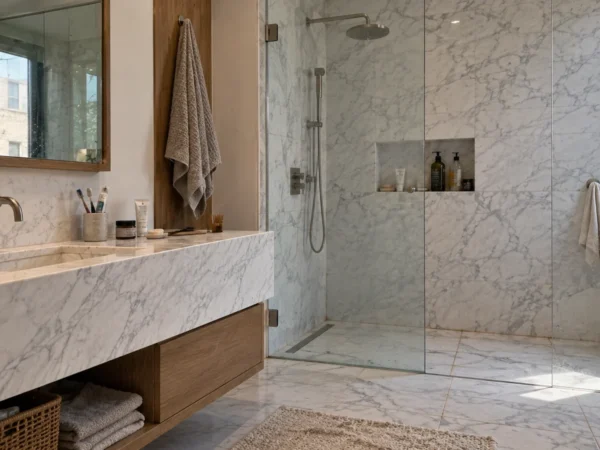
Water carried in from an entrance, grit under shoes and the areas around bathrooms all change walking conditions. Mark these areas on the drawing and review granite alongside the finish, stair nosing and expected cleaning routine.
The responsible specialist confirms walking requirements and the assembly before the drawing is released for fabrication.
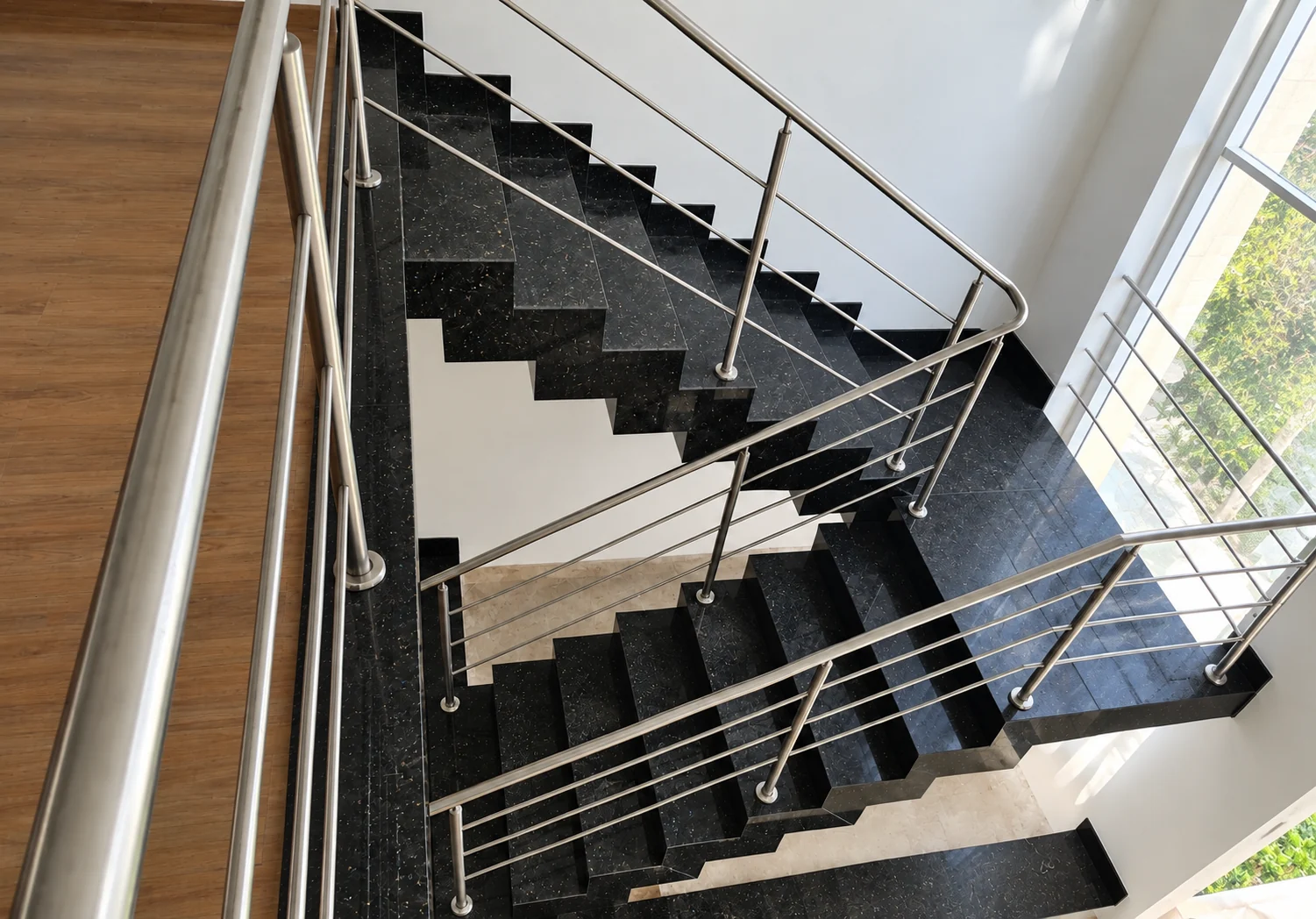
Why check polished granite carefully in wet areas?
BCA notes that slip resistance can fall when stone is wet or contaminated, especially on polished surfaces. Use this principle to identify the areas that need assessment. The designer should specify conditions and a test that represent the finished surface.
How do material properties differ from slip-resistance evidence?
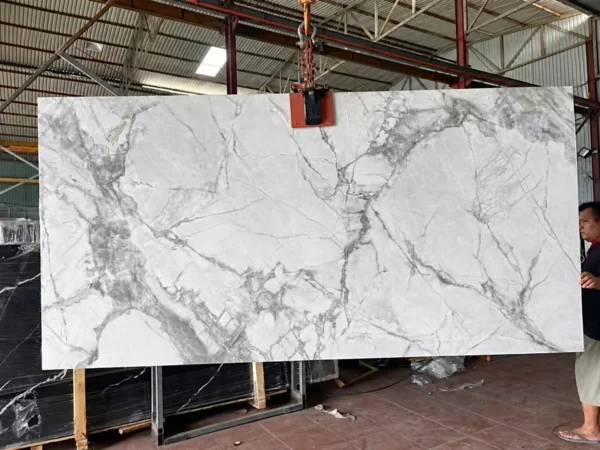
The public ASTM C615/C615M-23 summary lists properties such as water absorption, flexural strength and abrasion resistance for granite dimension stone. Slip assessment needs to match the finish, wet or dry conditions and test method. Avoid converting results between methods without technical justification.
How should stairs and floors be divided before choosing a finish?
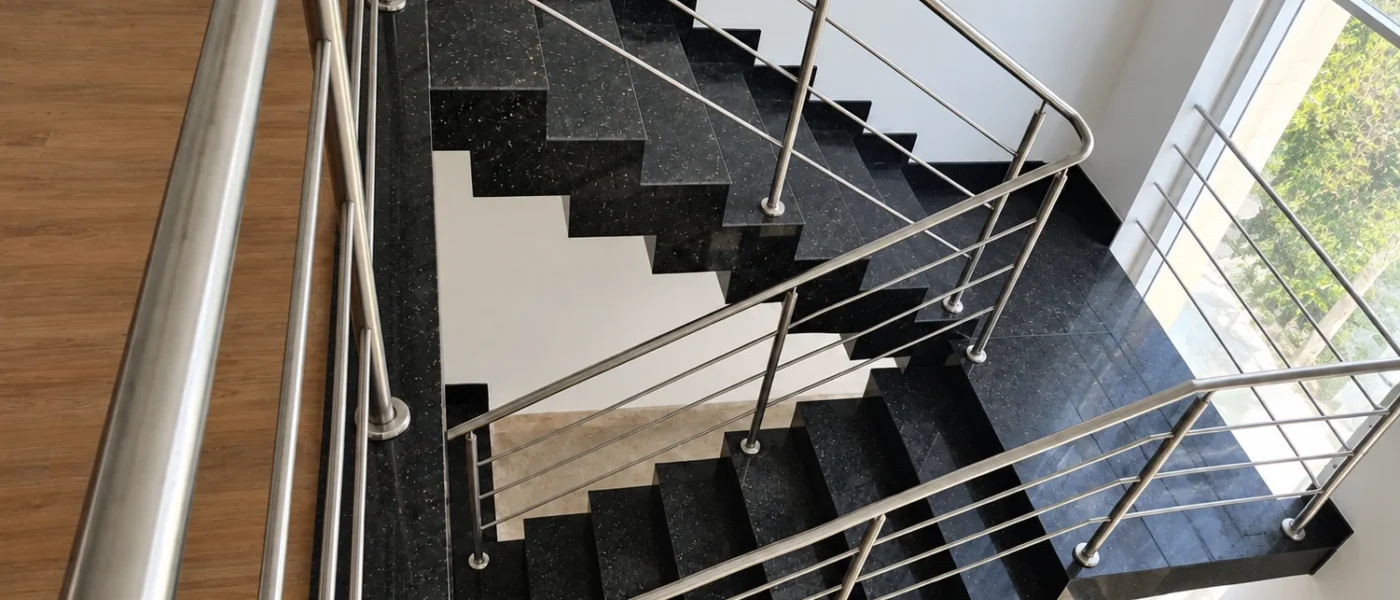
Mark entrances, landings, areas near water and frequently cleaned zones. Show treads, risers, nosing and any grooves on the drawing. Approve polished, honed or textured samples on the specified stone. Have the specialist confirm whether the groove detail suits the design.
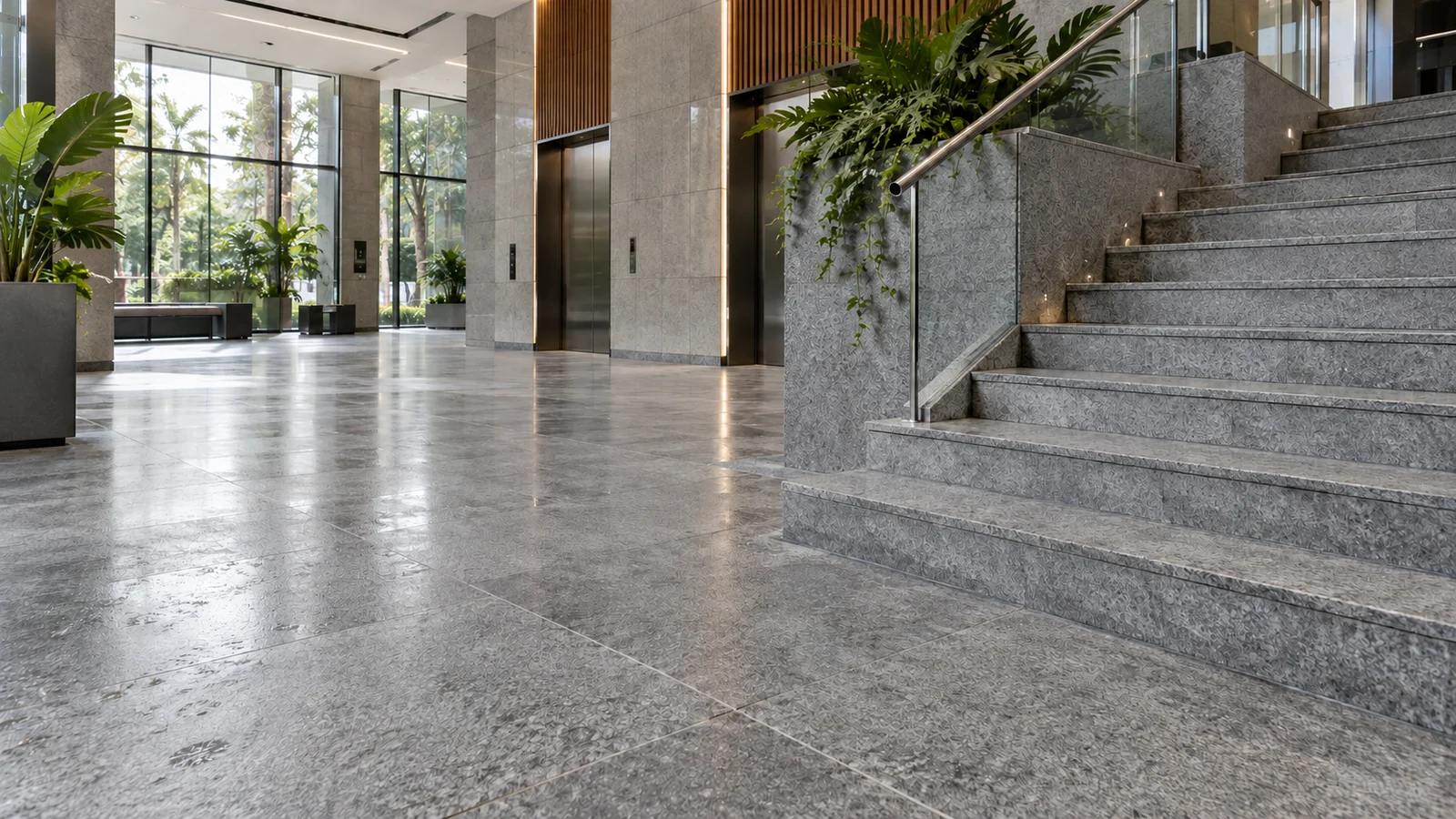
Who approves stair nosing and safety requirements?
The designer, engineer or responsible installation team approves walking requirements, the assembly and nosing. The fabricator checks the approved specification. If the finish changes, check the edges and related drawings again.
Five steps for choosing granite for stairs and floors
- Mark dry areas, potential wet areas, grit and cleaning conditions.
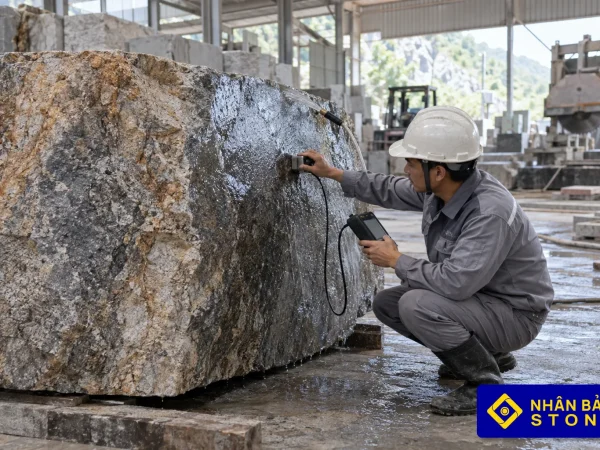
- Check the stone code, finish sample and material documents.
- Have the designer specify the slip assessment method, sample and conditions.
- Approve dimensions, panel layout, treads, risers and edges.
- Record the approver, final revision and open items.
What should you check on delivery and in the care guide?
Compare the stone code, dimensions, edges and grooves with the approved sample and drawing. Check that assessment documents represent the actual finish. NSI describes sand and grit as abrasive. Remove dust regularly and use stable entrance mats and cleaners suitable for the stone and its treatment.
How can you compare fabrication costs on the same scope?
Send the same stone code, finish sample, dimensions, quantities, panel layout and edge details. Mark grooves or changes in finish on the drawing. Confirm assessment needs, assembly, cleaning and the proposed finished surface before approval.
Four questions about granite for stairs and floors
Assess each answer against the specific location and finish.
Is textured granite guaranteed to be slip-resistant when wet?
Assess the actual finish, possible contamination and walking conditions. Ask the designer what evidence the project requires.
Are grooves in stair treads enough to approve the design?
The specialist should consider groove placement and detail with the stair design and conditions of use. Record the approved detail on the drawing.
Does abrasion resistance mean I can skip dust removal?
Sand and grit can still affect the surface. Remove dust regularly and use a suitable entrance mat and compatible cleaners.
Can I reuse an old test after switching from polished to honed?
Check whether the tested sample, method and conditions still represent the new finish.
Confirm walking conditions before submitting the fabrication details
Once the stone and assembly are approved, send the drawings, finish sample, stair nosing details and quantities with the enquiry.
NHAN BAN STONE provides custom stone fabrication to specification.
Installation, site survey, restoration, sealer and waterproofing notes are general information only; a responsible specialist must confirm them for the specific project.
NHAN BAN MTV COMPANY LIMITED (NHAN BAN STONE) · Hotline 0909 929 904 · [email protected]
References