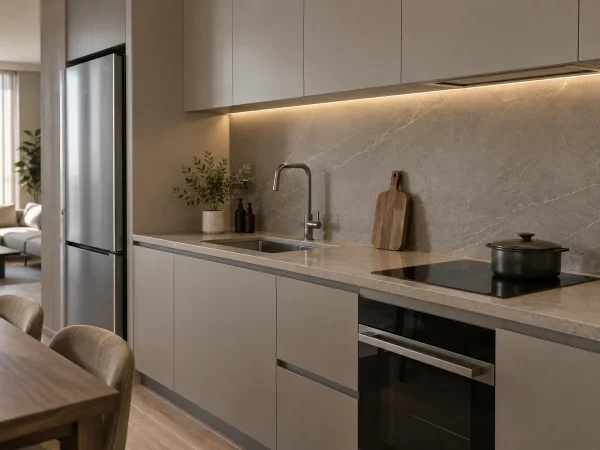


1. Problem to address
Backlit stone depends on natural transmission, slab thickness, fixture setback, heat management and the rear support system. Samples should be reviewed both unlit and illuminated to show the practical difference.


2. Core criteria
- Review transmission and veining on actual samples.
- Agree fixture setback through a project-relevant sample where included.
- Select a compatible light source and heat-management approach.
- Plan access for drivers, power supplies and cables.
- Select colour temperature after reviewing the sample under proposed lighting.
3. Coordination workflow
- Record the slab in ambient and illuminated conditions.
- Test a representative area only where included in scope.
- Adjust light spacing and diffusion based on the sample.
- Check framing, ventilation and cable routes against the documentation.
- Review the finished effect before packing within the agreed scope.
Structural design, site surveys and installation remain with the responsible project parties.
4. Limits and risks
- Lights placed too close can create visible hotspots.
- Natural stone will not transmit light as uniformly as an acrylic sheet.
- Missing service access can complicate maintenance.
- Inadequate heat management may affect bonding materials.
5. Pre-approval checklist
Confirm unlit and lit samples, setback, light source, heat management, service access, technical documentation and handover scope.
Discuss stone options
NHAN BAN STONE can compare design intent with available material, fabricate in the workshop, inspect and hand over within the agreed scope.