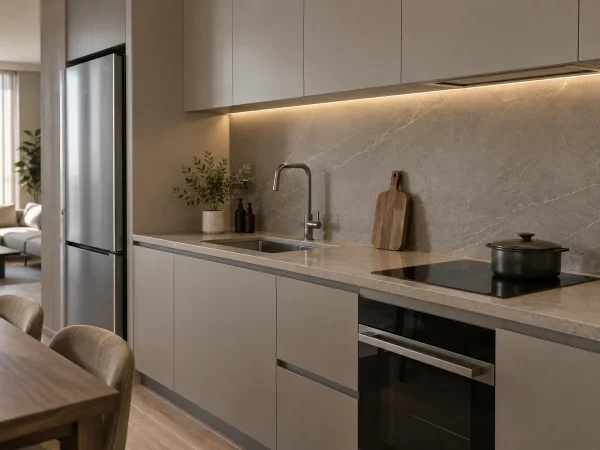


1. Problem to address
Natural-stone colour coordination should consider undertone, contrast and lighting rather than relying on trade names. The same slab may look different beside timber, metal or different light sources.


2. Core criteria
- Identify the warm, cool or neutral undertone of the actual sample.
- Review contrast with floors, walls and furnishings at real viewing distance.
- Keep strongly patterned surfaces balanced within one visual zone.
- Record tonal variation across the full slab.
- Review polished or honed surfaces under planned lighting.
3. Coordination workflow
- Assemble stone, timber, metal, fabric and paint samples.
- Compare them under relevant daylight and artificial-light conditions.
- Record the material board and viewing conditions.
- Compare small samples with actual-slab references where available.
- Keep an agreed control sample and approval scope.
Structural design, site surveys and installation remain with the responsible project parties.
4. Limits and risks
- Uncalibrated screens and promotional images cannot replace actual samples.
- A small chip may not represent full-slab variation.
- Light colour and direction can change perceived colour.
- Too many strong patterns can overload a compact space.
5. Pre-approval checklist
Confirm actual samples, undertone, companion materials, lighting, surface finish, control sample and handover scope.
Discuss stone options
NHAN BAN STONE can compare design intent with available material, fabricate in the workshop, inspect and hand over within the agreed scope.