

Overview and practical value
Natural quartzite is a metamorphic rock originating from quartz-rich sandstone, with color and veining that can vary from slab to slab. It should be distinguished from engineered quartz and ordinary sandstone; confirm the characteristics of the specific material before agreeing on its intended use and fabrication.
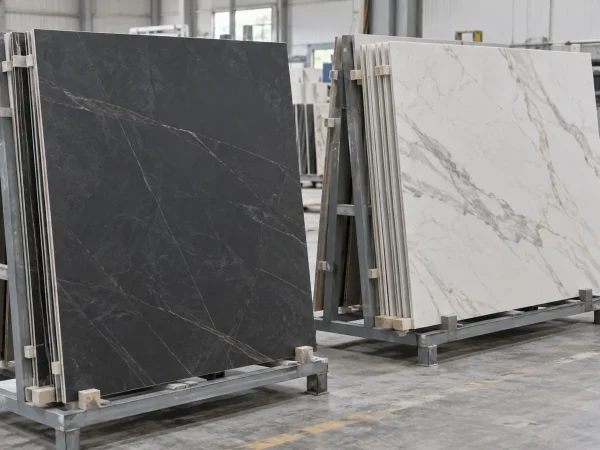
For architects, contractors, and developers, an appropriate selection should be assessed well beyond the reference photograph. The slab must suit the architectural scale, service conditions, panelization layout, and fabrication budget. A small physical sample helps evaluate color; full-slab photography and layout drawings help assess vein movement across adjacent surfaces.
Before selection, review full-slab imagery and physical samples under the lighting conditions relevant to the project.
Reading color and veining
Read the material at three distances: close up for mineral crystals and naturally formed veining; mid-range for vein flow direction; from afar for the overall field of color. Warm, cool, and grazing light can change the perception of the surface finish.
What to confirm before ordering
- Confirm the exact trade name, material classification, and batch lot.
- Review the full slab, physical sample, and planned cutting layouts.
- Approve dimensions, thickness, surface finish, edge profiles, cutouts, and tolerances per shop drawings.
- Mark sensitive zones and key veining features before fabrication begins.
- Confirm edge details, cutouts, joint locations and the agreed fabrication information before work begins.
Applications to consider
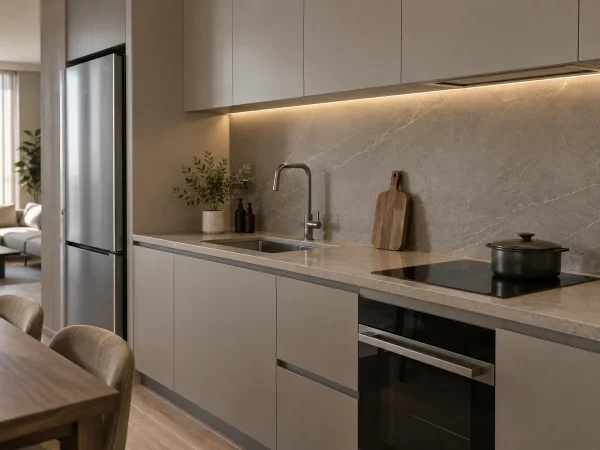
Common application directions include kitchen islands and worktops, large-format stone walls and tables and statement interior details. Ultimate suitability depends on the specific material grade, substrate framing, structural loads, environmental exposure, and manufacturer or engineering guidelines.
Reference material gallery


Technical and care notes
Natural stone exhibits inherent variation in color, veining, and mineral texture across blocks and slabs. Photographs and small samples serve as initial references; stone variety, lot codes, dimensions, finish, and fabrication details should be confirmed before ordering.
Routine maintenance requires a soft cloth, clean water, and a pH-neutral cleaner approved by the material supplier. Avoid applying acidic household chemicals (such as vinegar or citrus) to natural calcium-based stones like marble or onyx. See the Natural Stone Institute care guidance for general reference; it does not replace material-specific requirements.
Discuss stone options for your project
NHAN BAN STONE can help compare the design intent with available material, select blocks or slabs, fabricate in the workshop, inspect, pack and hand over within the agreed scope. Contact us by phone, Zalo or email, or open directions for an in-person discussion.