

Light Marble Discoloration: What to Record Around Dark Edges
Photograph a dark border on light marble before cleaning or applying a new product. Record which pieces are affected, when the change first appeared and what has changed since.
Recognize the pattern around the slab
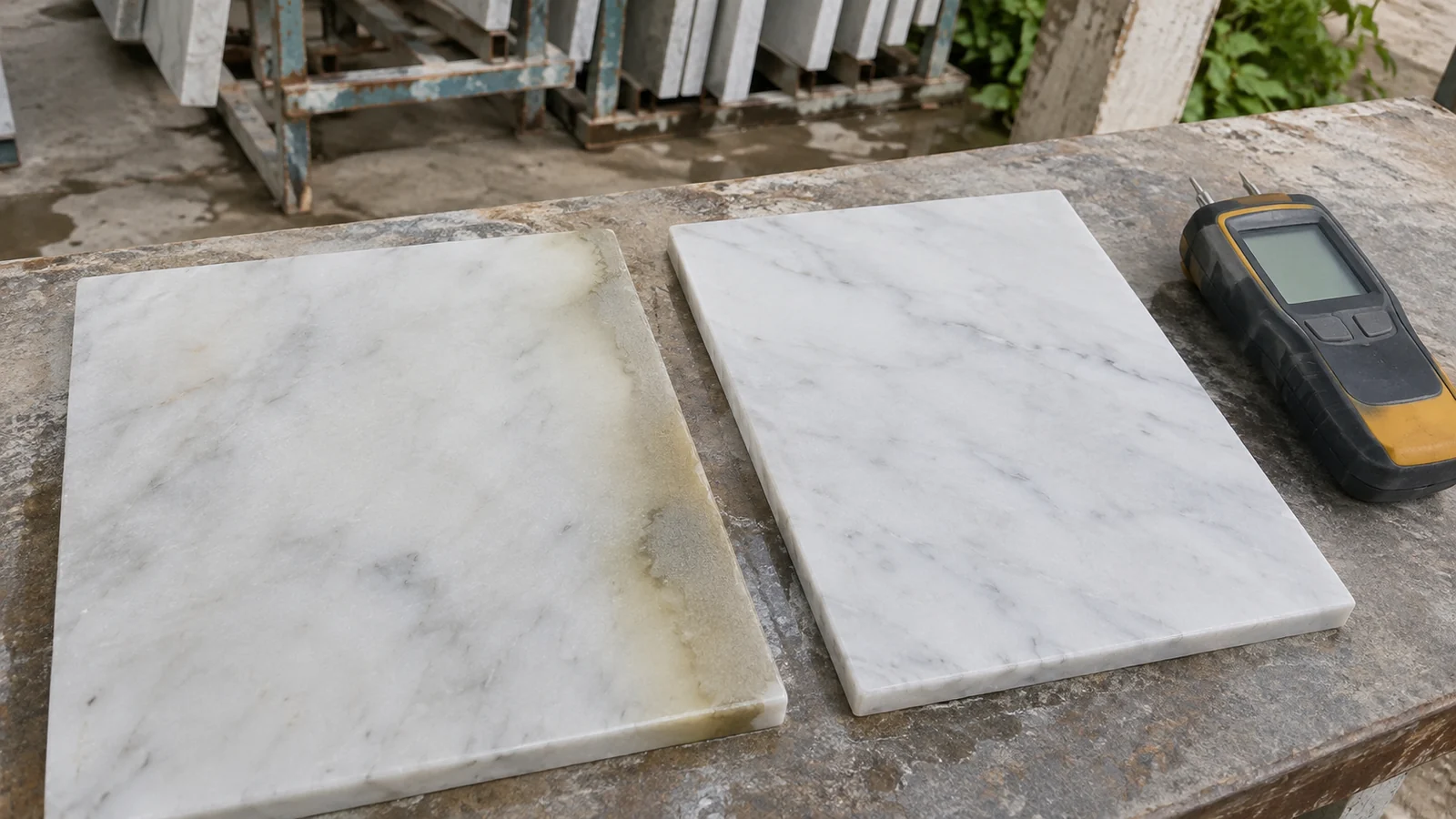
Picture framing describes a band of discoloration around a piece. ARDEX notes that moisture from adhesive or grout can affect the face or edges of some stone. The shape of the mark describes its location. Determining its cause needs more evidence.
Check how moisture may affect appearance
Ask the specialist to compare the stone, adhesive, grout and substrate with the observed pattern. A yellow patch or dark edge gives no independent measurement of composition, moisture content or water movement. Use the ARDEX brochure to understand a possible mechanism and request current product guidance for the project.
Document conditions by location
Record dry walls, floors and shower areas separately. Include substrate, exposure to water and cleaners used. If the change occurs only next to a shower, preserve that observation for the specialist to check against the actual assembly.
Request records from each responsible party
The stone supplier identifies material, batch and finish. The installer provides records of the substrate, adhesive and grout. The designer coordinates the assessment and records observations and confirmed findings. Ask manufacturers about the exact products used.
Preserve the evidence in five steps
- Mark affected pieces and areas on an overview photograph or layout.
- Record when the change appeared and how it progressed.
- Gather stone, adhesive, grout, substrate and treatment records.
- Repeat photographs from the same angle and in similar light.
- Send the records to the specialist and agree who approves the next step.
Build a condition checklist
| Record | Evidence |
|---|---|
| Location | Overview, close-up and marked layout |
| Appearance over time | Photos under comparable light |
| Stone and finish | Code, batch and known treatments |
| Installed assembly | Substrate record, adhesive and grout names |
| Changes and interventions | Dates, cleaners and prior treatment |
Specify replacement pieces if approved
If a replacement is approved, send the approved dimensions, stone code, finish, edges and cutouts. The designer and project specialist approve the repair approach and the scope for removal and fitting. The fabrication enquiry covers the specified pieces.
Questions about dark edges on marble
Use the condition record to distinguish observations from findings confirmed by the responsible specialist.
Will a dark edge disappear when the marble dries?
The outcome depends on its cause and the actual assembly. Record changes and ask the specialist how to monitor them.
Can a photograph identify whether the stone or adhesive caused it?
A photograph helps locate the problem. The assessment also needs the material, substrate and installation history.
Will another coat of sealer resolve a dark edge?
Have the cause and product compatibility assessed before adding any treatment. Preserve the original condition for review.
Does approving a dry sample rule out later discoloration?
The sample records appearance under its viewing conditions. Evaluate the proposed adhesive, grout and substrate separately.
Keep a record before choosing the next step
Keep the photographs, timeline and material records together. Let the responsible specialist decide whether measurements or sampling are necessary. If the approved approach calls for new parts, send a complete specification.
References
NHAN BAN STONE · NHAN BAN MTV COMPANY LIMITED (NHAN BAN STONE) · custom stone fabrication to specification · 0909 929 904 · [email protected]
Installation, site survey, restoration, sealer and waterproofing notes are general information only; a responsible specialist must confirm them for the specific project.