

Polished, Honed or Textured Stone for Different Interior Uses
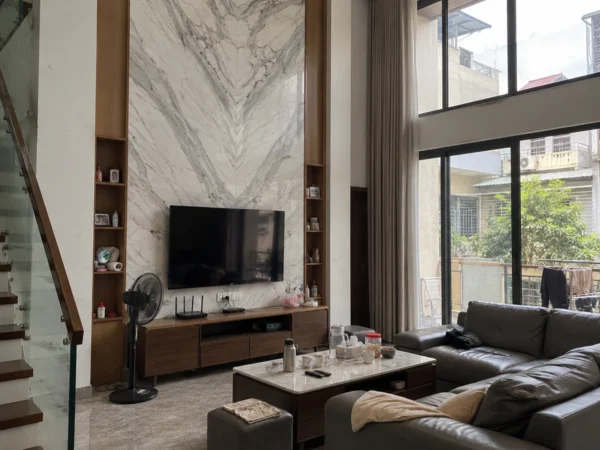
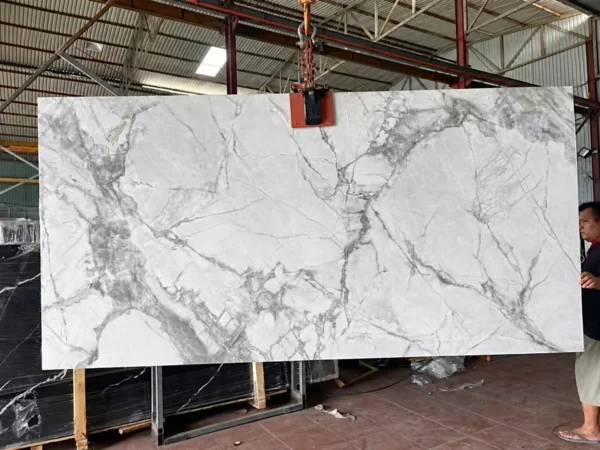
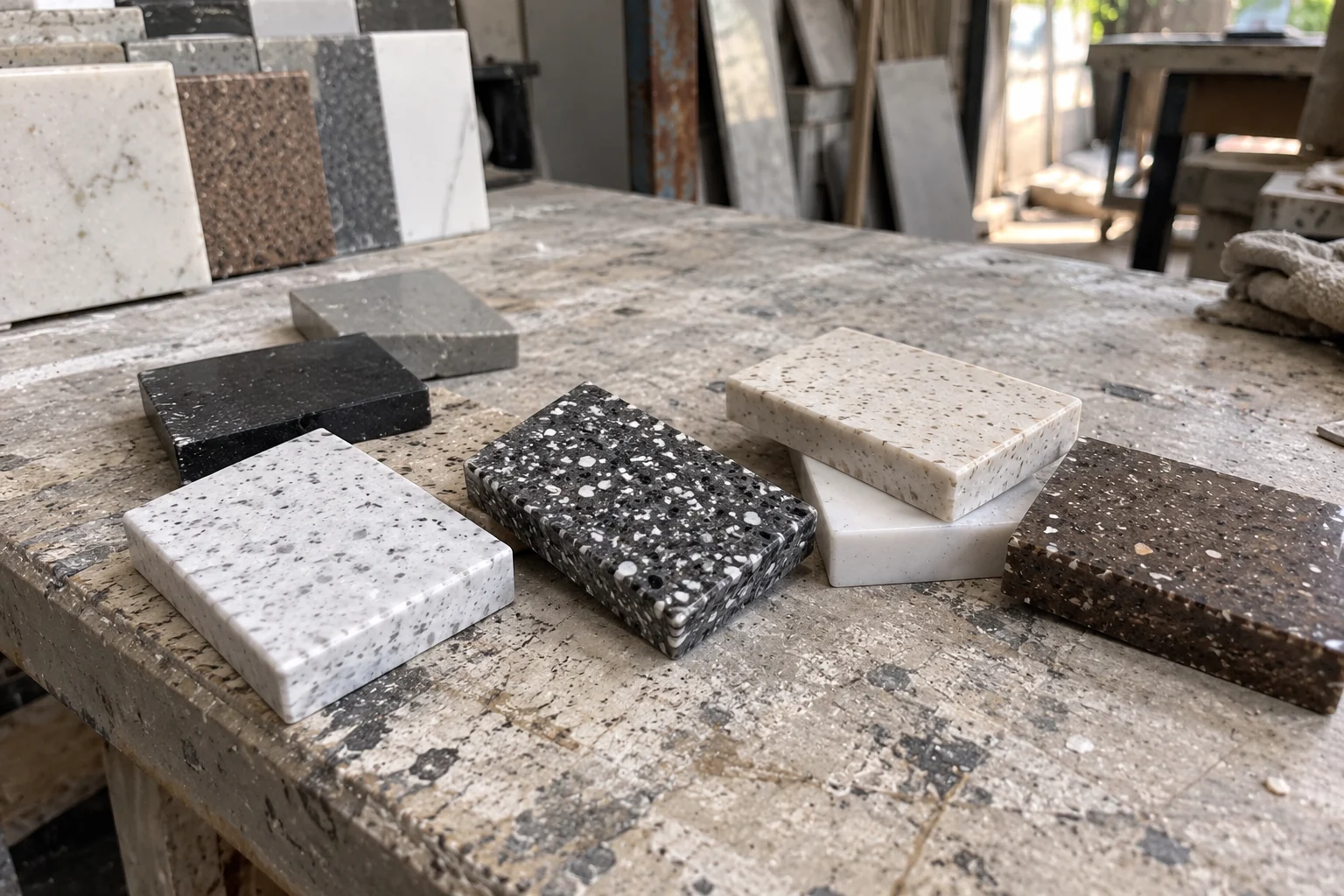
A polished sample can produce strong reflections under the lights at its intended location. A honed sample can look different beside wood or metal or in daylight. Review a sample of the specified stone in the expected light.
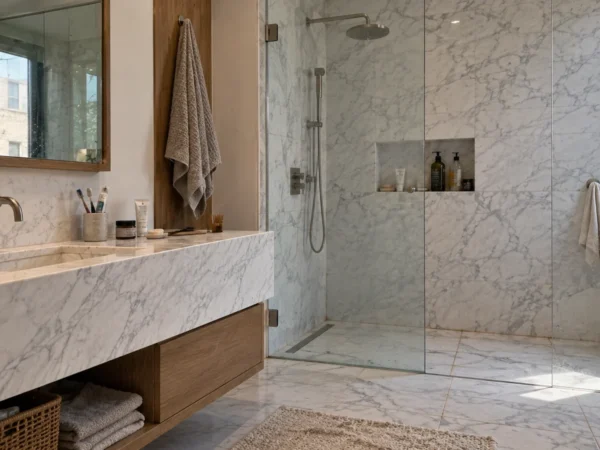
For floors and wet areas, the designer should define the assessment needed for the finished walking surface.
Why is the finish name alone insufficient?
Two finishes described as matte may differ in reflection and feel. Record the stone code, the process, the sample reference and what needs approval. Inspect it from the front and under raking light.
What distinguishes polished, honed and textured surfaces?
A polished surface gives clearer reflections. Honing produces a smooth, lower-sheen finish. Texturing changes the feel of the surface. BCA describes flaming as a heat treatment that creates a rougher surface. Suitability depends on the stone.
How should the finish differ for tables, walls and floors?
For a table, consider liquids, contact and cleaning. For walls, look at direct and raking light. Floors also require attention to grit, wet or dry conditions and foot traffic. The public ASTM C1528/C1528M-26 summary considers stone alongside the related components of its assembly.
Who approves the sample and confirms performance needs?
The designer approves visual effects and use criteria. The responsible project team confirms the assessment required, especially for wet floors. The fabricator checks the approved sample against the stone code and the drawing.
Five steps for approving a finish before fabrication
- Define location, water exposure, grit and cleaning.
- Choose samples of the specified stone.
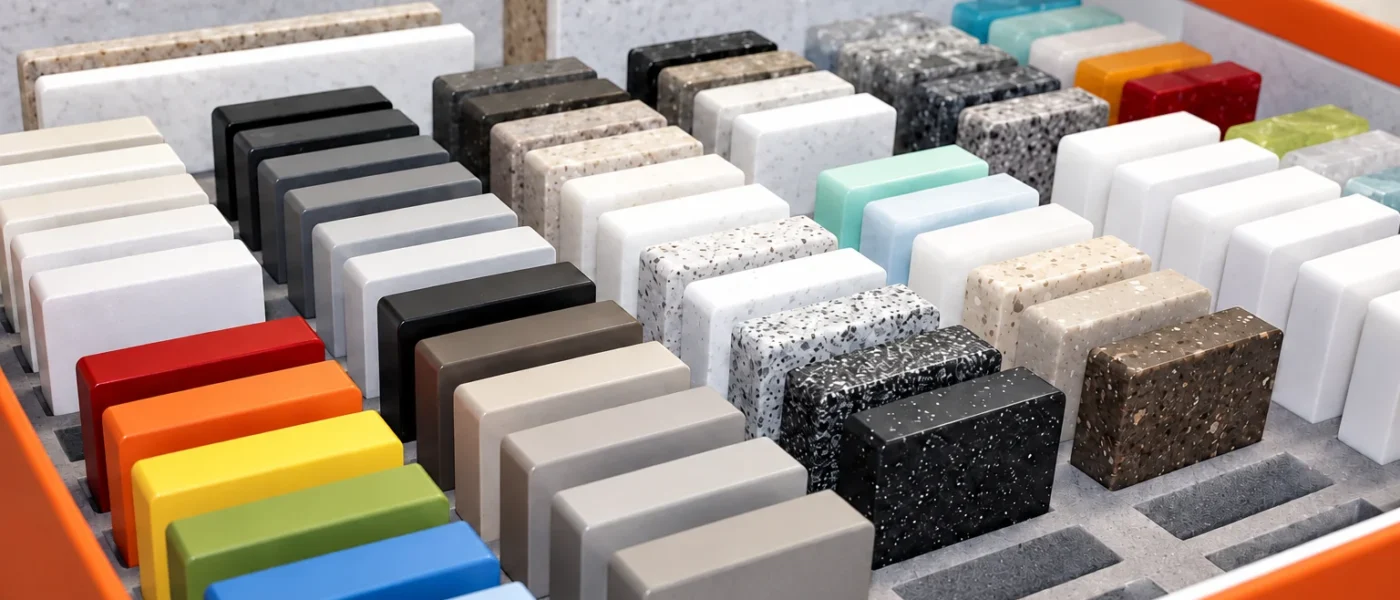
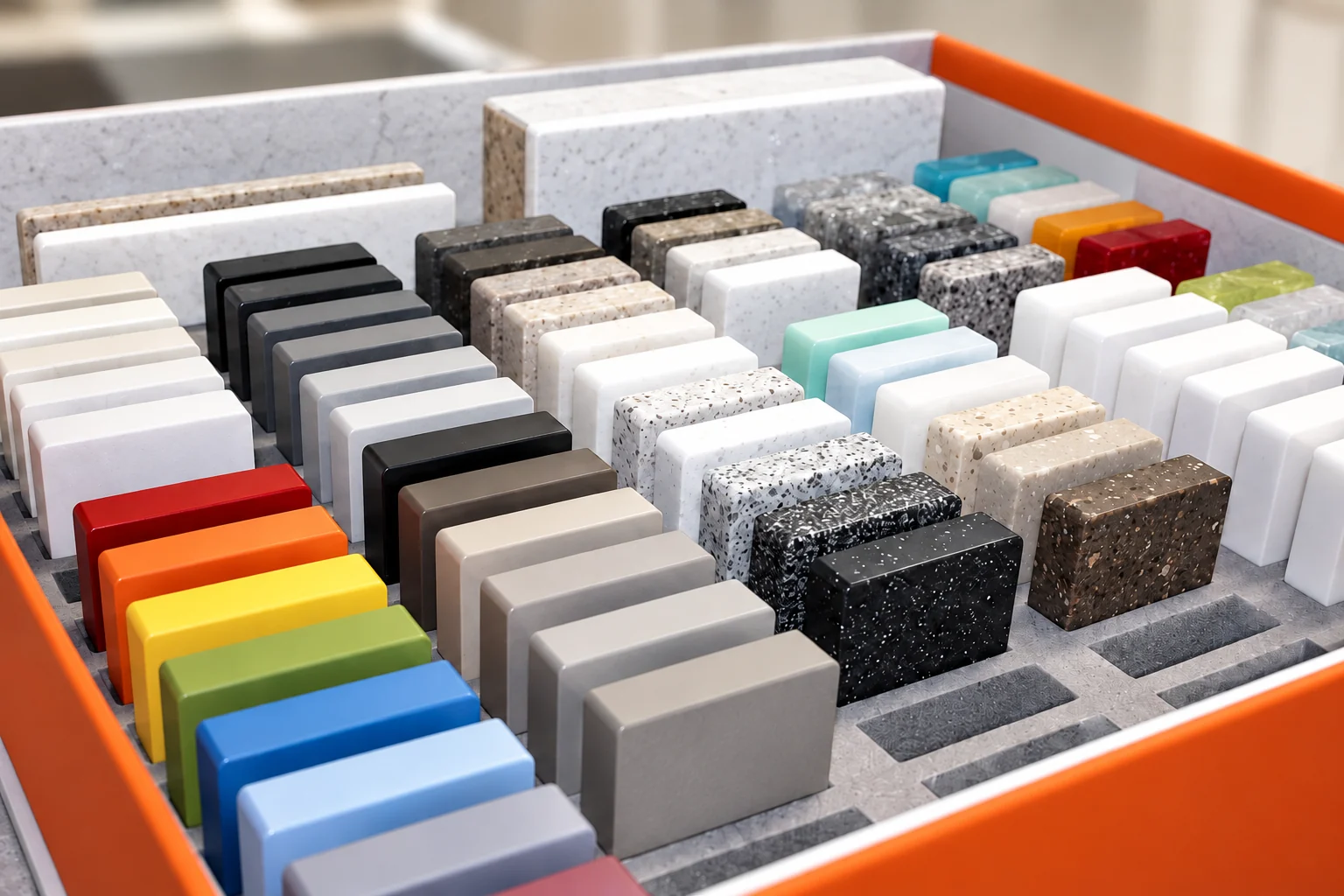
- Review samples in the expected light and record the qualities to match.
- Confirm the assessment required for walking surfaces.
- Record the sample, drawing revision and locations of each finish.
What should you check when receiving the stone?
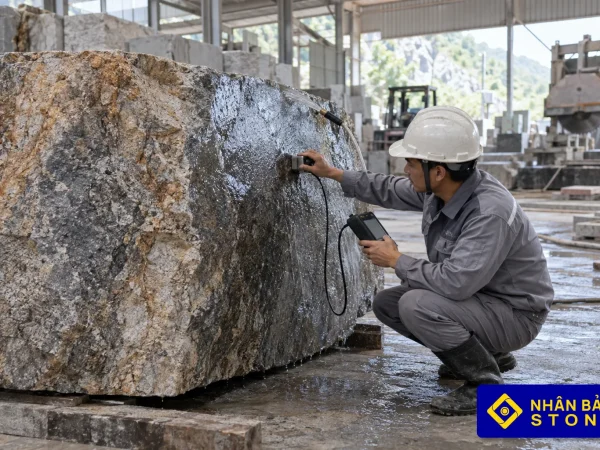
Verify the stone code and finish sample. Compare colour, reflection and texture in the agreed viewing conditions. Check boundaries between finishes against the drawing. Use assessment evidence that represents the actual finished surface.
What information affects the cost of finishing?
Provide the stone code, sample, quantities, dimensions, finished area, edges and any transition between finishes. Ask the specialist to confirm a suitable process for that stone, the cleaning routine and any project testing.
Four common questions about stone finishes
Check the exact sample and its intended location before choosing.
Is honed stone untreated?
Honing is a finishing process that produces a smooth surface with less reflection than polishing.
Is textured stone always slip-resistant?
Assess the exact finish and walking conditions, including whether the surface will be dry, wet or contaminated.
Does polishing eliminate water absorption?
Absorption depends on the stone and its treatment. Check the documentation for the actual material.
Can one item have two finishes?
Yes, if compatible with the stone and design. Show boundaries, edge details and both finish samples in the approved documents.
Approve a location-specific sample and record the specification
Share the approved sample, drawing, stone code, edge details and area for each finish when enquiring about fabrication.
NHAN BAN STONE provides custom stone fabrication to specification.
Installation, site survey, restoration, sealer and waterproofing notes are general information only; a responsible specialist must confirm them for the specific project.
NHAN BAN MTV COMPANY LIMITED (NHAN BAN STONE) · Hotline 0909 929 904 · [email protected]
References