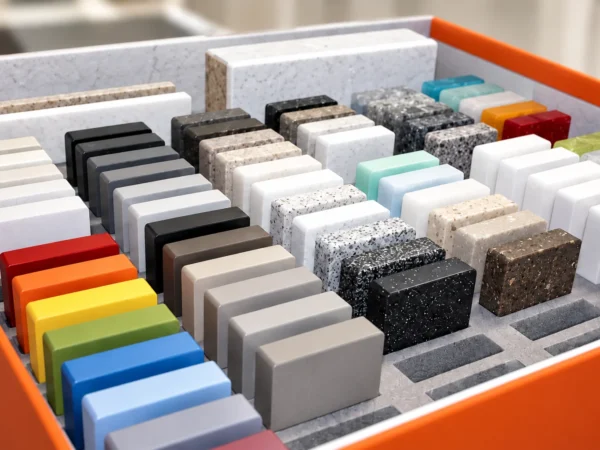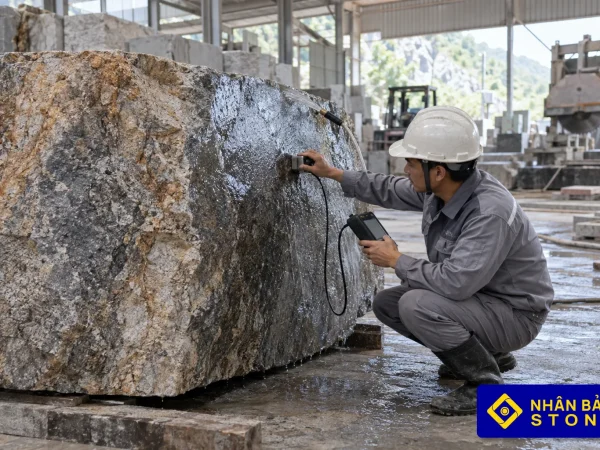


Granite or Marble for Interiors That See Heavy Daily Use
Lemon juice, objects dragged across a table and standing water by a sink can all change the choice of stone. Start with the location and how people use it, then approve the colour, veining and sheen.
Granite is worth considering for many frequently used surfaces. For calcite-bearing marble, agree on the care routine and the surface changes the household can live with.
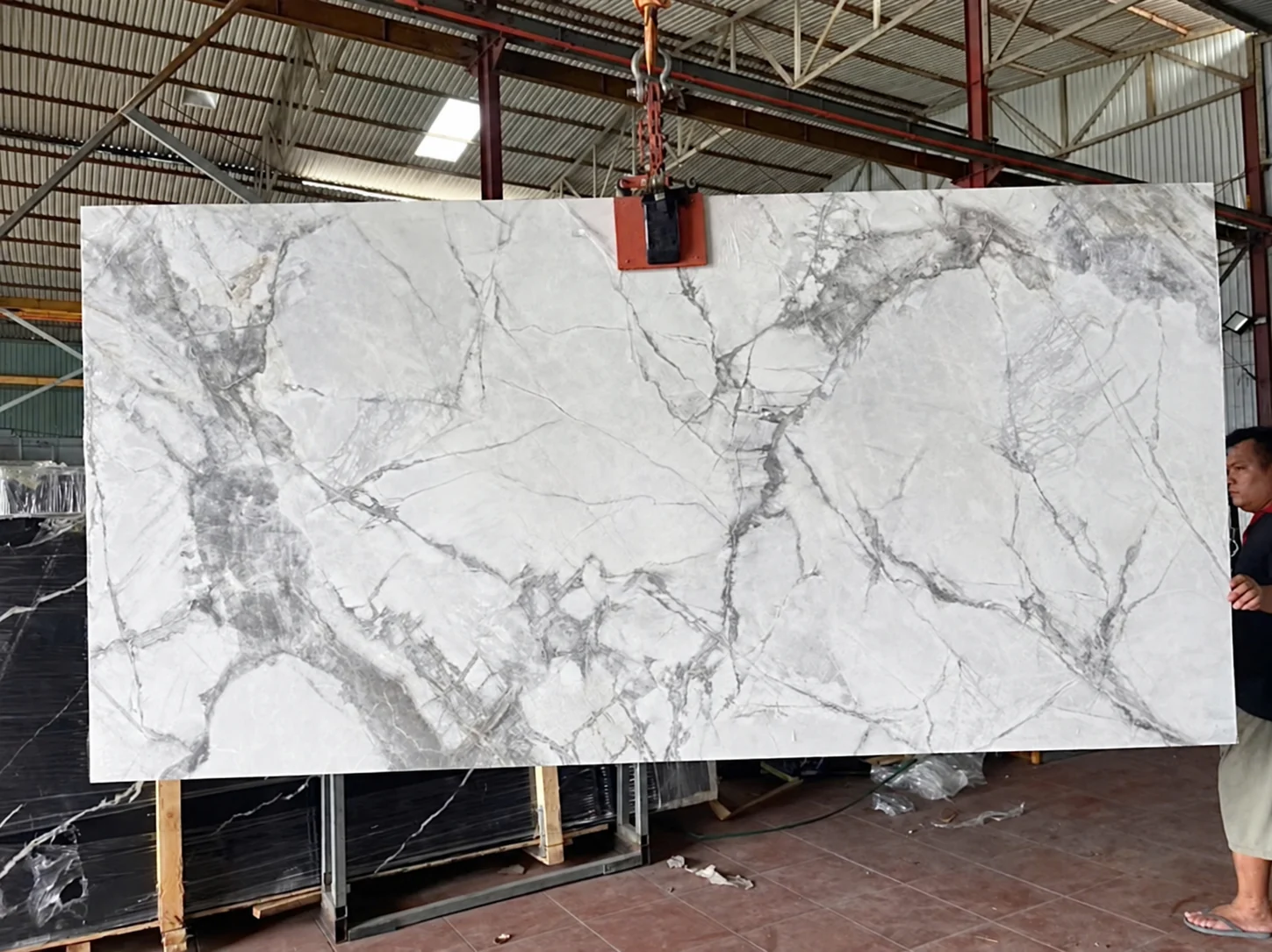
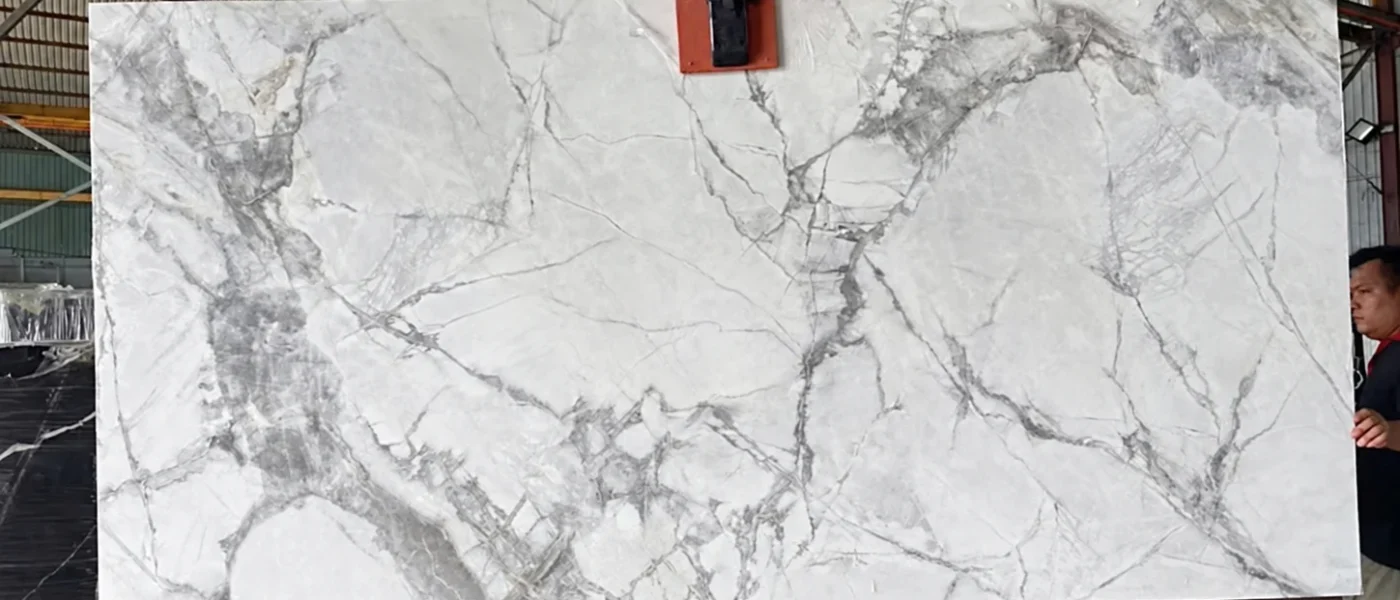
What can colour and veining alone miss?
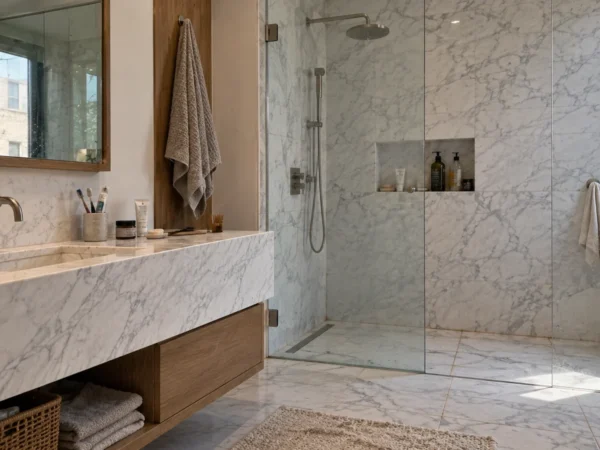
A display table holding a vase and a dining table that sees fruit juice every day need different care. The Natural Stone Institute notes that calcite-bearing marble is sensitive to mild acids. Acid etching changes the surface itself, so cleaning may leave a dull mark visible.
What technical criteria help compare granite and marble?
NSI lists granite for counters, tables and heavily used floors. Check the exact stone, sample, finish and treatment before setting requirements for water absorption, scratches or heat. For marble, record likely exposures and how much visible change the household will accept.
How does location change the choice?
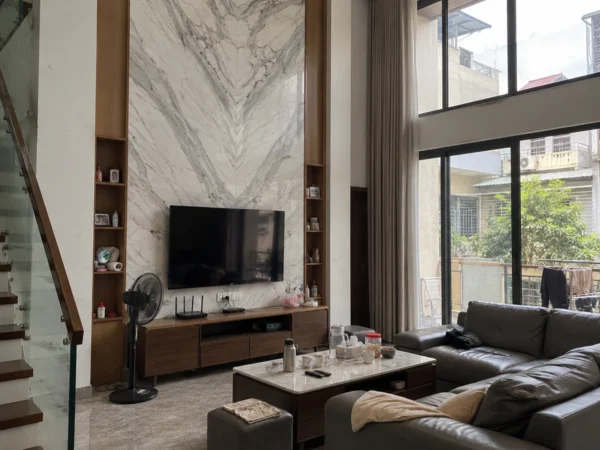
For kitchen and dining surfaces, consider food, water and cleaners. For flooring, consider grit, traffic and wet or dry conditions. On a low-contact feature wall, vein layout can take priority while the responsible specialist confirms the attachment. The public ASTM C1528/C1528M-26 summary considers stone alongside the related parts of the building assembly.
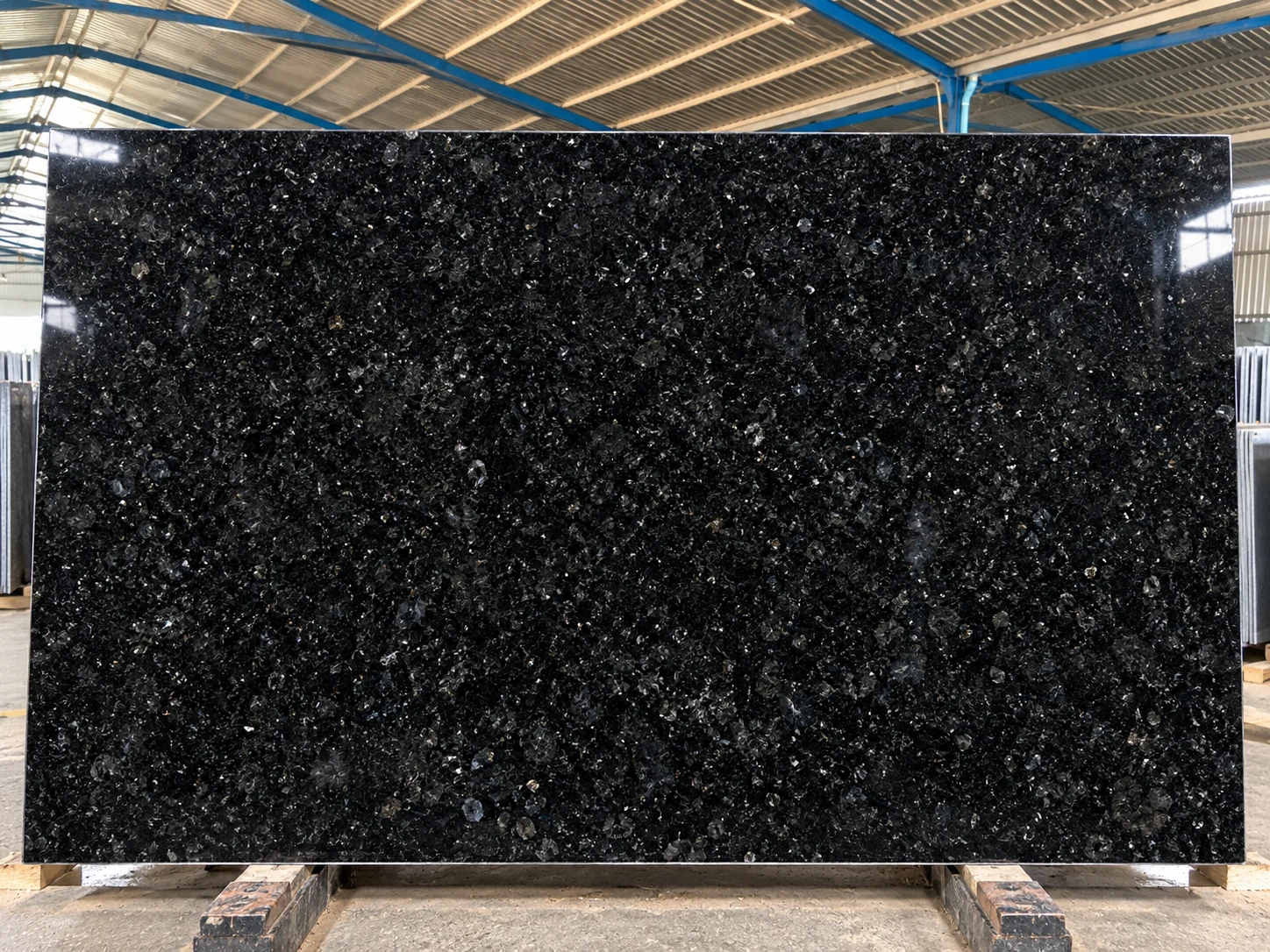
Who approves the stone, dimensions and responsibilities?
The owner approves the expected surface changes and the designer specifies the application and finish. The site team confirms the substrate, attachment and site dimensions. Record the material code, vein direction, finish, exposed edges and approval owner in one document set.
Five steps to approve the stone
- Mark counters, floors and walls, including areas exposed to water or food.
- Record frequency of use, cleaning products and the surface changes people will accept.
- Approve a sample of the specified stone, finish and treatment.
- Approve dimensions, panel layout, vein direction, edges and cut-outs on the drawing.
- Record the approver, date, drawing revision and open decisions.
What should the fabrication check cover?
Check the stone code and vein direction against the material sheet, the dimensions against the final drawing and the edges and cut-outs against approved details. Compare the surface with the approved finish sample. The responsible site team checks the substrate and attachment under the relevant project documents. Use the project’s agreed tolerances.
What makes fabrication quotes comparable?
Send each fabricator the same stone code, panel layout, finish, edge profiles, cut-outs and drawings. Label options awaiting approval. Ask the relevant specialist to confirm the stone classification, existing treatment, exposure and acceptable surface changes before final approval.
Four common questions about choosing granite or marble
Consider each answer against the actual stone, finish and location.
Is granite completely impervious and scratchproof?
Water absorption and scratch behaviour depend on the stone, finish and conditions of use. Check the documentation for the specified material.
Can marble be used for a dining table?
It can be considered if users accept the care requirements and understand that acidic foods and drinks can leave dull marks.
Does a honed finish prevent acid marks on marble?
Honing can change how marks appear. Calcite-bearing marble remains acid-sensitive.
Can I use the same stone throughout the house?
Yes, if each application is assessed separately. Tables, floors and walls may need different finishes or specifications.
Confirm the use and prepare the fabrication specification
Once the slab, finish and application are approved, provide the approved drawings or dimensions, edge details and cut-outs when enquiring about fabrication.
NHAN BAN STONE provides custom stone fabrication to specification.
Installation, site survey, restoration, sealer and waterproofing notes are general information only; a responsible specialist must confirm them for the specific project.
NHAN BAN MTV COMPANY LIMITED (NHAN BAN STONE) · Hotline 0909 929 904 · [email protected]
References