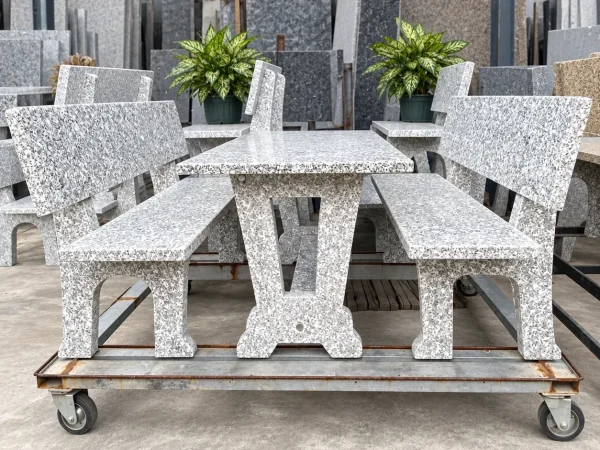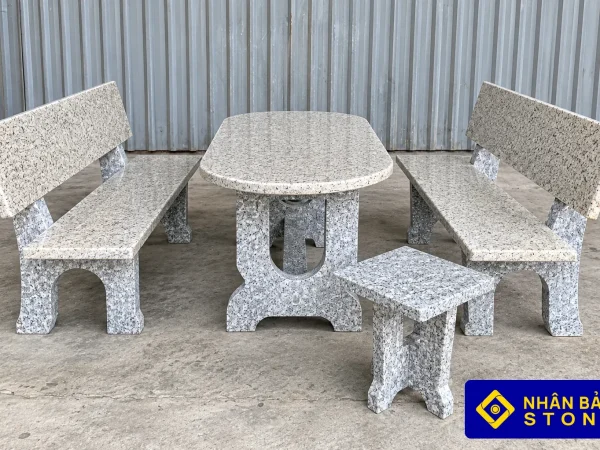


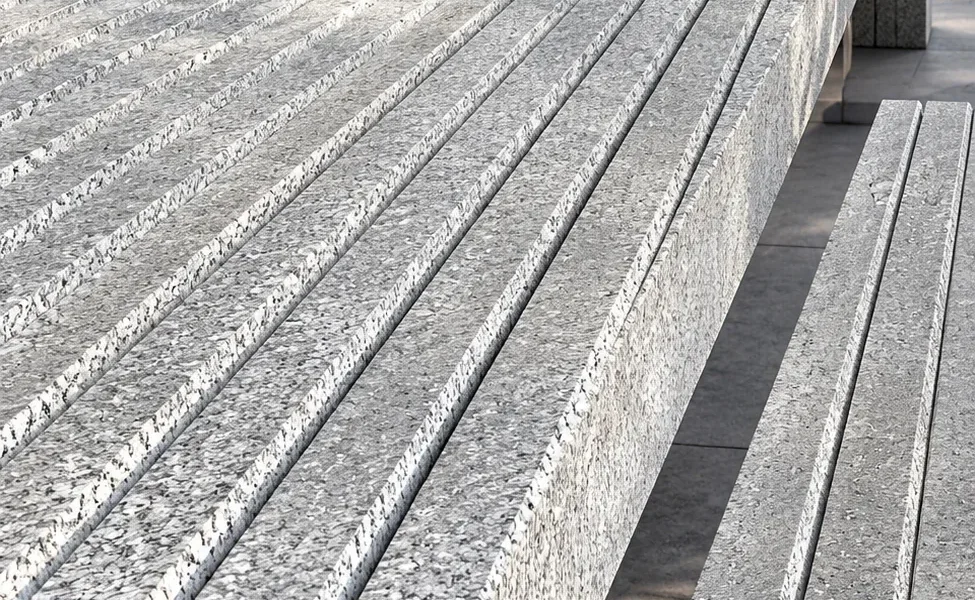
When considering natural stone garden furniture styles, compare the actual surface, intended application, and installation requirements instead of relying on the trade name alone. This guide focuses on checks that can be completed before material approval.
Natural stone varies from slab to slab and batch to batch. Water absorption, strength, thickness, and load capacity should only be quoted from documentation for the specified product, alongside the approved sample and project drawings.
1. Four Leading Natural Stone Table Archetypes
- Circular Table with 6 Stools (Classic & Harmonious): Featuring table slabs from D1000mm to D1200mm surrounded by 6 matching stools. The circular configuration eliminates harsh corners, promoting egalitarian conversation and smooth movement.
- Rectangular Table (8 to 10 Seats for Alfresco Dining): Measuring 800x1600mm or 900x1800mm, this format accommodates larger family gatherings, garden tea tastings, and outdoor weekend banquets.
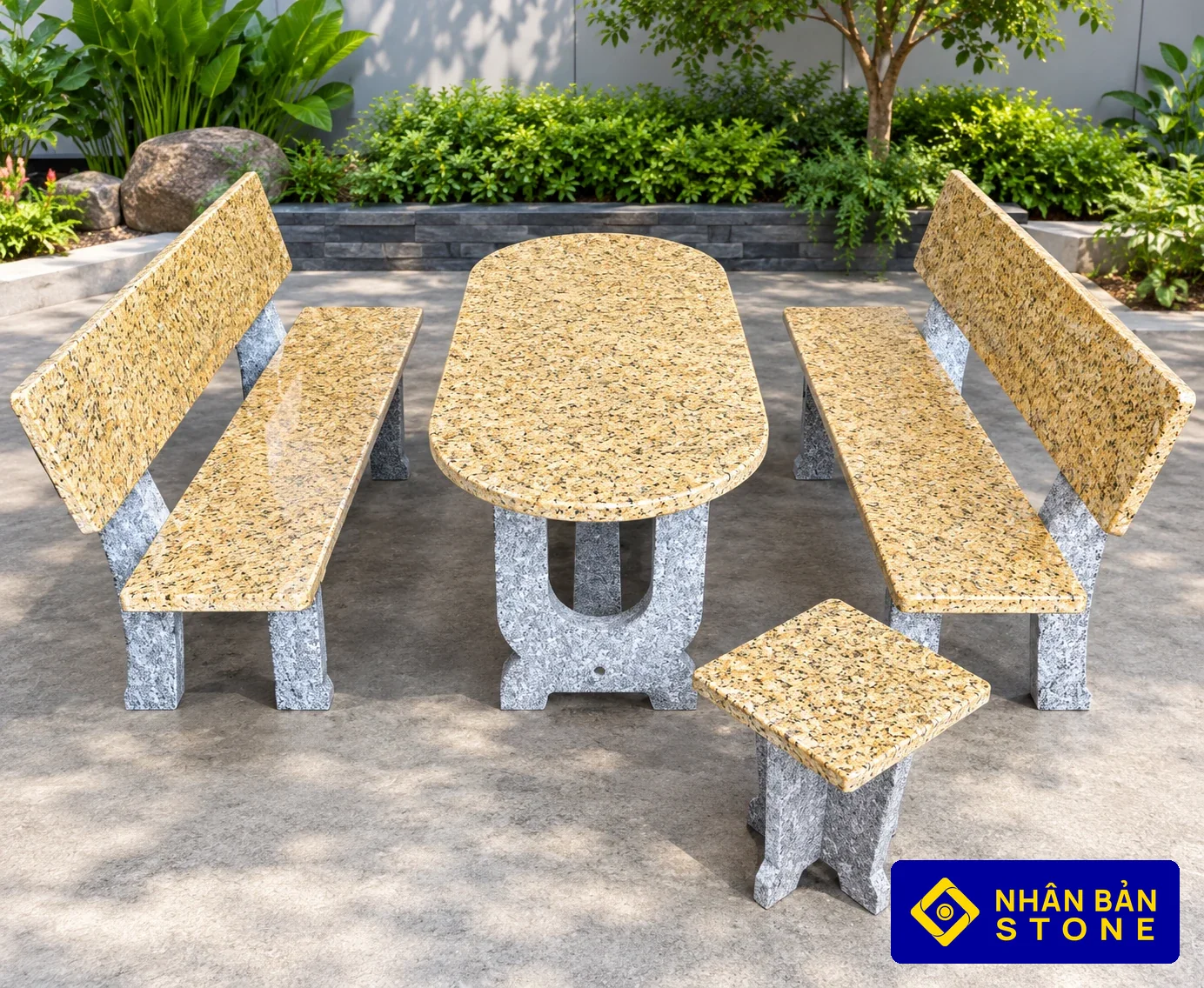
- Oval Table Sets: Merging the seating capacity of rectangular formats with the soft, flowing edge lines of circular curves, suitable for narrow rectangular garden lawns.
- Freeform Monolithic Sets (Rustic Zen Style): Preserving the organic, asymmetrical perimeter contours of raw quarry boulders while providing a mirror-polished flat surface. These sets anchor Japanese Zen gardens, rockeries, and Koi pond banks.
2. Sizing Stone Sets to Landscape Dimensions
- Courtyards Under 30m² (Townhouses, Urban Terraces): Select compact round tables (D900mm – D1000mm) paired with 4 to 5 stools to maximize open space.
3. Harmonic Chromatic Coordination
Coordinate stone tones with architectural finishes: Binh Dinh Yellow complements clay tiles and tropical foliage; Cambodian Black emphasizes minimalist glass and fair-faced concrete; and Suoi Lau White offers versatile balance across all styles. You can also refer to our guide on “Cambodian Black Granite Outdoor Furniture: Dramatic Contrast and Modern Luxury” to compare technical suitability for your installation.
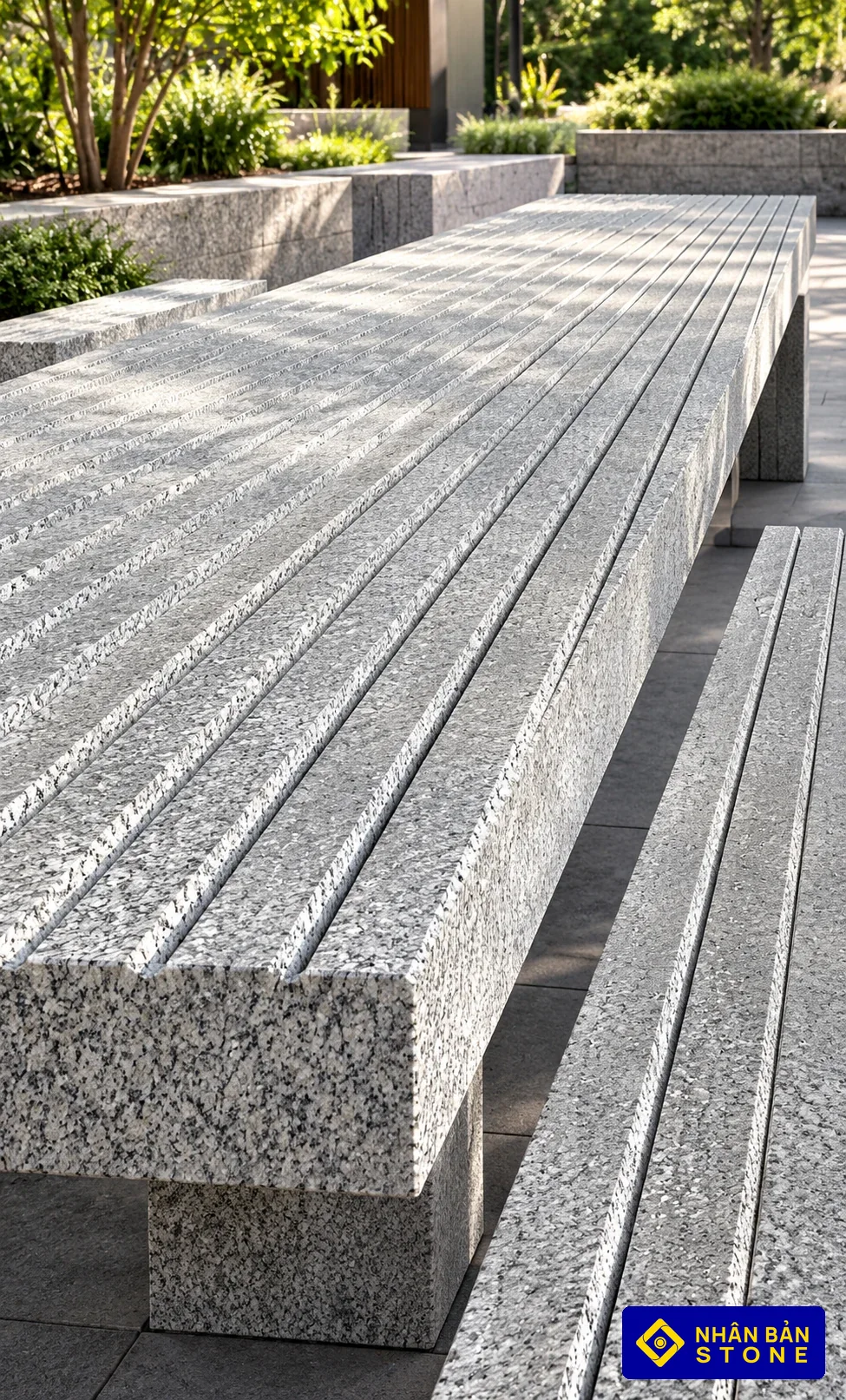
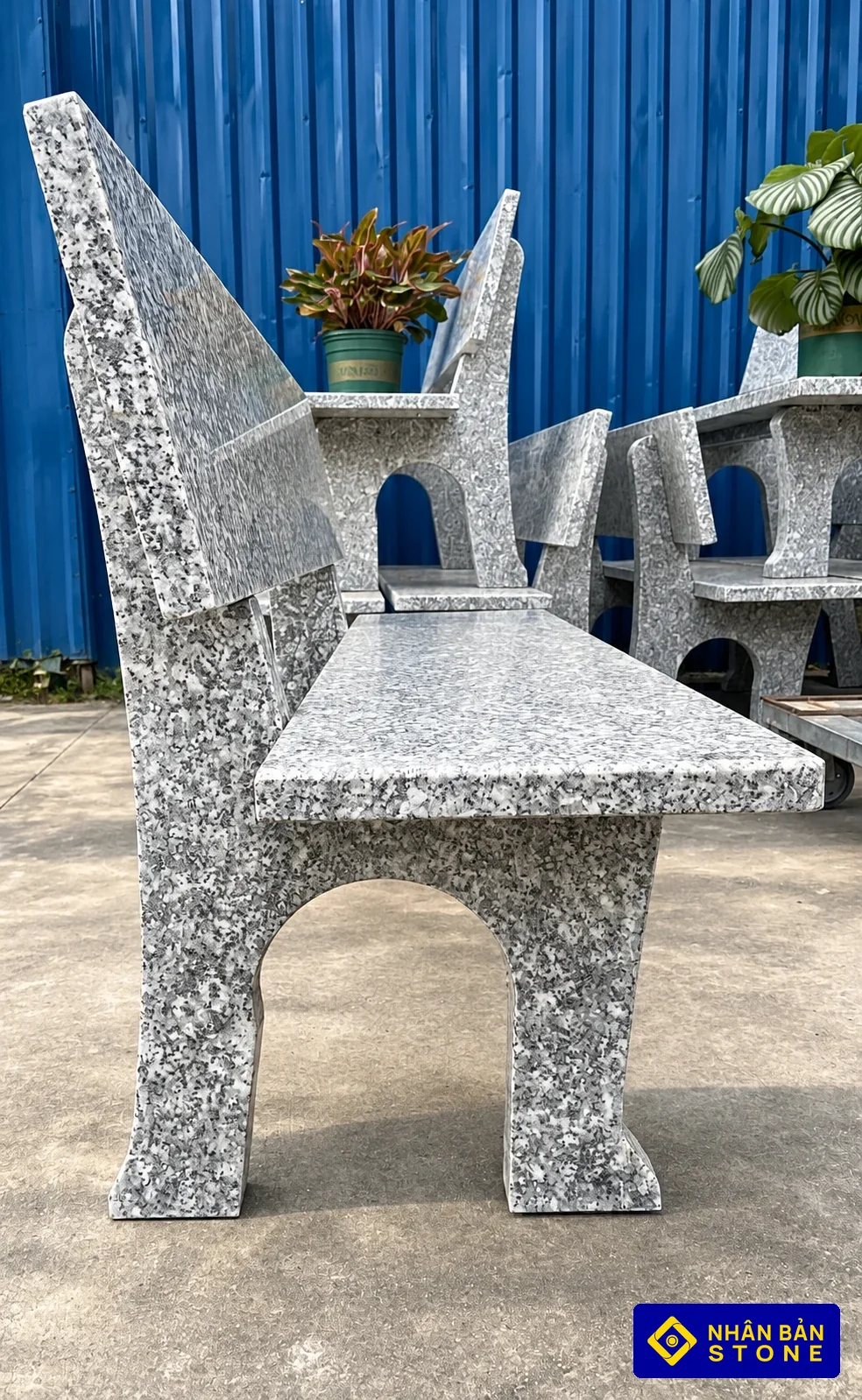
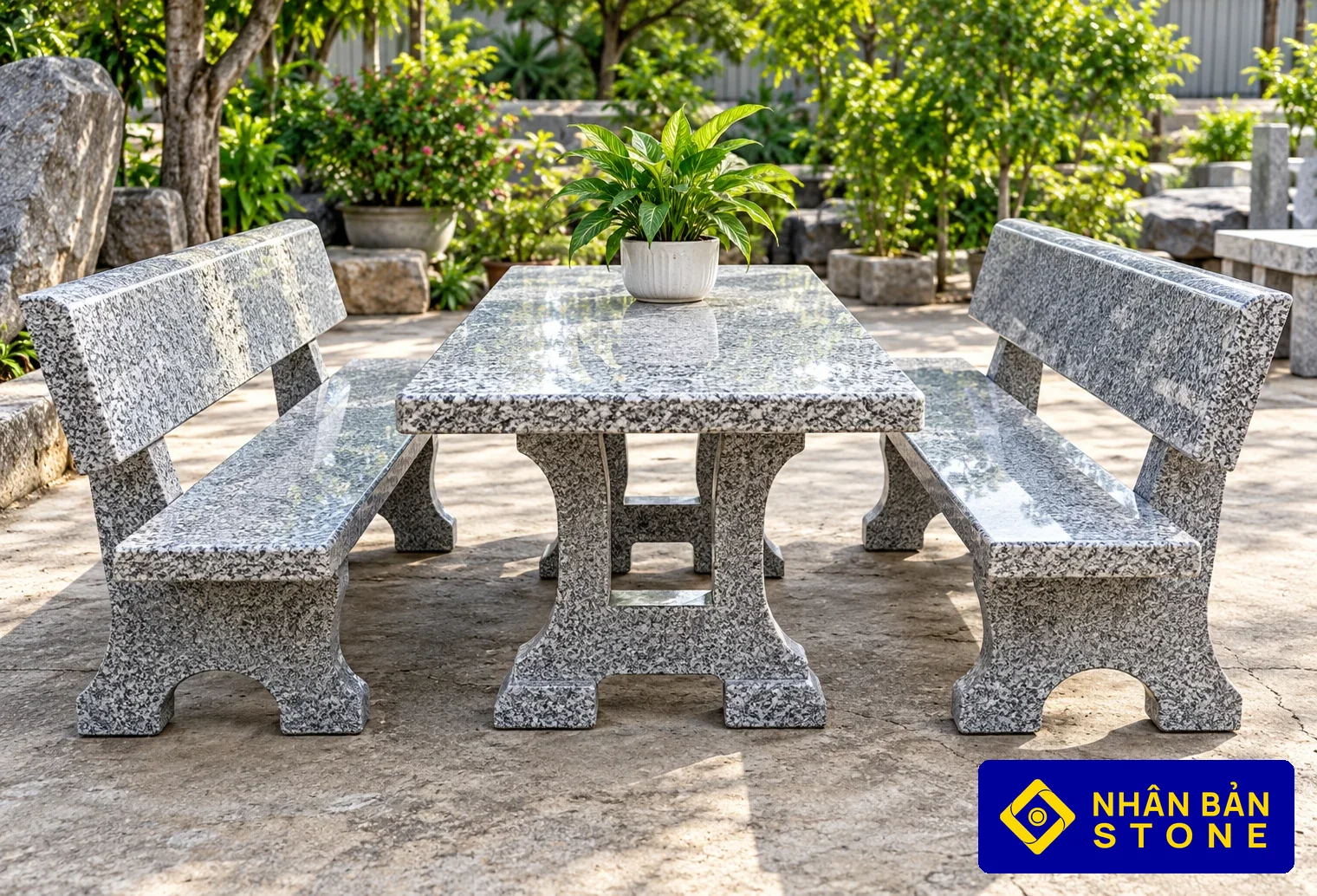
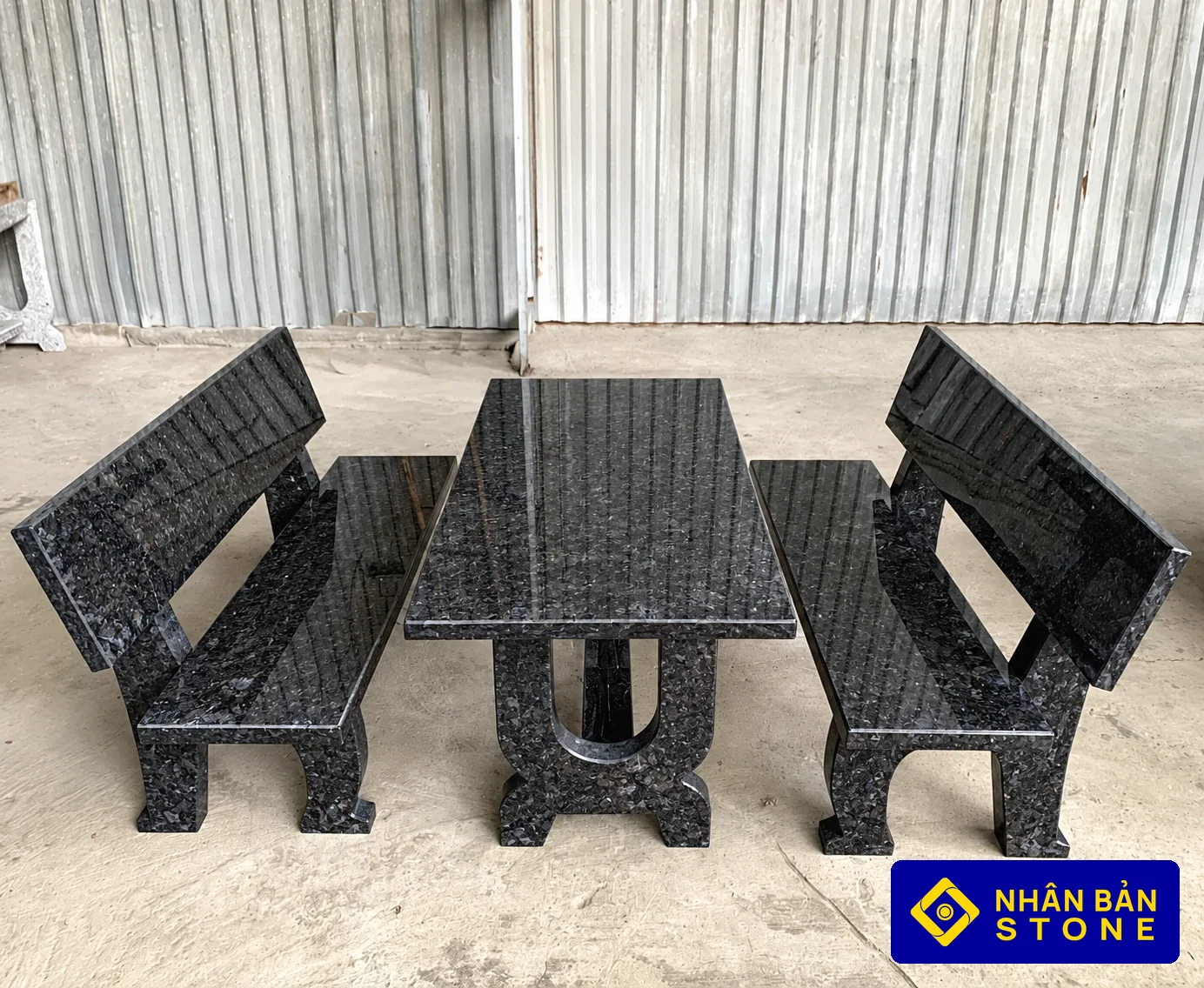
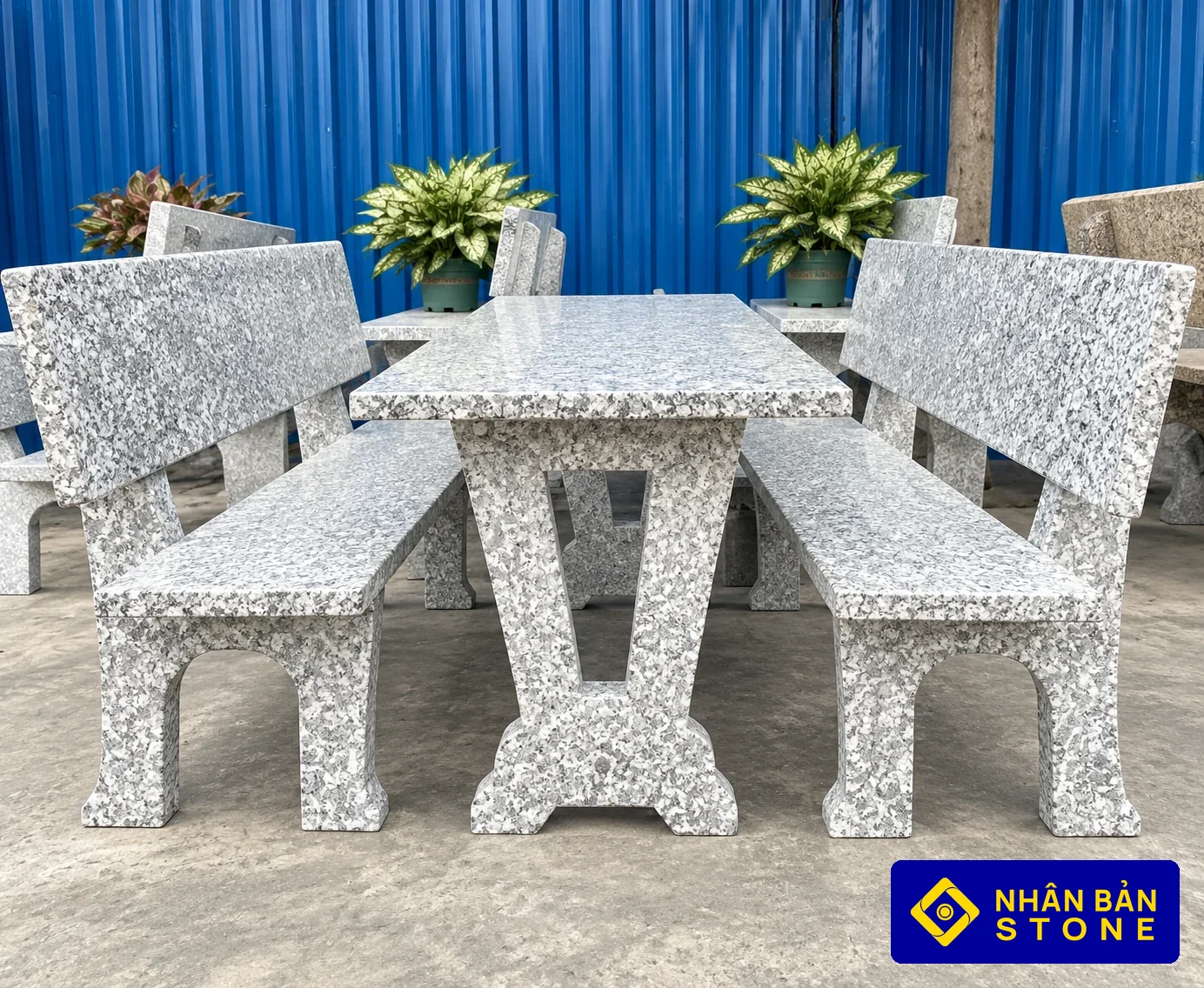
4. Comprehensive Spatial Sizing Matrix for Courtyard Planning
- Compact Round D1000mm (4 – 5 Stools): Minimum footprint 2.2m x 2.2m. Recommended for compact courtyards 20m² to 35m².
- Standard Round D1200mm (6 Stools): Minimum footprint 2.6m x 2.6m. suitable for standard private gardens 40m² to 70m².
- Monolithic Freeform Rustic Boulders: Variable boulder spans (1.8m to 2.5m). suitable for naturalistic water features and estates exceeding 100m².
Checks before ordering
Measure the intended area and allow circulation space around the furniture. A suitable footprint supports comfortable use and gives installers enough room to move and position heavy components without damaging walls, planting, or adjacent finishes.
The supporting surface must be level, stable, and designed for the expected load. Support points, joints, and any anchoring method should be shown on the drawings; the weight of the stone alone is not evidence that every configuration will remain stable. You can also refer to our guide on “Suoi Lau White Granite Garden Sets: Elegant, Durable and Cost-Effective Seating” to compare technical suitability for your installation.
Review pieces that will sit next to one another. Natural stone can vary in tone, grain, and veining, so numbering and dry-layout photographs are useful before packing and again during installation.
Check seat edges and tabletop profiles by sight and touch, especially for homes with children or public spaces. Chips, sharp arrises, uneven joints, and rocking components should be resolved before handover. You can also consult our technical reference on “Natural Stone Surface Finishes: Technical Guide” for comprehensive engineering specifications.
For routine care, begin with clean water, a soft cloth, and a pH-neutral cleaner. Blot spills early, and use sealers or restoration products only when they are suitable for the specified stone and supported by the product instructions.
Price: Contact us