


When considering Black Galaxy granite kitchen countertops, compare the actual surface, intended application, and installation requirements instead of relying on the trade name alone. This guide focuses on checks that can be completed before material approval.
Natural stone varies from slab to slab and batch to batch. Water absorption, strength, thickness, and load capacity should only be quoted from documentation for the specified product, alongside the approved sample and project drawings.
1. Resistance to Heat from Pots and Pans
Do not place cookware straight from a heat source on the surface. Use a trivet and follow the care guidance for the specified product to reduce thermal-shock risk. You can also refer to our guide on “China Black Galaxy and Indian Black Galaxy: A Practical Comparison” to compare technical suitability for your installation.
2. Mohs Hardness of 6.5 and Resistance to Knife Scratches
The dark obsidian background, enriched by golden enstatite-bronzite crystals that glimmer under under-cabinet LED task lighting, creates sophisticated visual depth while concealing culinary dust and minor splashes between routine cleanings.
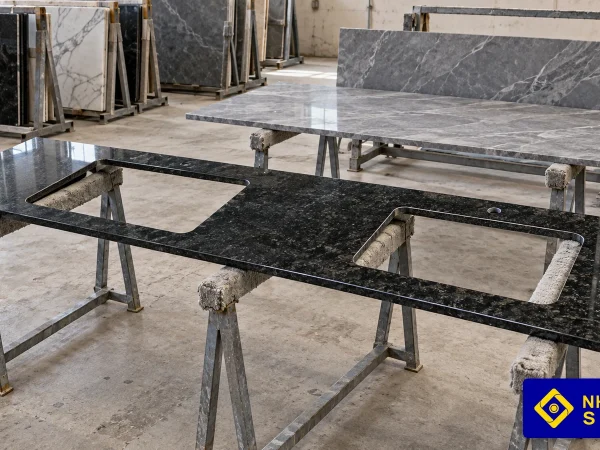
3. Essential Fabrication Engineering: Radius Cutouts and Edge Mitres
- Concealed Steel Bridge Reinforcement: The slender front and back stone rails adjacent to cooktop and sink openings are grooved underneath and reinforced with embedded stainless steel flat bars in high-modulus epoxy.
4. Care Instructions for Maintaining the Black Galaxy Finish
To maintain mirror clarity, wipe surfaces after food preparation using warm water and pH-neutral mild dish soap. Avoid aggressive acidic scale removers, which can gradually dull mineral gloss over multi-year exposure. You can also refer to our guide on “Cambodian Black or Black Galaxy: How to Compare Alternatives” to compare technical suitability for your installation.
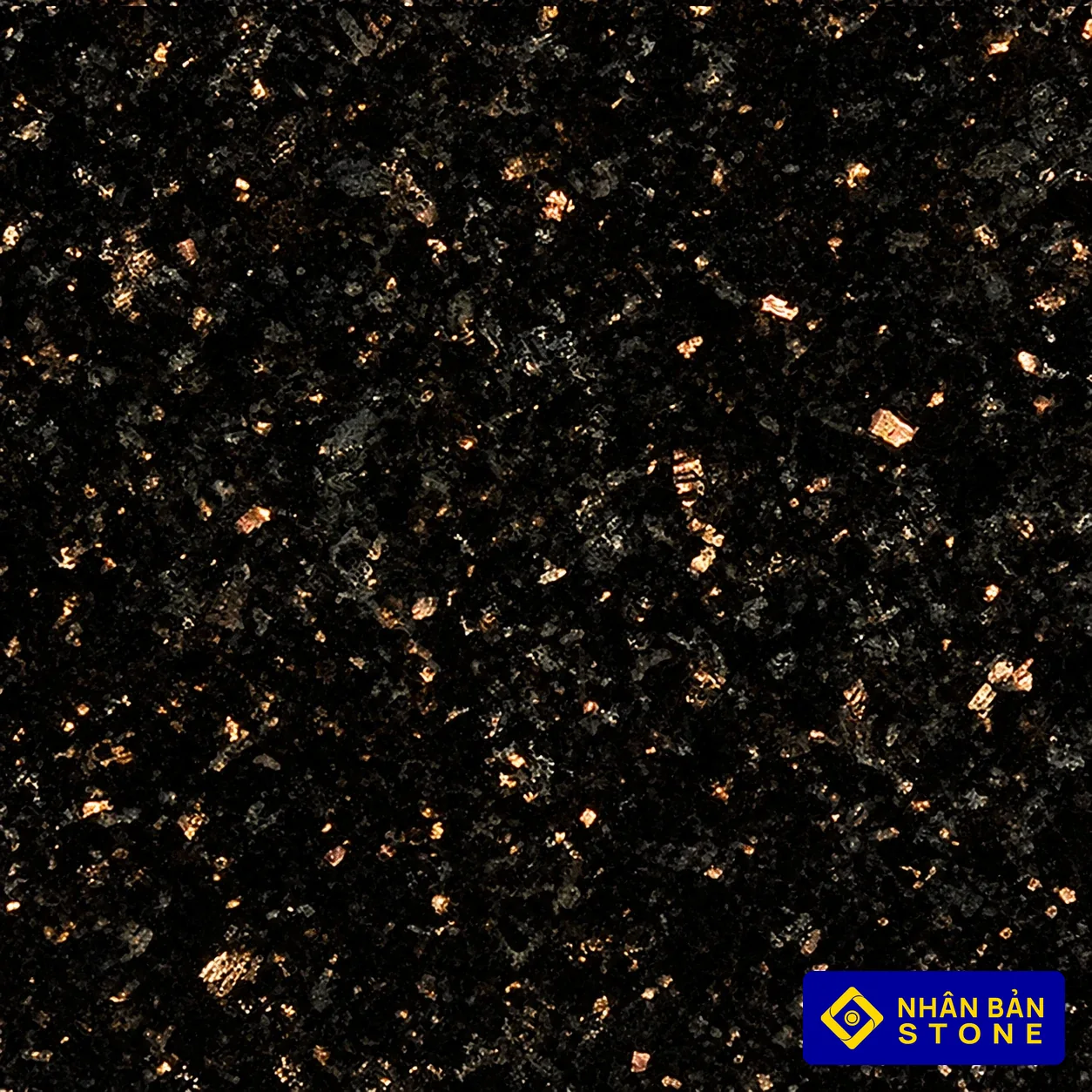
Review the slab under lighting similar to the intended space, and record the vein direction, colour range, and acceptable variation between adjacent pieces.
Approving the Material for Its Application
A trade name identifies a material family but does not replace slab review. Inspect the actual stone under lighting close to the intended space, compare lighter and darker areas, and agree on an acceptable range of colour and vein variation. You can also consult our technical reference on “Natural Stone Surface Finishes: Technical Guide” for comprehensive engineering specifications.
Polished, honed, flamed, and textured finishes differ in appearance and maintenance. Select the finish for the indoor or outdoor location, expected moisture, foot traffic, and cleaning requirements rather than assuming one finish suits every use.
Before cutting, verify field dimensions, vein direction, joint locations, openings, and the supporting structure. These details affect layout and breakage risk; a trade name or promotional image cannot replace coordinated drawings.
At delivery, check batch references, quantity, ordered thickness, edges, and surface condition. Use technical values only from the test report for the specified product or batch.
For routine care, use a soft cloth, clean water, and a pH-neutral cleaner. Blot oils, coffee, and coloured spills early, and use trivets in heated areas. Sealing intervals should follow the stone, exposure, and product guidance rather than a universal schedule.
Price: Contact us