

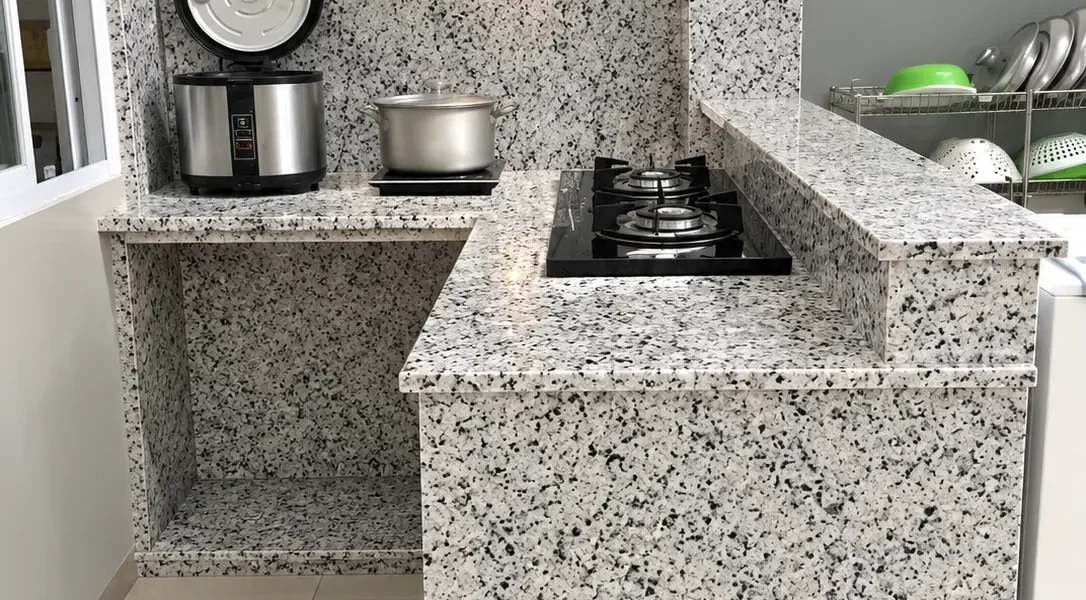
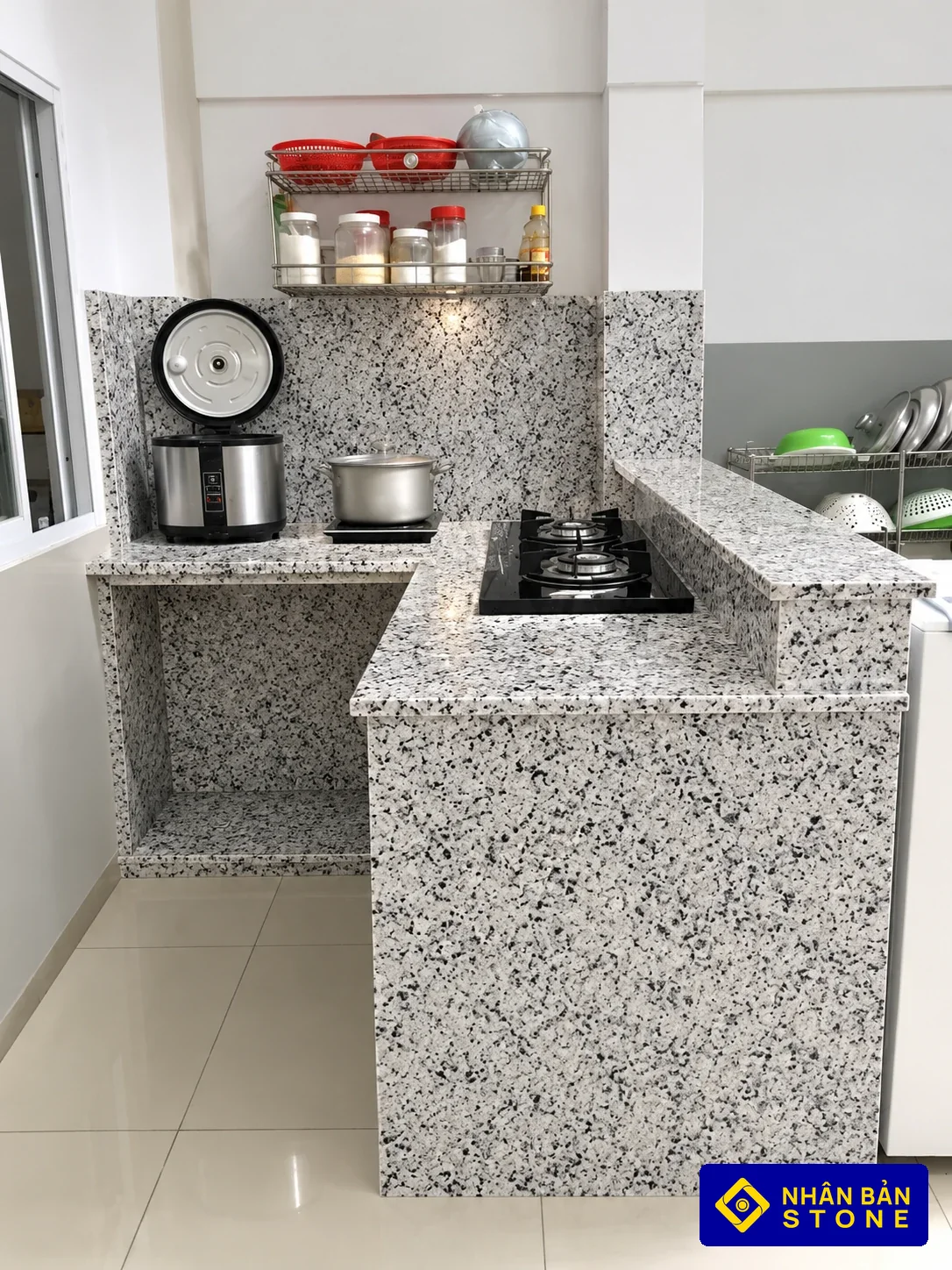
When considering Suoi Lau white granite slab widths, compare the actual surface, intended application, and installation requirements instead of relying on the trade name alone. This guide focuses on checks that can be completed before material approval.
Natural stone varies from slab to slab and batch to batch. Water absorption, strength, thickness, and load capacity should only be quoted from documentation for the specified product, alongside the approved sample and project drawings.
1. Large Quarry Reserves and Stable Supply
A primary risk in large-scale architectural projects is supply exhaustion or tonal discrepancy between construction phases. With Suoi Lau White Granite, this concern is entirely eliminated. You can also refer to our guide on “Suoi Lau White Granite: Applications for Floors and Cladding” to compare technical suitability for your installation.
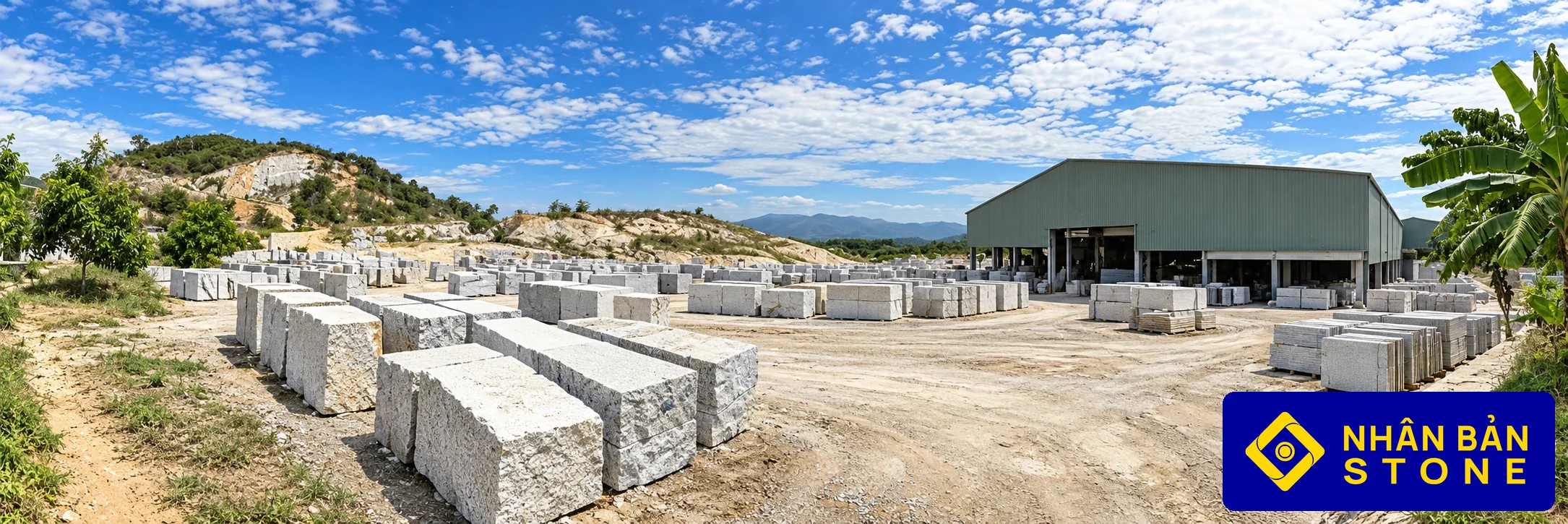
Quarried in Khanh Hoa Province across some of the largest geological formations in Vietnam, modern multi-bench open-pit quarries yield massive blocks year-round with uniform grain distribution. This allows multi-phase developments to secure matching stone lots even years after initial commencement.
3. High Compressive Strength and Flamed Texturing
In addition to traditional mirror-polished finishes, slabs can undergo thermal high-temperature flame texturing (Flamed finish). Thermal spalling produces a rough, non-slip texture that meets strict safety friction coefficients for outdoor parking ramps, external steps, and wet pedestrian paths. You can also refer to our guide on “Cambodian Black and Suoi Lau White Granite in Common Applications” to compare technical suitability for your installation.


4. Standard Physical and Mechanical Data for Suoi Lau White Granite
For architectural specification packages and structural engineering documentation, Khanh Hoa Suoi Lau White Granite has been rigorously tested in accordance with national and international dimensional stone standards:
5. Architectural Design and Specification Guidelines
When incorporating Suoi Lau White Granite into commercial master plans, architects should clearly define whether the application involves heavy pedestrian circulation or wet environments. Specifying appropriate surface finishes—polished for interior foyers and flamed or bush-hammered for exterior ramps—ensures optimal performance. Furthermore, matching joint widths and specifying polymer-modified white setting mortars prevents moisture staining and preserves the clean aesthetic over long building lifespans. You can also consult our technical reference on “Natural Stone Surface Finishes: Technical Guide” for comprehensive engineering specifications.
Approving the Material for Its Application
A trade name identifies a material family but does not replace slab review. Inspect the actual stone under lighting close to the intended space, compare lighter and darker areas, and agree on an acceptable range of colour and vein variation.
Polished, honed, flamed, and textured finishes differ in appearance and maintenance. Select the finish for the indoor or outdoor location, expected moisture, foot traffic, and cleaning requirements rather than assuming one finish suits every use.
Before cutting, verify field dimensions, vein direction, joint locations, openings, and the supporting structure. These details affect layout and breakage risk; a trade name or promotional image cannot replace coordinated drawings.
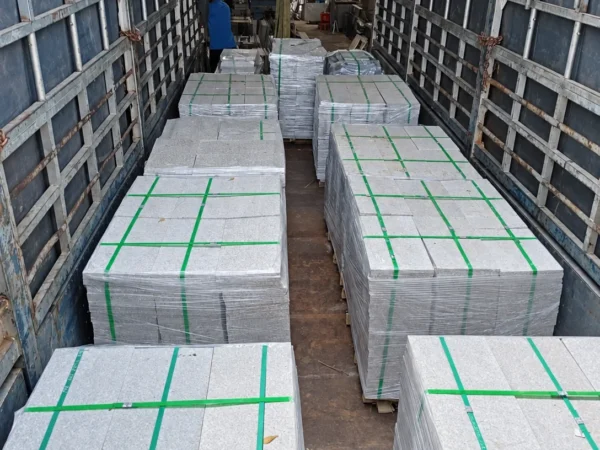
At delivery, check batch references, quantity, ordered thickness, edges, and surface condition. Use technical values only from the test report for the specified product or batch.
For routine care, use a soft cloth, clean water, and a pH-neutral cleaner. Blot oils, coffee, and coloured spills early, and use trivets in heated areas. Sealing intervals should follow the stone, exposure, and product guidance rather than a universal schedule.
Price: Contact us